

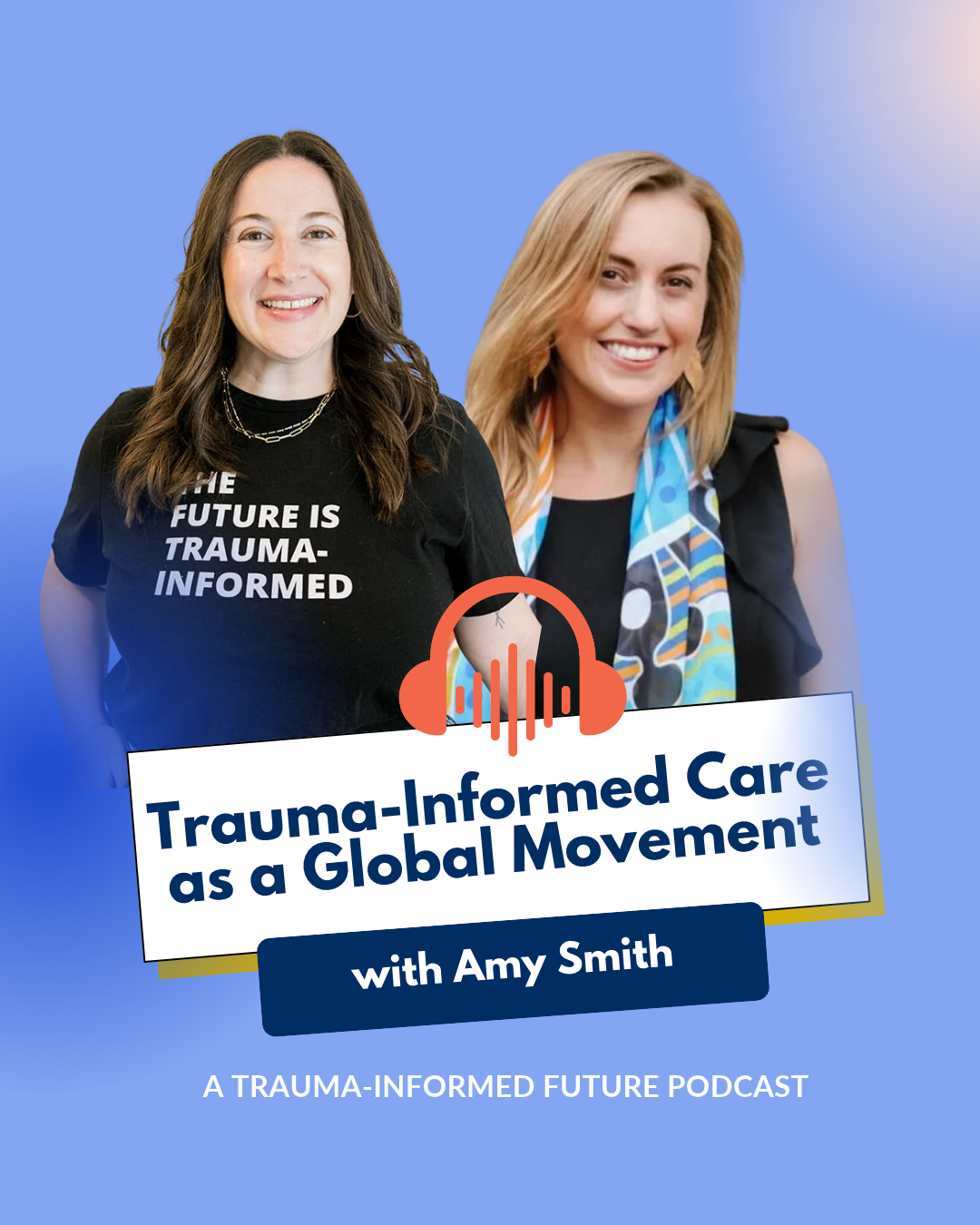
What does it look like to understand trauma-informed care as a global movement, not a framework belonging to any one country, culture, or profession?
In this episode of A Trauma-Informed Future, host Katie Kurtz is joined by Amy Smith, founder of Kindred Consulting with Purpose, joining me from Queensland, Australia. Together, they explore the connections bringing people across the world together around trauma-informed care, the Indigenous and First Nations wisdom that has long informed this work, and how we can honor its origins while building a more inclusive, globally connected movement.
They also dig into what it takes to move beyond buzzwords and one-off training to embed trauma-informed principles into our everyday interactions, workplaces, and systems. From burnout and systemic harm to the power of curiosity, trust, and human connection, this conversation challenges us to think about not just what trauma-informed care means, but how we live it.
Because building a trauma-informed world isn’t something any one of us, or any one country, can do alone. It’s a collective, ongoing practice of learning, unlearning, and creating systems that better honor our shared humanity.
Learn more about Amy:
Amy Smith is the Founder and Director of Kindred: Consulting with Purpose; a purpose-driven consultancy that partners with organisations to cultivate mentally healthy, trauma-informed workplaces and communities. An Accredited Social Worker, supervisor, facilitator and consultant, Amy has spent more than a decade working across mental health, suicide prevention, refugee and asylum seeker support, First Nations communities, and regional and remote Australia. Her work is grounded in a deep commitment to decolonising practice and recognising that many of the principles now described within contemporary trauma-informed approaches have long been understood and embodied by Indigenous peoples through ways of living, knowing, being, and relating. Amy supports organisations to honour this wisdom while translating trauma-informed principles into practical, relational approaches that create meaningful and sustainable change. Through workshops, leadership coaching, supervision, and organisational consulting, Amy is passionate about making complex ideas accessible and supporting leaders to cultivate cultures where people feel safe, connected, and able to thrive. Outside of her work, Amy is a mum to two little humans and believes the same principles that guide her work also shape her life. She intentionally nurtures trusted relationships with family, friends, and community, finds joy by the ocean and around a campfire with a guitar in her hands, and firmly believes that a good solo dance party in the kitchen can brighten even the hardest of days.
Connect with Amy:
Website: www.kindredconsulting.com.au
LinkedIn; https://www.linkedin.com/in/amykindredconsulting/
Instagram: kindred.consulting
Show Transcript:
Katie Kurtz (she/her): [00:00:00] hi everyone, and welcome to a Trauma-Informed Future podcast. I'm so excited to introduce you to, but for me, selfishly, to reconnect with Amy Smith of Kindred Consulting. Hi, Amy. I'm so- happy for you to be here , to share this conversation, also just to share you and the work you're doing on the, a total different side of the globe.
So welcome, welcome. I'm hoping you can just, in your own words, introduce yourself, how you're arriving here today.
Amy Smith (she/her): Yeah. Thanks, Katie, and it's so... I was very excited to be here and to connect with you, even though we're recording this. Yes, I've alwa- I've been a really big follower of your work and admirer of your work from afar, so it's been really nice to connect over the last 12 months or so.
I would like to start by saying I am coming from Gubbi Gubbi country, which is the traditional custodians of the land that I live [00:01:00] and work on up on the Sunshine Coast in Queensland. And I would love to invite w- both of us but also the people who are listening, to reflect on how... And this is something that Uncle Paul Gordon, who is an elder over here, has shared that resonates with me and that I try and remind myself every day around how can we connect to country every day.
And whether that be go outside, put your feet on the ground. Even when we started this conversation, there was a couple of magpies singing and talking in my backyard, and I just... It's just that connection to country and to the land and to the sea and everything. So wherever you are right now, I encourage you to pause and listen
So as Katie said, my name's Amy. I am the director and founder of Kindred Consulting With [00:02:00] Purpose. I've got a social work background, which was very instrumental in how I came here. And essentially, I started Kindred because I saw the disconnect between what we were trying to do within community sector or healthcare around trauma-informed care, and the lack of trauma-informed support within those systems for staff particularly.
But also broader, like how those systems are designed even how, like funding structures happen, and the impact on community and the impact on the people that we're trying to work w- work alongside and support. And one of the things that's at core to this work I've seen is we don't burn out because of the stories we hear or the people we support.
We burn out because of the systems the systems that impact us, but also the systems that cause more harm and cause more oppression. And so when you're working in this kind of work and you're constantly [00:03:00] up against these systems, that is so exhausting. And so moving away from burnout being an individual failure, or you didn't self-care enough, but actually recognizing the role of systems within that and that collective care and systemic care as well.
And that's kind of why I started four years ago, and it's definitely grown and pivoted as you would know when you have a business. Like, things kind of shift. But that is core to I- my messaging really is getting people to look beyond the person and looking at the environment, and that's very social work of us, I would say.
Katie Kurtz (she/her): Yes. Yeah.
Yeah.
Amy Smith (she/her): Yes. So that's it. And then I love the ocean. The ocean is my happy place. That is where I find my ventral state. So one of the prerequisites I've said to my husband is, "I don't care where we live in the world, but we have to be within 10 minutes of the [00:04:00] beach." And I have two small humans who are two and five.
I would say becoming a mom has really also been one of those, like, pivotal shifts in just understanding attachment and development and the things that I knew of or had been practicing in work, like professionally, but then it becomes your real life and you see it, and you see this tiny human. And I guess the weight and the responsibility as a...
particularly I have two boys as a mom, that has been really p- like, it has impacted my professional work as well. And yeah, it d- I know everyone who becomes a parent says it, like, changes your life, but yeah, it's just been a significant part of my journey. And why Kindred exists, actually.
My eldest was 18 months old when I started Kindred, so I kinda had two babies.[00:05:00]
Katie Kurtz (she/her): Thank you so much. I Shout out to systems thinkers. It's such an ingrained... Like, once I feel like you learn how to think in systems and really look, have that ability to, like, zoom in and zoom out to see the interconnection of everything, it's like you can't unsee or un-know that. Mm-hmm. Which is a very social work thing.
And I love what you talked about i- in regards to burnout and really shifting that narrative from individual responsibility to collective and systemic. You know, it might be something we personally feel, but it's a collective responsibility to address the, the atmospheres- ... and the systems we exist in that are really the root cause of that.
And I know I feel that deeply in so many ways right now. And so yeah, so... and so such an essential part of burnout and the stress I [00:06:00] always talk about, like, the stress-resilience continuum is it includes burnout, moral injury, and trauma. And it's like it's all... trauma-informed covers all of that.
It's not- Mm-hmm ... just the extremes. And so, yeah.
Amy Smith (she/her): Yeah. Yeah. And I was gonna, like, on that, I feel like it's like trauma-informed practice asks us to hold both. Like, yes, the nervous system matters, and understanding and befriending our nervous system is kind of like taking our power back a little bit.
But we also need to recognize the systems that impact on people's nervous systems and how the, that structural change and that, that matters as well. So it's, I don't think, I think it's important to know the indivi- like ourselves and how our nervous system responds and reacts to different things and how we can support it.
But also that... And I, but in particular, I think that intersectionality and looking at people's, [00:07:00] like, people's relationship with, like, power, control, culture, all of those things and how that impacts on individuals. So both are really important, which, yes, I know you know.
Katie Kurtz (she/her): Yeah. But yes.
Amy Smith (she/her): Yeah.
Katie Kurtz (she/her): Yeah, absolutely. I agree, and I think that's, again, the essence of this approach is that is, like, trau- to be trauma-informed is also to be nervous system informed, but it's not just this individual experience, it's and both the nervous system- Yeah ... of a family, of a c- Mm-hmm ... of a community, of a culture, of a system.
Like, it's all interconnected.
See, we're already diving in. So I just want us to name and highlight that we are on two very separate ends of the earth. So I'm a- I'm recording this from California in the United States. You are in Queensland, Australia. And we have connected because we are [00:08:00] both very much active in the trauma-informed movement, of this global movement, which I think sometimes is s- very new to people.
So before we kinda dive into talking about that, 'cause I have so many questions, like, I just wanna, like, nerd out on this approach with you. But- ... I'm curious if you can walk us through just your own trauma-informed journey. Like, how you were introduced to this approach, how you have grown as a trauma-informed leader.
Amy Smith (she/her): I feel like my journey around trauma-informed practice began before I had the language for it. And but if I was to, like... Okay, the first time I was introduced to, like, the term or the concept or the framework was, I was working for a little community-led organization called, or, like grassroots, called House of Welcome with people seeking asylum and refugees.
And it was my first... I did my placement there for uni, and then got a job [00:09:00] there and we did, like a two-day workshop on trauma-informed approaches. And that would've been in, it would've been 2014. So, and I'm... So I guess that was when those, like princ- like it w- it actually was firstly officially developed.
And yeah. But I do remember, and we talk, like we learnt about ACEs and a little bit about the window of tolerance and, you know, like all of those kind of core foundational things. But it definitely was a penny drop moment for me, not just in my work, but also in my life.
And I remember, like, reading about, particularly around the ACEs and the impact and, on that, and looking at m- my own journey, but also in particularly, like, my brother.
I'm gonna tell my brother's story, but I was like, "Oh, that's why he does that." And so it really, it did... [00:10:00] And working in the refugee dis- like, people seeking asylum sector, you've got people who experience, like, acute torture trauma, and then they're coming to Australia and at the time, and still today, like re-traumatized because of that, the systems and the policies and...
Like it's horrific. And so- That means that being able to find a job or learn a new language or, like, all of these things is, like, you're asking people to do things that are hard in itself. Like, moving countries is hard without all of those other things. And so yeah, it was definitely one of those moments where I thought, "Oh, this is re- this is real," because I- of my own lived experience and my own, like, understanding of...
And I guess before that, I'd always seen things that had happened to me, I didn't want them to f- define me. And so I'd, I had been very [00:11:00] much like, "Yes, that stuff was sad, horrible, shouldn't have happened, but I'm not gonna let it dictate who I am." But in doing that, I also didn't allow myself to recognize the impact it does have on my nervous system, and does have on my relationships, and, like, all of those things.
So I- that didn't start until I was in my 20s really. I'm like, "Okay, yes, I can, like, move forward, but I also need to acknowledge the impact it has as well."
Katie Kurtz (she/her): Yeah. Thank you so much for sharing that. I think it, I know it resonates with me and it resonates with so many, that oftentimes- Like you said, we've been practicing this approach, but we just didn't have the language for it.
Mm-hmm ... or we learn about it and prac- be able to strengthen our practice with it because of our own [00:12:00] lived experiences and whether that's professional or personal or both. And I know that very much resonates with me and my kind of journey with it and so many people, not just who've been on this podcast, but people in this movement.
And that, it, you know, sometimes we know trauma, and again, using that kind of very big with liv- the lived experiences of people- ... and the intersections of that. And I always just want to always give gratitude to Dr. Kimberly Crenshaw, who really gave us the work around intersect- intersectionality, but this has been around since the dawn of time.
Like, this is a- ... you know, we're ... And understanding the word trauma and what it means is still so, so new in the grand- ... scheme of things, and we're still learning and from not just [00:13:00] the academia research, which always has a lot of nuance, and I always tell people, like, take pause where and be discerning when looking at the academia and research around something so delicate and human, but also people just sharing their lived experiences and us bearing witness to them and doing something.
But the... I think we've been practicing trauma-informed care for a very long time. We're just now having a lot more l- shared language and understanding around it, and a little more framework as we move into the next phase- As a, a society. And I kind of wanna start with a really big thing that of just acknowledgement and naming the times we're in, and just how you mentioned before we hit record, like, how to be trauma informed in a traumatizing world.
It's coming at us at all angles. It has been.
But it feels more... I don't know about you, again, [00:14:00] from living in this, this side of the hemisphere, and especially the United States right now, it's so compounded. Like, it's just one thing after another, and it's like every day there's a new horror, horrible thing happening.
And it's like how it's ov- it's so overwhelmed, the burnout of just even the empathy burnout of, and compassion fatigue. And I know that's felt universally and globally different. But there is an underlying tension. And so I'm just curious- what are you noticing,
Amy Smith (she/her): Yeah
Katie Kurtz (she/her): In your realm and your part of the world, and how it's kind of all, again, coming back to that interconnection of us all, especially in this global movement?
Amy Smith (she/her): I think, and I feel like I may have read something from you years ago, and it's definitely still relevant today, that this is...
actually, no, I've heard this from multiple places. Like, we're i- living in a [00:15:00] time where we... There's been... There hasn't been this much collective trauma since World War II.
And so, and different parts of the world are being impacted differently. But also we're all being impacted as well, and because of, like, social media, and the internet and everything, everyone is more aware of what's happening in different parts of the world that we probably weren't, wouldn't have been previously.
And that, like, that has a... I would say, like, most of the world or most of the people today, we're all living in, like, a hypervigilant state all the time because of that. But also we're a bit desensitized, too, because we're seeing so much destruction. And I saw a post the other day, it's like, like it said, you know, you saw something, you know, something to do with Gaza or some kind of [00:16:00] image, and you just scrolled past.
And how, like, that's how desensitized we are, that we see so much destruction that we literally s- like it doesn't stop us in our tracks anymore. And part of that is survival, because when you're exposed to so much trauma or so much violence y- your... our nervous system's like, "This is too much," like I need to kind of shut down a bit.
But I'm also really mindful, and as a, a white person I know this is something a First Nations person said to me, like, "You get to shut off," whereas many people that sadly they don't get to run away from it. And so yeah. I just, I think we're living in a time where- It, there is a lot of collective trauma happening.
We obv- we had a terrorist attack in December. We had an attempted attack as well in [00:17:00] January. And this past week, this probably hasn't been in the news, but we've had some football players in the media around a sexual assault.
There were 13, 14-year-old boys who are up for a sexual assault of a 14-year-old girl.
Like, there's, right now, like, violent, gender-based violence is quite, like, in the media a lot. And I would say particularly being of a mom and having boys, like the weight of that, like, no one... Most people don't raise their kids wanting them to abuse other people and to cause- ... violence. But I said to, like, okay, gender stereotyping, most little boys get given, like, boy guns and swords and it's like we're conditioning them to think violence is part of being a man- in, like, play fighting. Like, most girls don't get that kind of stuff, and I'm a very strong anti-weapon [00:18:00] household. But like, they- that's the type of stuff that we're conditioning kids to think what's okay.
Katie Kurtz (she/her): Yeah.
Amy Smith (she/her): And so, you know, that's... and like, that's not, that's nothing to do with my professional...
Like, I don't work with kids. But I... and this is where, like, I feel like trauma-informed practice or, like, it's about being. Like, this isn't just something I put my work hat on, and I teach people this framework, and then I go along my, at home or in my families, and it doesn't... , it applies if you're interacting with humans, and it applies on, in, like, all s- facets of life.
So the way I parent has changed the more I learn about this.
Katie Kurtz (she/her): Yeah. I have so many things. First, we need to talk about trauma-informed parenting. I'm not a parent- ... yet, but I feel like-
Amy Smith (she/her): Yes,
Katie Kurtz (she/her): we do ... that's the next wave of thing, like, of this [00:19:00] movement. I think that's something that's really coming surfacing, that we're, you know, trauma-informed caregiving.
...
Katie Kurtz (she/her): So we may have to do a part two or talk off the record on that one because-
Amy Smith (she/her): I feel like- Or- ... that would be the space I would be in if I wasn't in, like,
Katie Kurtz (she/her): this
Amy Smith (she/her): space. Yeah. Like, I'm so passionate about it because that's where it starts.
Katie Kurtz (she/her): Mm-hmm.
Amy Smith (she/her): Like, imagine if every parent had that knowledge and was really intentional in parenting in that way, 'cause there's also an element of re-parenting-
Katie Kurtz (she/her): Yes ...
Amy Smith (she/her): that happens. Like, it... And even as people, like, Like, I started this before I became a parent, but it, like, you're, once you become a parent, you're like, "Oh, there's a lot, there's a lot of stuff there that I didn't know about," because you don't know until you're, like, in that position, and- Ah
And I, yeah, I'm really grateful for, like, I mean, I've only been a parent for six years, but I'm so grateful I had the tools and knowledge and understanding before [00:20:00] that- ... to help me navigate it because a lot of parents don't. And it's not again, like, not everyone, but most parents, you know, they love their kid, and they wanna do the best they can, and they're doing the best they can with the tools they have.
Katie Kurtz (she/her): Mm-hmm.
Amy Smith (she/her): But sometimes those tools aren't, like, aren't the best for-
Katie Kurtz (she/her): Yeah ...
Amy Smith (she/her): creating compassionate, kind, curious little humans, and nurturing their, understanding their nervous system, begin to feel their feelings. Like all of that kind of stuff. Like, we weren't really brought up like that. And I've had a few conversations with older family members, and who maybe aren't so, they're a bit judgmental of my parenting. I'm like, "I'm doing it on purpose because I wanna raise emotionally intelligent boys." Yeah ... because, yeah, we don't have many of those in the world.
Katie Kurtz (she/her): Fair. Look
Amy Smith (she/her): at some [00:21:00] of our leaders.
Katie Kurtz (she/her): Yes. Yeah. Yeah. And it's just another system, right? It then create- ... you know, it creates another system.
And kind of back to what we were talking about earlier, we can't, you know, the infamous kind of Hillary Clinton quote, "It takes a village." Like, it, y- you know, are we also looking at the systems that are resourcing caregivers and parents and kinship caregivers and the support needed? Which, again, is just like- it's all connected.
And I don't know about you, but I get all the time, like after a, a keynote or a workshop, people will come up to me, like, either, either after or, like, months, years later saying, "You know, I came to, like, a professional training or a conference for professional reasons, but I didn't realize this approach would help me with my marriage or-
My parenting or in my community or in, with, you know, whatever." And I'm like, "Yeah," 'cause it's not compartmentalized. This [00:22:00] isn't, you know, a sick- You're a
Amy Smith (she/her): whole human ...
Katie Kurtz (she/her): hip HR, you know, trend. This is- Yeah ... not something that came up in some LinkedIn, you know, think piece or, you know, a conference room. This is a, a full body, full human approach.
And so yeah, it is gonna- Yes ... it's so necessary at work, and we can kind of create more frameworks and structure in workplaces which is the work you and I do. But it's everywhere, and it, and- ... I hope it does seep into how we personally engage. But yeah it's back to, though, how this isn't, you know, a one and done checkbox workshop that we can just, like, do.
No. It takes... You always say it works when you work it, and, Yeah I'm curious if you can talk about or let us kind of a glimpse into [00:23:00] what you're seeing in the trauma-informed movement, you know, in Australia and New Zealand, and how it may... kind of compare notes, if you will- ... of what's happening here and- Yeah
Yeah.
Amy Smith (she/her): I do wanna also, and you touched on this already, that, you know, whilst the framework and the, the language around it is relatively new, like, over the last couple of decades I also... and I always, like, reference this in any work I do. Like, I would say the original trauma-informed leaders are, like, indigenous peoples-
Katie Kurtz (she/her): 100%
Amy Smith (she/her): and First Nations peoples, and they actually modeled it the best.
Katie Kurtz (she/her): Mm-hmm.
Amy Smith (she/her): And so whilst now we have academia and research and like, like frameworks and things, like I, I think it's important to know that's not new. Like, some... I don't... i'm generalizing here, I don't mean this, but some white scholar [00:24:00] didn't make this up.
Like, this has been around for tens of thousands of years. And whilst I fi- you know, it is helpful, and I would like to do a PhD one day, and I can see the value of having research and really refining this- but it's important we don't think we made it up. Like, we're not... And the same in parenting.
Like, a lot, like, the parenting movement is the same. You see, like, gentle parenting or all of this, and they're like, "Oh, it's this new wave, new way of doing parenting." It's like, no, we just tried to, like, Westernize and individualize, and then we realized that we've completely stuffed up the world.
Katie Kurtz (she/her): Yeah.
Amy Smith (she/her): And re- like, recognizing that indigenous peoples have had it right all along.
So...
Katie Kurtz (she/her): Look at that. Yeah. Yeah I really appreciate you naming that. I do the same in just really helping people understand that, especially new people, [00:25:00] like, who are new to this approach, that, like, I didn't make this up, first and foremost. Like, I didn't- Yeah ... I didn't just, like, create this. A lot of people are like-
Amy Smith (she/her): Yeah
Katie Kurtz (she/her): "Did you make this up?" I'm like, "Oh, God, no." ... But most importantly, again, back to holding the and/both, is yes, we can honor some of the notable frameworks scholars, et cetera. However I'm a steward of this approach. You and I are both stewards,
Amy Smith (she/her): Mm-hmm ...
Katie Kurtz (she/her): because of, you know, the people who came before us.
And-
Amy Smith (she/her): Yeah ...
Katie Kurtz (she/her): unfortunately, we can look to so many social justice practices leaders in the helm of those movements indigenous and First Nations people who may not identify... A- again, the l- language may not be there, but the practices, the nervous system of all things. Like, no one-
Amy Smith (she/her): Yeah ...
Katie Kurtz (she/her): you know, like-
Amy Smith (she/her): Somatic- Yeah
Katie Kurtz (she/her): not, like, practices, like all of that ... it's all rooted-
Amy Smith (she/her): Yeah ...
Katie Kurtz (she/her): in that. And, like, unfortunately, and I'm always [00:26:00] on the outlook of, like, I just don't, we don't always know the names of those people. They're not in the journals. They're not in, you know, the bookshelves. But those are the people, like, I always...
I appreciate you naming and honoring that because I think we need to be doing that as a part of this move. Again, using the term movement because we're always- ... moving and evolving. Just showing a lot of gratitude and honoring those origins. And it can be hard because we don't have, like, that one person or thing.
There's a lot of people. And again, as to your point, it's globally. It's not just, you know, like, you know, as a white person in the US, we tend to just have this narrow vision of just us- Mm-hmm ... and no one else. But, like, one of the things I keep kind of coming back to is you and I seem very similar work and journeys, two different sides of the world, and still, you know, there's a...
it's bigger than, you know, the United States. And it should-
Amy Smith (she/her): But I do- It shouldn't
Katie Kurtz (she/her): be led by that. Yeah. Yeah.
Amy Smith (she/her): I [00:27:00] do feel though th- well, when I started, and I'm not sure if I've said this yet in the recording. Yeah. But when I started Kindred, and I had the idea, and I was like, "Yes, this is the gap."
Like, you know, we've got... There's lots of trauma-informed care training available around the place or in Australia. But no one's really doing, like... Well, how do we integrate it in the day-to-day? But also how are we supporting our staff in this? It's very much client-focused. Like, this is a, this is an approach that we take for people who are traumatized.
Mm-hmm. And like, I do quite a bit of work in the lived experience space. That doesn't feel good on the receiving end. Like, you can feel when someone is like, oh, like... And I saw a post, and it was like, it had this person, and then they had traumatized person, like, and then trauma-informed care. Like, that you're kind of labeling them and treating them like they're in this special box, [00:28:00] and that doesn't...
Like, that's pathologizing something and it, that is inherently about just being human.
Katie Kurtz (she/her): Mm-hmm.
Amy Smith (she/her): And so, you know, part of, yes, I do like tr- workshops and things, but part of it is actually getting people to look beyond it just being a framework and a thing that you do for particular people in the population group that you work with.
Katie Kurtz (she/her): Yeah.
Amy Smith (she/her): But actually get it in you or embody it in how you show up in the world, how you understand, like, what it's like to experience you in a place and being really intentional in learning and unlearn. And that's why my logo is always unlearning, always learning, always human. I think I got it the wrong way.
Anyway. But that, like, it's just, it's an in- it's a commitment to this is a, a becoming. Like, we never arrive.
Katie Kurtz (she/her): Mm-hmm.
Amy Smith (she/her): And one of the things- And like, I'll go back to your [00:29:00] question around people saying like they come because of they, like a professional development thing, and then it, that it's impacts their other lives.
Like I've had... I did a project last year with an organization, and part of it we had an evaluation as well, and some of the feedback was people were saying, like it cha- it's changed their life. Like it's completely changed their relationships. And one person in particular they wrote something...
I've got it. It was like perfectly what do you call it? Like articulated what I was trying to do in this whole nine-month-long project. But trauma-informed practice is a journey, and we never fully arrive. But part of it is about, like being committed to that journey and that process. Yeah. And that's what I hope people get whenever we, like do this work, that they don't feel like they go to a workshop and they know all the things.
And people who arrive or come and say, "I already know all of this," are actually [00:30:00] generally the people that know the least.
Katie Kurtz (she/her): Yes. Funny how that is. Yeah. Yeah.
Amy Smith (she/her): Or they might know it, but they're not, it's not integrated.
Because if you know it, if you truly know this stuff, you, even if you've done workshops and things, you know that there's always more learning and the...
And also it's about, like a shared space. You get to, like connect with others and support others on their journey as well. So, yeah, so it's always a bit of a... I don't wanna say a red flag, but if someone writes in like the baseline, I do like baseline surveys and things, "Oh, I've already done this." Okay.
Katie Kurtz (she/her): Great. 'Cause that happens here too. So that's good. So same page. Yeah. Do you... what's the willingness, openness, readiness for this work,
...
Katie Kurtz (she/her): Are you finding?
Amy Smith (she/her): I think people say it, that it's important. It's pretty mu- [00:31:00] and most of my work, and this is the other thing that I feel like is different to the US, and I'm interested to, like, obviously I won't... This is from what I see online. I wouldn't say trauma-informed practice is embedded in our mental health services, like, at all.
Mm-hmm. The last few years it's become more prevalent. But, and so now a lot of funding bodies, like, it's an expectation now- ... which is good. Yeah. So, but I also know, like, pretty much every service says they're trauma-informed now.
Katie Kurtz (she/her): Oh, okay.
Amy Smith (she/her): But they're not. And so it's actually almost done a disservice, because then people think they're, "Well, I went to a trauma-informed service and it was terrible, and so I don't...
Like, trauma-informed practice isn't all that it's cracked up to be."
So I would say n- it's, like, almost a backfoot. Now people are using the language, but they're [00:32:00] not- Yeah ... actually doing, or, like, it's not integrated.
Katie Kurtz (she/her): Okay.
Amy Smith (she/her): That's kind of what I'm seeing, and then people are saying it's important, but they're again, like, not...
The investment needs to be beyond just sending a staff to a two-day workshop.
Katie Kurtz (she/her): Mm-hmm.
Amy Smith (she/her): And I don't just necessarily mean financial investment, I mean people need to be given the time and space to have s- like, to pause and to reflect and to have, you know, whether it's communities of practice or, like, whatever mode it is to help people to continue their learning and to continue in embedding it, not just in their own individual practice, but as a team.
Katie Kurtz (she/her): Mm-hmm.
Amy Smith (she/her): What's, like, as the environment that we work in, like the service, like the way the service is designed like all of those things. And- Yeah ... that [00:33:00] requires leadership buy-in.
Katie Kurtz (she/her): Mm-hmm.
Amy Smith (she/her): So I got I got asked recently, "What's the one thing that y- you think needs to happen for organizations to do this?"
I'm like, "Leadership buy-in." Like, if you don't have leaders that are really invested in this, then it doesn't work.
Katie Kurtz (she/her): Yeah. Okay, so the same thing here. That's validating. Very validating. Yeah. I would say very, I mean, it's mirrored here. I don't think we... I would say the same, like mental health professionals, even going down to training at universities for social work, therapist counseling, like healthcare, it's starting to get a little more baked into training, but it's not the standard of care.
Mm-hmm. And some funding bodies are, like, saying it's, [00:34:00] you have to do it, but it's again just saying it. There's no guideline, and I think what's so similar between you and I in the work we do is we're focusing on the integration, right? Like, h- okay, what does it actually, what does it look like, feel like in the day-to-day and throughout the whole system of a team, a department, an organization?
And I often find people will be like, "Yeah, we're trauma informed. We believe in it." I'm like, that's great. That's actually like the first- ... the first star is you gotta- Yeah ... believe it's real. And then I'm like, "Oh, so, like, what are you doing?" Like, "Well, we took a workshop," and it, and then it fizzles, right?
Everyone's like- ... "Well, we've done that. We're moving now. Everyone's over trauma-informed care here, and we're moving on to resi- like, resilience," 'cause that sounds more positive. ... Resilience-centered care, whatever the new thing is. And I'm like- Yeah ... it's all the same thing. Yeah. And, you know, psychological safety, and it's like I can't go [00:35:00] down a whole rabbit hole on that.
But I think what you're saying, which again validates the same thing I run into, is that, and this is where people kind of get frustrated, it's like if you want a trauma-informed culture or organization or a practice, you have to have the buy-in. Because the people who make decisions are the ones that need, decide how are you gonna schedule around this?
How are you gonna make time for it? And how are you going to implement and create shared expectations? And that takes effort and time and buy-in, and I think a lot of times, especially because we work in systems, that a lot of these systems, healthcare, even mental health, are- systems that have historically been traumatizing, continue to be traumatizing, and harmful.
And so it's like [00:36:00] culture change takes time, and it's a long... I always say, like, this is a long game. How are you going to commit to it, and how are you gonna sustain it? I have lots of tools and things you can use, but I can't, you know, I can't make you do it. Like, again, it works when you work it.
Amy Smith (she/her): Yeah.
And I I also, I feel like on that I've had, I've seen the difference in projects when, like, I had a project where I'd actually done some work with a senior leadership team on a completely different thing. It was, like, more, like, trauma-informed support, like, through a structural change and all of that the year prior.
And then they came to me a year later, and they wanted to do more integrating trauma-informed practice within a particular program. And I said, "Okay, but the leaders need to be part of that."
Katie Kurtz (she/her): Yeah.
Amy Smith (she/her): And they were like, "Yep." [00:37:00] And so we had... But because I'd already done that work previously, and interestingly, there are a couple of managers that weren't part of that because, like, they weren't there, and the sites that were the most engaged and had the most shift in impact were the ones that had done the work with me before.
And so it's, it made me realize how important, like, and now I'm like, if an organization comes to me and they want training for their frontline staff I actually am like, "Well, I'm not doing anything with them until I've done work with the leaders." Because it actually doesn't... You're just creating more work for your- Yeah
frontline staff if the leaders aren't part of that journey. And not just part of it, but also championing it. Mm-hmm. Like, if they don't prioritize it, if they're not invested in their learning and how they can apply it to their leadership and how they can scaffold support around their staff to actually [00:38:00] implement this, then you're just burdening your staff and creating more work for them when they're already overworked.
Katie Kurtz (she/her): Yeah. Yeah. And this is a, it's truly a practice. Like, I always say, like, you don't go into a cooking class and leave 45 minutes as a top chef or Iron Chef, like, with a Michelin- Yeah ... star. Like, you're... And you have to integrate it. It's like, okay, here's this approach. Good news is it's applicable to anyone and anywhere, so like-
Amy Smith (she/her): Yeah
Katie Kurtz (she/her): join
Amy Smith (she/her): us- Anyone who works with humans.
Katie Kurtz (she/her): Anyone, you know, if you're a breathing human with, and your heart's beating, join us. Yeah ... but it's then, okay, here's what I do. Here's my lens of influence. Here's my role. Here's my the power I have. How do I apply it? And I agree. Like, I- I think the more... We need to be, we need more mirrors of people who are demonstrating what it, what this approach is so people can feel what it's like to receive trauma-informed [00:39:00] care.
'Cause it-
The reality is, it is quite counter-cultural- Yeah ... to pause to even just slow down and be like, and check in. Like, sometimes people are shocked when I share the simplest trauma-informed strategies, and they're like, "Oh, well I thought you were gonna give us this whole thing." I'm like, "Yes, but try it.
How easy is it after you... Tell me how easy it is to slow down and check in when we're in a culture of unnecessary urgency." ... You know, like, are you actually, like, is it, is there truly like an emergency here, or are we just so... Is the nervous system of this department in hypervigilance? And so- Yeah
It's not complicated, but we- it's like, okay, how do we create new neural pathways to, like, re-shift into this lens, which, you know, people... Culture isn't made up by another policy, it's made of people. So the more people who adopt it- Mm-hmm ... so [00:40:00] obviously could go on. But I think it's interesting, and again, just wanted to full circle move us back to, like, even though we're on different sides of the world, we're seeing the same trends, we're seeing the same things.
And I think- I did a keynote recently where I said, like, this is a global movement where we're all kind of at this edge, and I'm curious what your thoughts are. I feel like we're meeting we're meeting an edge right now of this movement where we're all sort of like, all right, we know those principles.
Like, we know what trauma-informed care is. Now everyone's just like, "Now what?"
Amy Smith (she/her): Now what?
Katie Kurtz (she/her): Right? Like, okay, what- Yeah ... how do we do it? And I think, like, that's where I'm really excited because that's my f- like, that's what I do. I know that's what you do. Like, we're ready for it because-
...
Katie Kurtz (she/her): Obviously we desperately need it, and it's just going to get worse, on all levels, from climate collapse to [00:41:00] political, global geopolitical war and violence, to things happening in our own community. Like, it's, there's just so much happening, and like you said, we're seeing it in real time. And whether we realize it or not, our nervous systems are responding. So I'm curious if you are, like, what your sense is, like, 'cause I feel like we're at that precipice.
We're at that edge of okay, it's time to, like, we've done it. It's been a good 14 years since we saw, you know, that first real formalization of what trauma-informed care is. We've seen a lot of iterations and interpretations. People are calling it a buzzword, you know? Yeah. The grifters have come out.
They're now grifting off of, you know, nervous system hacks and, you know, all sorts of things- Yes ... to make money. And so now what? Like, where are we going with this?
Amy Smith (she/her): And even though, and this is [00:42:00] where, and I know, like, you've created the trust, is it the trust framework?
Katie Kurtz (she/her): Yeah.
Amy Smith (she/her): As a way to do that. It, like, to help people to re- to integrate it.
But I would say even though the, the principles have been around for however many years, they're still not well known in most of the work that I do in mental health organizations. Oh, for sure. Like, they're still- For sure ... not known. And so, I would say, and that's where I'm like, maybe it's different over there.
But I would say, like, a lot of the work I do is still, one, like, i- identifying those principles, but then it's like, okay, you can know them and name them. But I guess what I I actually wanted to share, like, at the conference I spoke at a couple of weeks ago, I asked everyone the question, and I know you'll really like this 'cause I know you're big on this as well.
I [00:43:00] said if you'd like to, or if you're able to, stand up or raise your hand if you've heard someone say, 'This is a safe space.'" And there's about, I don't know, just over 100 people in the room, and everyone s- everyone stood up or raised their hand, and then they sat down. And then I asked, "Stand or raise your hand again if that helped you to feel safe."
And no one stood up. And then there was this, like, audible murmur and, like, a few people laughing and things. And it was one of those momen- And, you know, it was a mental health conference, but it was one of those moments that often people say, and I've said it before, "Oh, this is a safe space." Like, "You're safe here."
And we say it with intention, but we're t- actually... And safety is one of the principles of trauma-informed practice, but probably the one that's the most misused and in- applied in the wrong way.
Katie Kurtz (she/her): Mm-hmm.
Amy Smith (she/her): And [00:44:00] so part of the, I guess like, the re- the relearning or the unlearning and the learning around this is, yes, we've got these principles, but people aren't...
Like, they don't understand how it actually looks in practice. Like, safety isn't declaring something as safe. It's actually co-created with our teams, with the people that we support and invite, and, like, support creating a environment where people can access safety. But we don't get to assume what safe feels like for another person, and that, that's like the first step.
Katie Kurtz (she/her): Yes. I love that so much. I might borrow that with credit to you.
Amy Smith (she/her): Yes.
Katie Kurtz (she/her): Because I, I-
Amy Smith (she/her): It was really powerful. It is. And I've never done it before in that way.
Katie Kurtz (she/her): Yeah.
Amy Smith (she/her): And at the end of that, and this is where, I can't remember if we were recording when I said this before, but I tend to not, like, do one-off workshop, like [00:45:00] one-hour workshops, keynotes, or things because I'm like, "How much can you really change in an hour?"
But that session was... And like, afterwards, people coming up to me, and I actually had a couple quite a few peer workers and people with lived in, living experience come up to me after and say how much, one, it resonated, but it really gave them a lot of they're like, "That, like, that's what my, that's what I needed, and that's what I wanna do in my work as a peer worker now."
Now, as a practitioner, as a social worker, never been a peer worker. I w- I don't identify with the living experience around mental illness. And when people say that, that is so affirming because this work should, like, should be relevant not just to the psychologists and the social workers and things.
Like, it's relevant to everyone. And so I'm, I try and be really intentional in, [00:46:00] in that. Mm-hmm. And so when people do come from that space and they're like, "Yes, this is, this really hit home for me," like that, that's, I'm like, "Okay. I'm on the right path."
Katie Kurtz (she/her): Yeah. Oh, I love that. I love that. Yeah. It's such a...
I do similar things, like just saying like, "This isn't a safe space," and people are like, "Oh," the gasps. Mm-hmm. I'm like, "I know, right?" But it kind of goes back to your introduction and us doing that pause to acknowledge the land and the country, and it's coming back to, you know- Safety we assume safety is just this one thing, this very like-
Amy Smith (she/her): Universal ...
Katie Kurtz (she/her): one ex- universal thing. And most notably we're tend, we tend to just, our brains go to physical safety, our body.
Amy Smith (she/her): Yeah.
Katie Kurtz (she/her): And yes. Yes, of course, very important. And also kind of gleaning on the work of Dr. Sander Bloom, like, [00:47:00] there's various forms of felt sense of sa- senses of safety, psychological, emotional, social, cultural- Mm-hmm
moral, financial. So assuming, you know, somebody who looks like us may feel those forms of safety in certain places geographically, communally, wherever, versus, and then just assume everyone else must feel that is like wild to assume, right? And so-
Amy Smith (she/her): Yeah ...
Katie Kurtz (she/her): because we're not... And that's all trauma-informed care is doing, like you kind of said.
It's considering the lived experiences of other people. Would somebody- Mm-hmm ... who, you know, the safety of a billionaire is going to be very s- different than our safety and the safety of people who have, you know, economic uncertainty. Like, to assume financial safety is har- harmful. And so this approach is asking us to pause and [00:48:00] consider the lived experiences of others, and especially because safety is so prominent.
'Cause we know, you know, the, the opposite of trauma is not s- healing and resilience, it's safety. It's how do we move- Mm-hmm ... into a, a sense of felt safe- senses of safety, and that's very different for every nervous system on the planet. So how do we use that knowledge to inform how we engage with other humans?
Like, it's that simple, folks. Like, truly. Like- ... we have all the strategies and skills. Just- Yeah ... we're really just dying for you to ask us. But- ... I think safety is such a great way, and I love that just vis- very visceral, visible way to help people get it to make that connection. And I do a lot of the one-offs and I used to be the same- "Ugh," like, "What's the point?" And I have actually found it's such a beautiful way to [00:49:00] build awareness, like trauma awareness, and also to see it finally click for some people. But it is. It's so easy to get excited and, like, finally find something, and then to practice it are two very different things.
And so-
...
Katie Kurtz (she/her): I'm curious if we can talk a little bit about, like, how do you sustain the long game of this constant evolution of being a trauma-informed leader? Any, any words of wisdom from your, you know, from the field that you wanna share with folks listening of, like, how do we... we know that this is an ongoing evolution.
It's a practice. It's gonna take time. How do we do it? How do we sustain?
Amy Smith (she/her): Do you mean, like, as an individual or as in, like, the work I do with organizations?
Katie Kurtz (she/her): Either or. Or both.
Amy Smith (she/her): I think that my, I might talk about my own, how do I sustain myself first. Yeah. Because I [00:50:00] do... One of the, like, particularly this year, I've...
I always knew this, but more like, oh, like, if I'm not really being intentional in caring for my nervous system and in prioritizing my own wellbeing like I tell everyone else to do, I actually can't do this work. Yeah. Like, it doesn't... It require, it does require so much of me mentally and emotionally to...
'Cause a lot of it is conversational, a lot of it is connecting with other humans and sharing and so, you know, I have to have capacity to do that mentally and emotionally and so, and intellectually. And so, I need to nurture that as well. And I had a couple of months where I was away. I was traveling every week, and I had, like, multiple, like, different projects and, like, some of them were [00:51:00] quite intensive.
And I have family and, like, all the things, and I was like, "Okay I'm, I don't believe..." Like, when I talk about like, I don't believe in work-life balance. It's more rhythms and particularly as a business owner, like I, I often work late at night because my brain works better late at night.
And so part of it is, like, one, like, well, what works for you? And obviously when you have a business you've got flexibility with that. But also I've gotten a lot better at... i'm more attuned to my nervous system now. Like, I can sense when things, when I'm coming, getting into that hypervigilance, when I'm, like, super busy and, but because I'm creating it.
Like, it's not... And that's when I'm like, "Okay, my nervous system's trying to tell me right now that it's pretty stretched," and that comes back to that pause, like, those small [00:52:00] pockets and pausing every day. And when we say, "Oh, I don't have time," that's actually not... Well, it's not true in the sense of you can take five minutes and pause, but because you're in that state, you don't think you can.
Like, you're in that- ... survival mode. And so it's real- Like, we get stuck in it, and we get, and we, and it's h- really hard to get off that hamster wheel, I guess. And so for me personally- Creating pockets even when life is really full, and I have got a really full... Like, I am really busy. And being intentional and and then, like you were saying, like, sometimes it's really simple, but I really like saunas at the moment.
And so whenever I go away for work, I try to stay somewhere that had a sauna. Now, I know a sauna isn't gonna, like, it doesn't heal your trauma, just like ice baths and, like, all the things. But [00:53:00] I-
Katie Kurtz (she/her): Don't tell the grifters. Don't tell them that.
Amy Smith (she/her): But it's about... It- Again, like, it's like a tool. It's like I, for me, like, that warmth and that slowing down and pause it's like small ways to nurture my nervous system in a time that's really full and busy.
Mm-hmm. And so it's finding the things that work for you to support you when life is really stretched and really full.
Katie Kurtz (she/her): Yeah.
Amy Smith (she/her): That would... That's probably my, like, the biggest thing for my own, like, sustainability, and being intentional in doing those things even when you think you can't or you don't have time or all of that.
It's like sometimes it might just be going outside and putting my feet in the grass or putting, I know you know, putting my ha- like, doing, like, slowing down and just, like, taking a few breaths or hugging my child. You know, like, it's just [00:54:00] those small ways of, like, reminding our nervous system, like, I'm listening, and I'm here, and I'm not ignoring you."
Katie Kurtz (she/her): Yeah.
Amy Smith (she/her): Yeah.
Katie Kurtz (she/her): I love that. Those-
The simplicity of what it is, right? Just taking that break, hand to chest. Like, it's simple, but it takes effort and choice. And when we're in a state, if our nervous system is in that state of hyperarousal or we're in a season of life where we've had trauma where choice wasn't accessible to us, it can be hard to practice what I call trauma-informed self-care, which is self-consent- Mm-hmm
to say, "Yes, I can choose to take five minutes right now," rather than- Mm-hmm ... override my needs or abandon myself or neglect myself. And I always say, like, this, this approach includes you. Mm-hmm. So you have to [00:55:00] also practice it towards yourself, because most if not all of us also have lived experiences of trauma and stress and burnout.
And if anything, we're directly and indirectly being impacted by the collective and climate trauma around us. So the... And I always say, like, those- that's how, in the trust model I teach, like, that's how we resource ourselves. Like, what are these ways we are replenishing and resourcing to practice that trauma-informed self-care,
Amy Smith (she/her): Mm-hmm
Katie Kurtz (she/her): which comes in waves. I've been feeling extra crispy the last few months. This year has been- Mm-hmm ... hard for this work. Yeah.
Amy Smith (she/her): Yeah ...
Katie Kurtz (she/her): especially given the administration here in the US. It's just obliterated- Mm-hmm ... funding and has obliterated just everything human and humanity- Mm-hmm ... affirming.
And so it's been hard. And going through my own life transitions, like, just feeling the burn, that functional [00:56:00] burnout, and I just say, like, that crispiness. And-
Amy Smith (she/her): Yeah ...
Katie Kurtz (she/her): remembering that, yes, okay, like, this is a movement. It's a long game. It's gonna evolve. I am too. How am I resourcing? How am I meeting myself and my nervous system in this moment?
And doing so in relationship with others, Mm-hmm ... too. Yeah.
Amy Smith (she/her): Yeah. And I also, on, on that, and this is more, like, workplace related, but one of the questions I ask teams or particularly leaders is, like, what pro- protective adaptations do our workplaces unintentionally reward?
Because we often reward people who over-function and who don't have boundaries, and who are busy all the time.
And, like, like, all of these things that are actually signs that someone's either in hypo... Well, usually it's [00:57:00] hyperarousal. And we reward it in our workplaces, and then we wonder why people burn out and, you know, end up falling in a heap.
Katie Kurtz (she/her): Yeah.
Amy Smith (she/her): So- Yeah ... so some- so we live in a society that kind of celebrates people operating in that.
And I, like, I've created a bit of a hybrid window of tolerance, trauma response wheel, polyvagal theory, like, little-
Katie Kurtz (she/her): Ooh ...
Amy Smith (she/her): wheel. And often when I share it, people are like, "Oh, I..." Like, they recognize, "I- that's where I operate most of the time."
Katie Kurtz (she/her): Yeah. "
Amy Smith (she/her): And I wonder why I'm exhausted." And again, it's not about, and I... Like, Deb Dana talks about befriending our nervous system, and I really, I love that language.
Katie Kurtz (she/her): Mm-hmm.
Amy Smith (she/her): Because it's actually, when we notice this, it's not about trying to force ourselves to stop operating- Yeah ... in that. Or it's actually more like, "Oh, well, I'm doing that because my nervous system has [00:58:00] learnt that it needs to adapt to survive and to f- find safe..."
It's trying to find safety. Yeah. And so it's more about getting curious and, like, in those moments, and once we become more aware of, like, okay, well, if this is happening, that means I'm not actually feeling safe in my nervous system right now. So pausing and being like, "Well, what can I do to support myself to feel safe right now?"
Is a way of taking our power back from the systems- and not allowing ourselves to... And it is that counter-cultural. It's like, well, I don't, I'm not gonna operate like that anymore.
Katie Kurtz (she/her): Yeah. Yeah, I love that. It's so true, and resonates as someone who tends to, and who has lived in that, that state for many years,
Amy Smith (she/her): Yeah
Katie Kurtz (she/her): because of workplace trauma. I'm wondering as we kind of, close today, if you, any [00:59:00] parting words to those listening around the world who are in this work? Like, we're in... I always say, like, I'm in this with you. Like, I am in this work, too. I'm constantly learning and evolving, unlearning and evolving, practicing- Mm-hmm
taking breaks. You know, as we think of kind of this global movement where we're all committed to this practice, and we're showing up every day anything you wanna share to folks listening?
Amy Smith (she/her): I think maybe two things. Like, the question that I've been reflecting on re- lately is what is it like to experience me when I am, like, overwhelmed and stressed out?
Like, whether that's as a colleague or as a human, as a parent. And so being being honest about and curious about that. And also, I guess the other thing is as a systems thinker and someone [01:00:00] who's, you know, very much been a strong social justice advocate and systems change, recognizing that we ca- there's a, and there's an element of hopelessness if you just do that.
Katie Kurtz (she/her): Mm-hmm.
Amy Smith (she/her): Because it's like nothing changes unless the whole system changes. And so shifting to, well, what's within my realm of influence and control, and how am I... and not understanding your privilege, and using that to support... Like, using that in a way that supports others to do the same, but also to change the system.
And so, like, I get, like, taking my power back was like I can't change these systems, but I do get to have control over how people experience me within those, and how I show up in those systems, and being aware of my own responses, and [01:01:00] influence how people experience me or us.
Katie Kurtz (she/her): Yeah.
Amy Smith (she/her): And so the more I understand that, and the more I understand...
'Cause my no- my nervous system is in the s- the room too, and I think often those of us who work in this work, we focus on the other really well, and we probably do that 'cause it's less uncomfortable And so getting more comfortable with being uncomfortable around, like, understanding the, like, the impact that my nervous system has on other people too.
And again, like, going back to what I was saying, like, I feel like parenting is one of the hugest lessons on that.
Katie Kurtz (she/her): For sure. Yeah. Thank you so much. So many things we can discuss, and I just think it's so helpful to hear we're sh- you know, you and I are just, like, in this work all the time, and sometimes we need to, like, [01:02:00] lift out and just share these stories of what's happening so people can feel affirmed and not alone and gain new access to new voices and people and I always...
And resources. So thank you so much. Before we kind of close with the gentle spritz of questions, is there anything else you wanna share? Anything about your work, how people can connect with you?
Amy Smith (she/her): Yes, so I have... I'm on, like, LinkedIn and Instagram and all the things. I wouldn't say I'm that LinkedIn's probably the one I'm the most active on these days.
There's lots of Amy Smiths though, so w- I'm sure it'll be in the
Katie Kurtz (she/her): Yes. Yes. We will have it in there. We will make sure we have a- the correct link.
Amy Smith (she/her): And it yeah, I, as I said, like Kindred Consulting with Purpose is my business, so you can go to kindredconsulting.com.au. And yeah, that's probably the all the things.
I also wanted to [01:03:00] just celebrate you and thank you for your work in this. You've been doing this for a really long time, and as I said before when I started Kindred and I... Like you said, I'm like, "I didn't make this up." Like, I know that this is a thing ... that the world needs, but I couldn't find anyone else, so it was...
And then I found you, and I was like, "Oh, yay." There's other people that get this. And so I just really wanna thank you for your leadership in this and the work that you're doing. And the ripple effect that's having globally. Like, you know, I found you, this lone social worker. And yeah, as I said, like, your reflection cards are something that have become, like, a core part of the learning spaces and reflective spaces that I facilitate, so just wanna thank you for the work that you do.
Katie Kurtz (she/her): Aw. Thank you so much. Yeah, it's... I really appreciate that, and I [01:04:00] love that we've connected, and I have so many... I've mentioned before to you, and have said on this podcast, I'm very grateful for the last 10 years I have been immersed in with people, I've been in community with people in Australia and New Zealand.
Many have been on this podcast. And so it's so funny that we are connected but not in relation to that. And so it's... I always joke with folks- Yeah ... I'm just like, "One of these days I need to go to Australia for, like, a month and just hole up at a coffee shop- Yes, please. ... and just have everyone come so I can see all of these people that I've had-
Amy Smith (she/her): Yeah
Katie Kurtz (she/her): the privilege of being in this work with, and community, and some dear mentors and friends. So yeah, I'm so grateful we connected. I know we'll have many more conversations to come. And obviously I encourage people to follow along with Amy and her work with Kindred. All those links will be in the show notes.
So are you ready for our gentle spritz of questions?
Amy Smith (she/her): Okay, let's do it.
Katie Kurtz (she/her): [01:05:00] Okay. If you could describe trauma-informed care in one word, what would it be?
Amy Smith (she/her): One word.
Katie Kurtz (she/her): Or a few if you have if you can't contain it to one ...
Amy Smith (she/her): I feel like One word would say would be curiosity. And it's like curiosity of self, curiosity of others, curiosity of systems.
Like, I do... Yeah, when I was saying, like, how am I gonna say it in one word? But, and, you know, I was like, oh, like trust and safety, but I think, like, the reason I'm coming back to curiosity is it's, well, recognizing that for people to experience trust and safety, we need to get curious about, you know, the systems that impact on how they experience, or have they even experienced trust and safety before?
Or do they know what it's like? T- and how do I, like getting [01:06:00] curious around what does trust and safety feel like for me? And so I feel like curiosity is probably one, if I had to pick one. I love that, yeah. And I, like, that's a big value for me as well in my own leadership or just in my own life.
Like, just being cur- like curiosity is, like, a big part of myself.
Katie Kurtz (she/her): Yeah. I think it, a curiosity mindset is essent- is essential for trauma-informed practice, for sure. What is your current go-to for nervous system care or trauma-informed self-care?
Amy Smith (she/her): I guess I had talked about saunas.
Katie Kurtz (she/her): Yeah.
Amy Smith (she/her): That's probably one of them.
And interestingly, I, like I shared, I love swimming and I love the ocean, and for a long time I used to, like, I'd try and go for a dip in the ocean every day, even in winter. And how the more I was attuned to my nervous system that I realized that [01:07:00] cold water was actually not, like, it didn't actually, it wasn't, like, what I needed.
Or maybe I did in that season, but yeah, the more I've learnt about understanding my nervous system and the different things I have been more drawn to, like, warmth. And yes, so I would s- probably say at the moment, like, saunas, but also just slowing down, like, just pausing even when life is really busy.
Mm-hmm. Like, being intentional with that pause.
Katie Kurtz (she/her): Yeah. Love that. And what does a trauma-informed future look like for you?
Amy Smith (she/her): Just people not being silly.
Katie Kurtz (she/her): It's just that, right? Be better humans, please. Thank you.
Amy Smith (she/her): Yeah. Just, a trauma-informed future for me is that people, I guess coming back to, like, people are more curious about- Why [01:08:00] people do the things they do or why, or about their nervous systems or how we can design systems that are like more, that reflect that curiosity as well.
And just, yeah, I guess it's, like, more awareness. I know awareness isn't the, like, that's like the first step, but I just... I mean, even if we could just get there, that would really help.
Katie Kurtz (she/her): Would really help.
Amy Smith (she/her): Baby steps.
Katie Kurtz (she/her): Small steps, right? Again, it's a long game.
Amy Smith (she/her): Yeah.
Katie Kurtz (she/her): Thank you so much, Amy, for joining me in conversation today.
It's been so rich and full of curiosity and w- and ways that we can continue to sustain in this movement. So thank you so much for joining us.
Amy Smith (she/her): Thank you. It's been amazing.
Let’s Connect!
