

The Important Role of Supervision with Sas Petherick
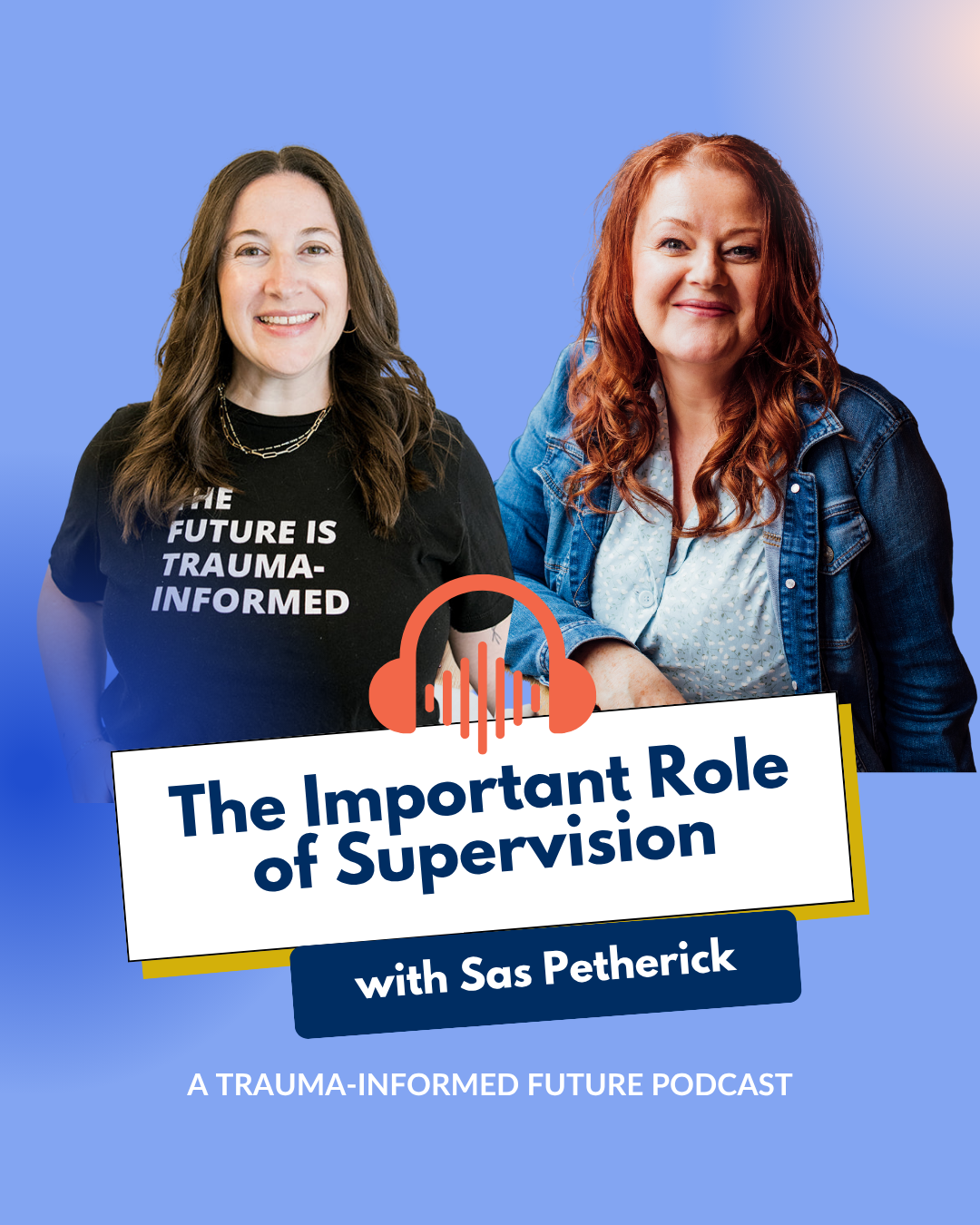
As human care professionals, we usually focus our time on delivering services, promoting our services and maintaining a business. But there is one key element that is essential to your profession that often goes missing. That element is the role of supervision. In today's episode, Katie is in conversation with master coach and her own supervisor, Sas Petherick. Sas helps us better understand the difference between supervision and mentorship as well as highlighting the importance of supervision as it relates to building our competency, confidence and capacity as leaders. This episode is full of helpful resources and supportive tips on how to find a supervisor and what to look for in supervision so you can ensure you are nurturing your integrity, ethics and capacity as a professional working with other humans.
Learn more about Sas:
Sas Petherick (she/her) is a Coach and Supervisor, OBSESSED with helping you heal your Self-doubt. Since completing her Master's dissertation on the experience of Self-doubt, Sas has spent over a decade working with hundreds of coaching clients. She has developed an evidence-based, trauma-informed, ICF-accredited coaching methodology specifically designed to support clients with self-doubt. Sas is the founder of Self-belief School where she helps humans heal the root causes of self-doubt to cultivate tangible and sustainable self-belief, self-acceptance, self-worth and self-trust. She also teaches other practitioners how to effectively support their clients in the Self-belief Coaching Academy. Sas is the host of Courage and Spice: the podcast for humans with Self-doubt. Most days you'll find her on the 'Gram: @saspetherick.
Connect with Sas:
Instagram: @saspetherick
Self Belief School-Self-belief School is a rich and supportive coaching program like no other. You’ll be fully supported to heal the root causes of your Self-doubt, untangle from protective beliefs, and develop healthy internal resources. I want to help you discover who you are underneath your self-doubt. Enrol anytime.
Self Belief Coaching Academy -Self-belief Coaching Academy is a six-month advanced program for experienced practitioners (coaches, therapists, counselors and mentors) who want to support clients through self-doubt. Evidence-based, trauma-informed, and ICF-accredited, graduates have called this the best investment they've ever made in their coaching practice.
Courage and Spice Podcast-#1 Podcast for Humans with Self-Doubt
People/Things Mentioned In This Episode:
Show Transcript:
Katie Kurtz (she/her): It's not uncommon for you to hear me say that trauma-informed care is not an arrival, it's an evolution. And just like so many other things, it takes practice. That there is no. end it's only a consistent evolution and a growth. Today. I'm really excited to have one of my dear friends, colleagues and my own supervisor, Sas Petherick on the podcast to talk about the important role of have supervision as professional space holders. Sas Petherick is a coach and supervisor obsessed with helping you heal your self doubt. Since completing her master's dissertation on experience of self doubt, Sas has spent over a decade, working with hundreds of coaching clients. She has developed an evidence-based trauma informed ICF (International Coaching Federation) accredited coaching methodology, specifically designed to support clients with self-doubt. Sas is the founder of Self Belief School where she helps humans heal the root causes of self doubt to cultivate tangible and sustainable self-belief self-acceptance self-worth and self-trust. She also teaches other practitioners how to effectively support their clients in the Self Belief Coaching Academy. Sas is the host of Courage and Spice podcast for humans with self-doubt. Of course, always eager to share interviews and conversations with these trauma-informed leaders. This conversation with Sas is so important and so relative right now. And it emphasizes the need for collective and community care. And the need for professional space holders to have spaces held for them. I'm excited to share this very informative and resource filled conversation with you today.
We are heading into the end of 2023 and as this time of year approaches, I want to remind us to remember to support and shop small, creators artists makers service providers like myself. This is a helpful time of year to really show up and show out for your community. If you're looking for any holiday gifts or end of the year gifts, Hanukkah gifts, whatever, it may be. I have the Contain Card Deck which is a 40 card reflective tool, all hand illustrated to help you hold space for yourself and for others. It's a beautifully illustrated card deck. It's a great gift for yourself or maybe for somebody else, this card deck really helps us be with what we're feeling , it offers permission to be human, to offer a little more grace and to go a little deeper into reflecting just all the feelings we have as a human being and to learn how to build our emotional capacity, our relational capacity and our resilience. And so the Contain Card Deck is a great gift if you are looking for something again for yourself or for others as we enter this, whatever holiday you celebrate, or maybe you don't, it's just a nice time to treat yourself. And you can find that special sale for this end of year at containdeck.Com or go to the show notes and find that as well.
I'm also really excited I really got a creative buzz recently and decided to create some fun trauma informed apparel. So t-shirts mugs stickers. If that's your thing. I have some really fun little designs that also could be fun gifts for yourself or others this time of year. So you can go to katie-kurtz.com or again to the show notes, to find some trauma informed apparel, to rock that out, to help us co-create a trauma informed future. So some fun things to consider. Again, all these things are unsayable and available now through the end of the year. I want to just to remind you all and I will continue to, because reminders are always so helpful. So without further ado let's go ahead and get started with this conversation with Sas Petherick.
So let's go ahead and get started
Katie Kurtz (she/her): Hi, everyone, and welcome back to a Trauma Informed Future podcast. I am your host, Katie Kurtz, and I am so excited and I have been very eager to bring on today's guest, Sas Petherick. I'm so happy to have you here. I can't wait for this conversation because I know it's going to be a good one. So welcome.
Sas Petherick (she/her): I'm so happy to be here, Katie. Always love chatting with you and yeah, to do this with a record button on just feels fun.
Katie Kurtz (she/her):Before we get in, because I know we were chatting prior to hitting record and there's just so much I think , we can delve into, but I'm just curious how you're arriving here today.
Sas Petherick (she/her): Such a good question. I feel disrupted this week as we go to air, I guess is the fancy way of saying it. We're deep in the heart of this conflict in Gaza, which feels horrific and heartbreaking. And I feel both wanting to hold, the joy and the light of. The work that I get to do and you know how lucky I feel in my life and also this disruption that is going on that brings me back to my humanity, really and I guess I'm just holding both of those things and feeling like, the complexity of our world just, it feels like it keeps escalating.
And this is just another example of that, but I guess it's. Yeah, it just feels, I have Jewish friends and folks who are directly impacted and I'm just holding all of it really. And I know many of us do that. So yeah.
Katie Kurtz (she/her): Yeah. Thank you for sharing that and naming that I think that's a really beautiful segue into what we want to talk about today or what we discussed talking about and seeing where it takes us.
But when I think of the art of coaching, the coaching in its most integrity based form, I think of you. You're somebody who I, in my coaching journey, grew up listening to and learning from. And because you have such a strong, background of education and training and qualifications, and then you lead your work out loud, right?
You are very integrity based, ethics based, inclusive, etc. And.., just so much experience in a coaching industry that still is very, it's in ways it's been around a while, but it's still very new, right? And we have a long way to go, which is a whole other conversation, but,, you hold space for so many people in a variety of ways, but especially with coach training and in your work with the Self Belief School.
And I'm curious, you know. We're holding space for so many people as coaches, but we also need to hold space for ourselves so that we can continue to show up for our clients and our communities. And so how do we do that when the world is escalating fires upon fires? We were recording this during the time of, immense conflict and witnessing history unfold before us.
Genocide and harm and dehumanization. I live in the U. S. and I'm waking up to manhunts of shooters and like constant mass shootings and human rights and my right to health care being stripped away potentially next week during elections, like so many different things. And then we have to show up and go to work.
We have to, make a living and I'm curious, let's start there with that giant, huge thing. But, how do we do both? How do we hold the context and nuance of holding space for others and ourselves while we let life go by?
Sas Petherick (she/her): Such a beautiful question. I don't really think I have any answers other than to say, my instinct is always to come back to compassion, like for myself and for others.
Something that I've been thinking about a lot in a, one of my teachers offered it to me is how much of that battle energy we internalize, how often we go to war with ourselves, or we. Try and argue with reality, and what would it be like to offer ourselves compassion instead?
Just to notice, oh, here I am, arguing with reality, wishing things were different, and what might it be like to, go on a peacekeeping mission internally? And that has really stayed with me, that idea that I could do that. That was that is something that is actually within my control and that I have some agency over what I've noticed since, attempting imperfectly to adopt that as a practice is that everything feels a little calmer inside.
So I don't feel as I feel disrupted, but I don't feel dysregulated. And I noticed the nuance of that within myself, like it's okay to be heartbroken and feel that despair sometimes to what we call empathic distress. When we know that our big hearts are being ripped open and there isn't very much we can do that really.
The only way to respond to that is to offer both ourselves compassion and to seek out others who can help us feel that we are part of something that is greater than ourselves. So I, I offer that and I don't know if that helps other than to say, we aren't supposed to deal with this on our own.
None of us are heroes, like any myth that, there is a lone wolf hero, superhero out there who's going to solve this. That's a lie. Instead, it is this very collective, collectively held beliefs. And intention and behavior that offers an alternative, that's the thing that is going to resolve all of these situations and very complex challenges that we face.
Katie Kurtz (she/her): I've been thinking a lot about empathic distress. And you've really catalyzed a lot of that thinking around how, most of us get into some sort of human care helping profession because we have a lot of empathy, we learned empathy, likely from a young age and it's something that drew us. To a profession that holds space for other people's humanity and in a variety of ways, and I think when it's an incredible gift to be able to do that, but it can also be a challenge when things become intense, whether it's in our own personal life, our own season of life, it's in the collective, or if we are in it.
We're in the process or we're feeling like the edges of burnout with our work or the have, just the, if we're entrepreneurs the rollercoaster of things that come up with entrepreneurship and, self doubt and all the things that you specialize in, I, it can be a lot.
And that I know from experience being a highly sensitive and empathic person that it. Can feel a lot. And it's like, where do we go with all this? Where do I take it? And not to give to someone or to dump on someone, but just to, to bear witness to, and then say, how can you help me sort this out so I can rearrange or renegotiate or even set down so I can continue to show up.
And I think for me, it. I know the power of either seeking out a coach but more importantly, a mentor of some kind and supervision, and I'd love for us to discuss maybe the difference between mentorship and supervision. I sometimes use them interchangeably, and I'm curious if you do too, or if you see a distinction between the two and just that importance of having, Spaces to be held in as professional space holders, and I really quick just want to, I know you and I know what that term means, but sometimes space holding is still a like various real thing, but you know if you're with other people to.
Listen and be with them, not to fix, judge, or solve, then you're holding space, and many of us are professional space holders in that we're coaches, or facilitators, or body workers, therapists, etc. We're professionally there to be with other people and hold the moment and compassionately inquire and hold space for them.
I always like to give a little bit of definition there because it can be a little out here, but yeah.
Sas Petherick (she/her): Yeah. I do see mentorship and supervision quite differently, but that might just be because of my training. I don't necessarily think that's the right thing. But I see mentorship is much more of a how can I help you get to maybe where I am or.
There is a sense of being a few steps ahead and leading someone along. Whereas I feel like supervision is more about meeting the person where they are and helping them make sense of what's happening now. So that, that's the distinction I make. But I love the segue into this, that it's really about as space holders.
What do you need to restore yourself so that you can show up to that work? Fully resourced, really. Like I think supervision is the best thing in all the years I've been coaching and working in this way, it is probably the one thing that I can say has fundamentally helped me to keep showing up
more so than anything else that I've really And for me, supervision is this very safe container, it's a psychologically safe container between two professionals who, and the supervisor offers to the coach or to the space holder, a place where they can reflect on the professional aspects of their work.
But also their personal wellness and well being. So it's where you get to reflect on your client works of what's, what might be going on between you and a client. Sometimes that's quite tricky to understand. There are power dynamics and, all kinds of things that are quite subtle and often unconscious.
But you get to hone your skills and deepen your craft and resolve challenges, restore yourself, explore some of the unknown unknowns, right? When you're, particularly when you're first starting out. So you as a practitioner end up, the intention is you walk away feeling a bit more resourced, a bit more Oh, I've figured something out here.
I've untangled something. And so I think it can be incredibly supportive, particularly if you are not that confident about your skill set just yet. If you're in that place of, like the first couple of hundred hours of any space holders journey is, it can be a bit ropey, right? We're a bit like, what the heck's going on?
Am I doing this right? What don't I know yet? And we're often quite hungry for support and help and mastery. We want to get there pretty quickly. And I think this is a way that you can do that, particularly in an industry like coaching where, it really is self regulated.
There's a kind of no bar, low bar for entry. We don't require practitioners to have any training, reach any level of competency, have any kind of ethical standard, right? Yeah, and unfortunately, I think what has happened is that many of us have equated mastery with income level, popularity, success, those kind of external measures, What I found is the opposite is true that often there are deeply competent practitioners who are hiding in plain sight, because they're often the folks that aren't shouting from the rooftops, they don't have very much ego involved in their work. And I think we get to choose what we stand for.
And if we have someone who is walking alongside us as we do that and helping us to feel resourced and to have that sense that no, you are doing it. This is competency. You are growing your mastery. Every time you unstick yourself from an issue with a client or that you are sitting in yourself.
That is one step closer. So yeah, I'm a huge fan of supervision. I think it's. One of the most important things you can do for yourself as a practitioner.
Katie Kurtz (she/her): Yeah. I completely agree. I come from my social work background where supervision is, it's just part of our career path. It's different though, in that we have to have supervision when we first start to ensure that we're meeting The requirements of receiving guidance to obtain a certain licensure.
So it's very similar, but then supervision typically ends once you get your, required hours. And it's I hold a supervision, vision designated license. So I have offered that over the years and continue to do that for other social workers. So I'm very familiar with providing that kind of space for people.
And when I think about it in the coaching, I didn't see it necessarily discussed right away, but I experienced it because I was a part of a training program that really values ongoing learning and support. I've always found it interesting though, how generally speaking in the coaching industry, I, when you were talking about how it's self regulated I started to get a very visceral feeling.
So I'm like, oh it's true. And also it makes me very nervous because it's just a lot. And I just became really curious over the years of why supervision isn't discussed more, offered more, and you talked a lot about having this as a beautiful way to get started and really help guide you in the beginning, eight years into coaching, I still feel like I need and desire supervision as somebody who is there.
Often providing it to other people, but I , always value having spaces and supervisor and people to hold space for me. I think very fondly of my first social work supervisor, Nancy Schaumburg, big shout out to Nancy. I love her. I was just talking to her the other day. She's still somebody I know and look up to as such
a beautiful mentor in my life. And I've been in social work for 15 years and I still love connecting with her and just having that space, to be held in. And I think for coaching, I, in transparency, worked with you with supervision and it's such, it felt like such an exhale oh, It's like such a beautiful space to be held in.
And so I'm curious if you can talk a little bit about, yes to new beginners, but what about those of us who are like in it, who sometimes think, oh, we're good. Like we don't need that. But now we're facing, we're maybe fatigued by what's going on in the world. We're feeling the same feelings our clients are feeling.
So we're now holding a lot of extra stuff. And how do we support people who are fatigued? And, I know you talked recently about just. The online business space this year has been quite interesting. And so we're also navigating the business and the clients and the art and the craft and all the things.
And things might start to feel differently for those of us who've been around for a while. So what do we say to those people, those of us like myself who are in it?
Sas Petherick (she/her): Yeah, well, I have supervision every month. Have done for 12 years. Yeah, I just I think it's a possibly a symptom of our culture where we're supposed to get to a place of certainty and competency.
And I think we just never do. So don't hold that as a standard for yourself. Instead, just ask for help, right? Because it just feels really freaking good to not be so alone in it. Yes, that is a good enough reason, and I know for me, and I'm a pretty self reliant cat when I, when I get into that place, I can shut myself off pretty easily and not ask for help.
I can forget that I need help. But I do, and you're right. I think that we need help with different things at different stages. Like often when we're getting started, we need like, how the hell does MailChimp work? And what's an opt in? Like we need help with that kind of stuff, right? And the, often the existential thing of, can I actually do this work because I haven't done it before?
Like this is the new stuff. But as we move through, more experience and, we get those first couple of hundred hours of client work under our belts, I think. We need support to make sense of different things. But I've yet to meet a coach and my supervisor who's been coaching for nearly 40 years.
Has supervision and she is always saying, you just never done you done when you die. So I love that. And I think it really appeals to a value I have of lifelong learning. I don't want to get to a place of complete mastery because I know that's actually a pretty stagnant place for me.
Like I would rather keep learning. I would rather. And thank goodness for clients who rock up and teach us, all of our blind spots and the things that we thought we were, we had figured out, clients will often offer us a curve ball and then we get to go deeper or go to a new level or layer of something that we feel a bit stuck around.
But I think there's never a time when you're not going to need help. So almost give in early would be my advice. But I also think, the thing about any kind of human care is that we are the most important part of that is that it's human care. Like we are not moist robots.
Otherwise, if folks who want that kind of support would be talking to chat GPT, right? Because they can ask those questions now and get some reasonably good answers, but there's no empathy involved in that. And so that's the thing. That's the human connection. We bring our own history and experience, our own trauma and our privilege to every client we work with.
And I think that, with experience, we'll probably get better at noticing when we feel a bit activated or we're just a bit overly invested in our clients. We might get a bit hooked into their situations or emotions or stories. We might feel the urge to rescue some clients, or maybe we find we're holding back and not saying something because we worry about being liked, right?
Because who hasn't had that experience? It might just be that your client's a bit stuck and you're running out of ideas. Like these are all very human. responses to helping someone else figure something out. And I think this just, to me, this is just, oh, we're a bit, you're a bit entangled with your client.
That makes sense. So that's inevitable. And when you have supervision, you have a place to go to figure out what might've happened there. Like maybe the client reminded you of someone and there was a bit of a stress response involved or maybe there's something that's a little bit unresolved or unhealed for you.
But the idea behind it is that you get to increase your self awareness and get some more perspective and objectivity. And, it's pretty fascinating how we activate each other in different ways. And I think having a bit of a sense of humor about it is super helpful to write, but I think what supervision has really helped me to do is.
embody a state that I call loving detachment when I'm coaching with clients. It means that I'm showing up from a pretty resourced and regulated, what I call the healthy adult self. If I'm coaching from there, if I'm supervising from there, I feel like something, something will happen that's helpful because I'm not I'm loving the client, but I'm a bit detached from them as well.
I'm not overly invested in them. I trust them to figure this out and I'm there to go. Oh, have you thought of this? What's going on here? Kind of thing. Yeah. And that's a really great state to be in. So I'm not, I'm always noticing when am I not in that state? What's going on? And that's a little note to myself to take that to my supervisor.
Katie Kurtz (she/her): Yeah. I love that. And I appreciate. Just going a little deeper into that, and I share that belief in, and value in lifelong learning, and similarly to trauma informed care, I always teach that there is no arrival here. If you're seeking this approach out to check a box, then you're going to be You're going to be upset because it's, there is no box or you're going to, it's going to fall flat and it's not going to work because it evolves as we evolve.
And there is, I think, as a recovering perfectionist, as somebody who wants to check the box, who wants the gold stars. That has actually felt like quite a relief. It has felt like, okay, like I don't have to try to perfect or reach or, continue to strive, but rather be in the practice and something I always end.
trainings when I do trainings on trauma informed care, I always tell people this ending is really the beginning because now it's about integration and embodiment. But I always leave people with the emphasis of seeking out supervision and mentorship, both because with a skill like trauma informed care, it needs to be developed, right?
We don't walk into a cooking class and leave an Iron Chef. You need to like, you need to really practice and flop and do all the things. But also supervision, because as you do practice trauma informed care, things are going to come up, right? You're going to start to see your clients differently. You're going to start, and not in a bad way, but you're just going to start to open your eyes to those subtle nuances in context.
There might, they might bring things up that you're, you may be like, I, do I do something? Do I not? Do I refer? That is a beautiful thing to bring to a supervisor or into a group supervision space so that you can talk about ethical dilemmas, talk about scope of practice, that those blurring edges that may get You know, you may get close to, which we all get close to, or the entanglements or the enmeshments.
That's what supervision is really about. And the mentorship is really that skill honing and mastery, which mastery is as an ongoing thing, not a level. So I am always imploring people to find those spaces and they get it by the end, they get it. But here's the thing that. Always comes up and I would love to hear from you is how it's a two part thing.
Great. I want supervision. How do I find it? Who's doing it? Where do I go? And how do I know who is qualified and who to trust? Because, and I can speak from experience Julie Johnson, a few episodes ago, and I talked about self vetting, this idea of how do we learn to vet. other people, practitioners for ourselves, especially if we have histories of trauma that disconnect us from trust.
And If we have a history of trauma or self doubt or distrust in ourselves, it can be hard to find who's, discern who's best, and sometimes we think we know, or we fall into a belief, and then we end up getting, harm occurs because it was the wrong person. I'm curious, it's a double question.
Where are the supervisors? Where, who do we go to? And then how do we, and maybe this can lean on your expertise around self belief, like how do we then trust ourselves in finding the right people for us?
Sas Petherick (she/her):Yeah. I'm going to ask this, I'm going to answer the second part first, if that's okay.
Katie Kurtz (she/her): Yes, absolutely.
Sas Petherick (she/her): So what I would say is you can trust yourself, right? You really can. You can take your time, interview some people, ask for referrals, You can do that and you can trust yourself and I would also say allow it to be an imperfect process. Maybe have a couple of sessions with someone and see what you think.
The supervisors I know, will quite happily take someone on for maybe, three sessions. With no obligations or maybe even do one free session just to start with and you get a feel for a person right like anyone any person that is offering you support and in any way you get a feel for a person and you can trust that.
And if at any point you feel like this isn't working out, you can talk about it with that person, and their response will reveal a lot about whether they are the right person for you. So I would say there's no rules about what kind of, what you should look for when you're seeking out a mentor, it will depend on where you're at in your development, what you're looking for, what really matters to you.
I know for me when I first finished my graduate program, it was really important to me that I had a supervisor. Who understood a developmental coaching framework, because that was my kind of theoretical basis for my work and I was so passionate about it and that was great. So for about two or three years, I worked with a supervisor who was a developmental coach and I so appreciated working with him.
That was fantastic for me. But that has become less important to me over time. And now I'm more interested in someone who has the breadth of experience. Hence, I'm working with someone who is very much in her crone era and really gets the complexity of the clients I work with. And she's also a therapist.
So it just is able to hold all of the different bits of me and my work. Both as a practitioner and a supervisor and you will, whoever's listening, dear listener, you will have your own requirements. So don't be afraid to ask people. What I would say, and I'm super happy to share with you, Katie, that there's a couple of global registers of qualified supervisors that are great.
To just seek out someone in your area. You can even meet them in person. Remember when we used to do that? And you can also find someone who works globally and is happy to be flexible around time zones. But I have found that in the UK supervision is. much more prevalent than it is in the States.
I think it's just growing in the States. And in Europe, particularly there, there is a, for anyone who works as a coach in in a government agency, or as coaching someone in a government agency, you need to have a supervisor to be able to bid for that work. So there is a lovely aspect of standard raising that is going on behind the scenes and I think, that is just the maturing of our industry and my hope is that it will continue to move that way.
I think it's certainly a way to set yourself apart from other practitioners who may just not find this particularly important. I think if you can find a supervisor and do that deep work with them that could be a really great way to, hone your craft and really deepen your mastery so that, you are the kind of person that your clients refer their people to,
Katie Kurtz (she/her): yeah. What a beautiful way to to build stronger trust with others like your clients and future clients. I know for me I always go immediately to an about page when I want to learn about somebody. I go to that about page and I want to know who is this person? Why are they qualified? I want to know about them rather than blindly trust or assume That because they have a lot of followers or they're, endorsed by certain people, like I, that's my discernment process is who, what qualifies, what experience does this person have?
And I find that when we are able to put that, have that space held for us, it increases our capacity to do the work or hone the craft we have, like you said. And then that helps us. Even build stronger trust trusting relationships, and it increases our capacity to build safer spaces for people to be in our space because we have that.
It's all about capacity building. How do we then if we're worrying or toying with all these different things and we don't have a space to talk about them and receive support, then it's taking up and filling up our capacity where we're not going to be able to have much more to give. But if we can then, like I said, release it or reorganize it or process it, we're clearing up that space to hold more.
And I just can't under, the, we just can't underestimate the power of that and how supervision is just such an integral part of our process as much as, the email lists and the things like, honing, skill development and supervision, I think are just so key.
Sas Petherick (she/her): And I really appreciate what you said earlier, Katie, about that integration.
I think that's the bit that for a lot of us, particularly if we're pretty high achievers and we love the process of learning. I think sometimes we forget that we need that time to integrate. And I know for myself. I didn't realize how important that was in the first, in my first coach training, I went from one to the other and then another, high achievement.
What I found as well was it really activated that sense of being a bit abandoned when a training would finish and I would basically get by good luck from the trainers. And I thought, oh, hang on, we've just had our last lesson. I'm only just now putting these pieces together. This is actually when I need the most support.
And in the years since I've, I now teach other coaches in the Self Belief Coaching Academy. One of the things we include as part of the cost of entry is you get monthly support until, so after you finish the program, you join our graduate program and there are monthly supervision and support calls and until that's no longer useful for you, there's no time limit on that.
Some people take. months to certify, others take years. Some people just love the community aspect of it. But for me, that always felt ethically really important. If I was ever going to teach coaches, I wanted to offer that space to integrate so that. Exactly what you're saying, you're starting to play with what you've learned and apply it to your practice.
And then you get a curveball and you're like, Oh, what do I do here? If only I had someone to take that to who understood the context. So I wanted to address that. And I, I think that's the thing when it's. When it is a self regulated industry, one of the advantages of that is we get to do this in a way that feels really good to us.
And, we get to put in place what we stand for and what matters to us. So that's always been, I think, one of the advantages for me of being able to do it my way.
Katie Kurtz (she/her): Absolutely. I think there's, it's definitely. I don't sit on the ends of extremes of regulated versus regulated because I live in both worlds.
I have a licensure that I maintain for a variety of reasons, paid a lot of money for that education. So I'm going to maintain it. And it's very regulated and to the point where it has created a lot of harm towards certain groups of people and it's not always. It's not always very beneficial, and it's not always very accessible.
And then I'm in the coaching world where there's no regulation at all, and it can, that feels very, talk about disruptive, that feels disruptive. And sometimes dysregulating. But that's where finding people and spaces and training programs that do Align with your values and ethics. That's where you begin to find and adapt to what that bar is for you. Yeah, which I think comes back to that. That's we reversed it. The second part of the question is, okay, I see the importance, but then where do you begin? And I know you mentioned those those directories, which if I will definitely link in show notes, if you don't mind sharing. I didn't realize that existed.
So that's awesome. I love being able to share a good resource with people, but any other things you recommend for seeking out or maybe some questions to ask people if that's helpful, if they're starting to think out about who they might reach out to.
Sas Petherick (she/her): Yeah, I think, think about your clients and the places you get stuck, right?
What is the kind of support that you actually need? And this is about, this is different from your own, like maybe therapy or coaching that you might have. This is actually about how does your stuff get tangled up with your clients. aNd I think the thing is that you will naturally expand out from that, right?
Because coaching is, as coaching supervision in particular, we look at the whole perspective of the kind of system of coaching. So it's about who you are as a practitioner, who your client is, what's going on between you. Who are the other people that are involved in this, the wider systems that you're both part of and subject to.
So we're looking at the world of you and the client and how they are getting mashed together. But if you just start to think about what is it that, what is the kind of support that you need? Is it very much about. I just need more tools or I need more ways to support people. Is it that I need to feel more confident or I need to feel more competence and what might that look like?
Where do you get stuck with clients? Is there a story you might be telling yourself about your work that you think, oh, if I resolved that, I think that might be the thing that would unlock something for me. Usually we have something that is driving us towards supervision. Even if that is, I just don't want to feel so alone because I work alone, right?
I want somewhere where I can talk about this work. And in a place where everything is on the table. Once you get a sense of what is it you're looking for, you can then look for folks who have that kind of approach to their work. Because, likewise, Supervision isn't regulated either, right?
But one thing I have found is that supervisors do tend to train, right? So coaching supervisors will take the time to invest in some pretty thorough training. I know my own diploma in supervision was 18 months long and it was a kind of, ego death sort of approach. It was pretty cool, but it was very rigorous.
And I think most coach supervisors will have had a decent level of training, but they will also have had quite a lot of experience as a coach. So you can ask them about, the kinds of clients that they work with or used to work with. What is it that they specialize in? What's the approach they take?
Some supervisors are pretty straightforward and very blunt because that's their personality, right? And others will take a much more like collegiate and compassionate lead type, positive regard type approach. Like coaches, right? Like our supervisors will lead with their own kind of personality.
Interview a few people and get a feel for it. I think ask your colleagues and co workers who they use as supervisors. Even I've seen people that I follow put a, request out on Instagram stories and say, anyone got a good supervisor they use? So I think there's absolutely, you can take a pretty kind of potluck approach to this and then use your own discernment to figure out if they're the right person for you.
Katie Kurtz (she/her): Yeah. Thank you for that. I know I refer many people to you for supervision. I know you've offered one on one and also group offerings, and then also your coaching program, which I love that you've integrated that as a norm of the training, which I think is so important. And I know my training with Beautiful You Coaching Academy, that now has also become a part of the norm of the aftercare of training, which, I completed my training eight years ago this month.
And I love when I can make it to those supervision calls. It's beautiful. And it's again, brand new coaches. And those of us who've been around for a while, like It's all relative and it's all is such a nurturing space to be a part of so I love being able to encourage this as a part of the practice.
That's the whole practice piece and find people that you know and I'm eager to see where this will expand more in our industry because it is so necessary and, to have, these questions and just where to start to find people is so important. So I appreciate that.
Sas Petherick (she/her): Well, and I think, Jules Parker, who runs Beautiful You , I adore her and consider her a colleague and friend.
And I think we both share real values around this, that we can't just train people and then go, good luck and wave goodbye from the door. That, ethically doesn't, I'm speaking for Jules here, but I don't think that would feel very good to either of us. I love that Jules is offering supervision too, and I think it's just one of those, again, it's one of those things where hopefully this will become the norm, and I know we both take our learning and our own support really seriously.
So, It's feels good to say, okay, well, this is what I'm going to stand for and how I'm going to show up. And when others start to see that as the norm and more and more graduates of our programs require that for their future learning providers, then great. That's how we mature the industry slowly.
Katie Kurtz (she/her): Absolutely. And just, it feels really good to be supported. This kind of brings our conversation full circle of just how we're arriving here. Like I share that disruptive feeling and that, there's a lot going on. Unfolding globally, but also in our own backyards and also just naming, we're now really feeling the impact of the pandemic like we're feeling that reverberating impact.
And so this just fatigue and. weariness, if you will, it's a lot. And I'm personally craving that support. Like it, it almost feels and I know you talked about, and forgive me, I forget the term you used when you talked about empathic distress when we're in groups of people. Yeah. I'm just leaving my mind here.
Sas Petherick (she/her): Interpersonal synchrony is what it's called. Yeah. It's so cool, right? Like the idea that we synchronize. Yeah. I think it's such a beautiful concept and it's this idea that. It's why concerts and protest marches and sports games have this real surge of good feeling. It's because it's like our mirror neurons where we, connect empathically to each other's experience.
That happens on a grand scale. And so it feels really bloody good to be in each other's company. So we do, we synchronize with each other. I think it's such a Poetic term. And I love the idea that, we are so connected in ways we don't really understand. , but I completely agree that we're only now seeing some of the echoes of the real impacts of the pandemic.
And, I keep coming back to Sonya Renee Taylor says, we don't want to go back to normal. Actually, that was not great for many people. So if we ever learned anything, it's that we have to, we owe each other a lot and we need to act like it. So there is something about that sense of you don't get to be alone, right?
Like actually you're not alone. Wolves always have run in packs. So we have to, take care of each other if we're going to survive the next few decades.
Katie Kurtz (she/her):Yeah, I love that concept, and I feel it so viscerally even just in conversations like this, and when I'm in groups with people, whether it's training live or in person I, it takes a lot of energy to hold space, but it also gives a lot of energy when you're in a shared space, and I think that It's so important and I know it's hyperbolic to say now more than ever, but really now more than ever, we need spaces to be held in to regenerate our capacities to show up and hold space for others.
So I really appreciate this conversation and hope that people take away. Understanding supervision more and maybe start to seek that out for themselves in, in, in whatever way, feels best for them. So I want to close this conversation with my. Take on rapid fire. I've been calling it a gentle spritz.
And why it's a gentle spritz is I give these questions to people way ahead of time so you have time to think and you don't feel like you're in the moment. And you can take your time answering them and in whatever way feels good for you. And then I'd like to just close with you sharing any helpful information about you, what you're offering so people can connect with you, your podcast, all the amazing things you do.
I always like to start with this question of if you could describe trauma and form care in one word, what would it be?
Sas Petherick (she/her): So to me, it's compassionate. And just to expand on that a little bit, because one word is never going to be enough for me. I know.
Katie Kurtz (she/her): I don't know why I asked this question because I know people like simplicity.I can never answer anything in one word. It at least has to be three or more. So yes, please feel free to expand.
Sas Petherick (she/her): Well, I think the thing that I really love about compassion is it's quite robust. Compassion isn't coddling, but I think it gets a bad rap, right? Compassion is kind of like, Oh, you can stay on the sofa and never leave.
And just you sit under that pile of Dorito dust and you'll, and it's okay. That's not compassion to me. That is coddling, right? Compassion is honey. I know you want to lie on the sofa all day, but we got shit to do and you'll be okay. And it's like A really healthy adult response to the world because heck knows we all want to, crawl under a blanket for it from time to time.
But there is something about the people I know who are survivors of trauma are often deeply driven, right? There is a sense of mission from that experience. Where they have a the richest sense of humor and often a sense of this is not going to define me. I am going to do some shit in the world that is good.
And so I don't think that's everybody, but I think there's something about for those of us who feel a real calling to this kind of work that, yeah, if we can hold compassion for ourselves and for each other. And for our clients, I think that's a world I want to live in.
Katie Kurtz (she/her): Yes, me too. What is your current go to for nervous system care tending?
Sas Petherick (she/her):So I am learning how to breathe into my belly, which is way harder than it sounds. And I found it almost embarrassingly hard to breathe into my belly. I actually have to pause and concentrate and it always makes me feel more expanded, more, more kind of present, all of it. It's really good. So I'm intentionally breathing, which I think I find the irony of that.
So poetic, because I think so many of us, we do these things without really thinking yeah.
Katie Kurtz (she/her):I always used to roll my eyes when people are like, just breathe. I'm like, okay, well, who has the time or what is it and then really learning and delving into the different types of breath and the power of it.
really helped me control my judgy eye rolls. And I always name that. And I share that with people because I think that happens culturally. We're like, yeah, I'm breathing. And it's but are you breathing? Do you notice you're breathing? And I think too. I will admit in the past, I was like, how much can a breathing really help, right?
Don't we need something that takes a long time and we have to, really work for it, but really it is so simple and so accessible to us.
Sas Petherick (she/her): And my meditation teacher is always like, Sas, if you can't breathe. What the hell else are you doing right? So if we can't get the simple stuff, In a way that is actually supportive, then lower your expectations.
So I'm humbly learning to belly breathe.
Katie Kurtz (she/her): Love it. And lastly, what does a trauma informed future look like for you?
Sas Petherick (she/her):I really pondered on this question because I think we're going through a bit of a reckoning with trauma I've just turned 50 and I grew up in the 80s where I think most of us had a pretty kind of benign neglect version of trauma in our parenting experience.
And the pendulum has swung from. We don't call that trauma. What do you even mean to everything is trauma . And I think we have to have a bit of a sense of humor about that because sometimes it's pretty funny. But my hope is that we have a bit of a settling of that pendulum somewhere in the middle where it's a bit balanced and discerning.
My hope is that at least trauma is part of our conversation. But it's something we care about and we want to do right by. I hope that it helps us to collectively put down our armor a bit. And all the ways we defend ourselves against getting hurt, against getting re traumatized or re hurt in some way.
So that we respect each other's experience, respect that everyone's coming to the circle with their own stuff. And, I really want that to lead to more healed humans in leadership roles. I Think that will change how our cultures and our systems operate where they're more inclusive, more diverse, more respectful, more curious about each other.
I think that's where we get a real breadth and depth of stories and in a sense that we need more of our humanity in any kind of decision making role. And that needs to take into account. The trauma we cause our planet as well. So I'm all for all of that. I think a trauma informed future broadens and deepens.
And it leads to the kind of world that we want to live in.
Katie Kurtz (she/her):Yeah, absolutely. Thank you so much for being here and being in conversation with me. I so appreciate it. And I would love for folks just to know how to connect with you, learn more about your work. Maybe learn about your supervision or your coaching program that offers that as a good either resource for themselves or others and anything else you'd like to share for people to connect with you.
Sas Petherick (she/her): Thanks so much, Katie. At the moment I have two main offers. One is Self Belief School, which is for anyone who has self doubt and I'll take you through a program to support you to make sense of that self doubt and unhook from it and build really robust self belief. It's all evidence led and trauma informed.
It's a really fun program. So you can check that out at selfbelief.school. And I also have an ICF accredited training program for practitioners called the Self Belief Coaching Academy, where I share my coaching methodology with experienced practitioners. It's a six month program. We run it once a year. And that includes as much supervision and support as you can handle. and it's super fun and you always meet like great great practitioner pals people have described it as being like a paradigm shift in their work. And I am both slightly nervous to say that, but also makes me beam with pride as well.
And I've poured my 15 years of experience and training and education into that program. So they're the two ways to really work with me. And I yabber on about self doubt on my podcast, which is Courage and Spice. And most days you'll find me on Instagram. And I'm just @saspetherick on there so come and get connected.
Katie Kurtz (she/her): Yes. Thank you so much, Sas.. I so appreciate you and this conversation and I share that vision of a trauma-informed future with you. So thank you so much.
Sas Petherick (she/her): Thanks Katie.
