

Practice the Pause: A Trauma-Informed Micropractice
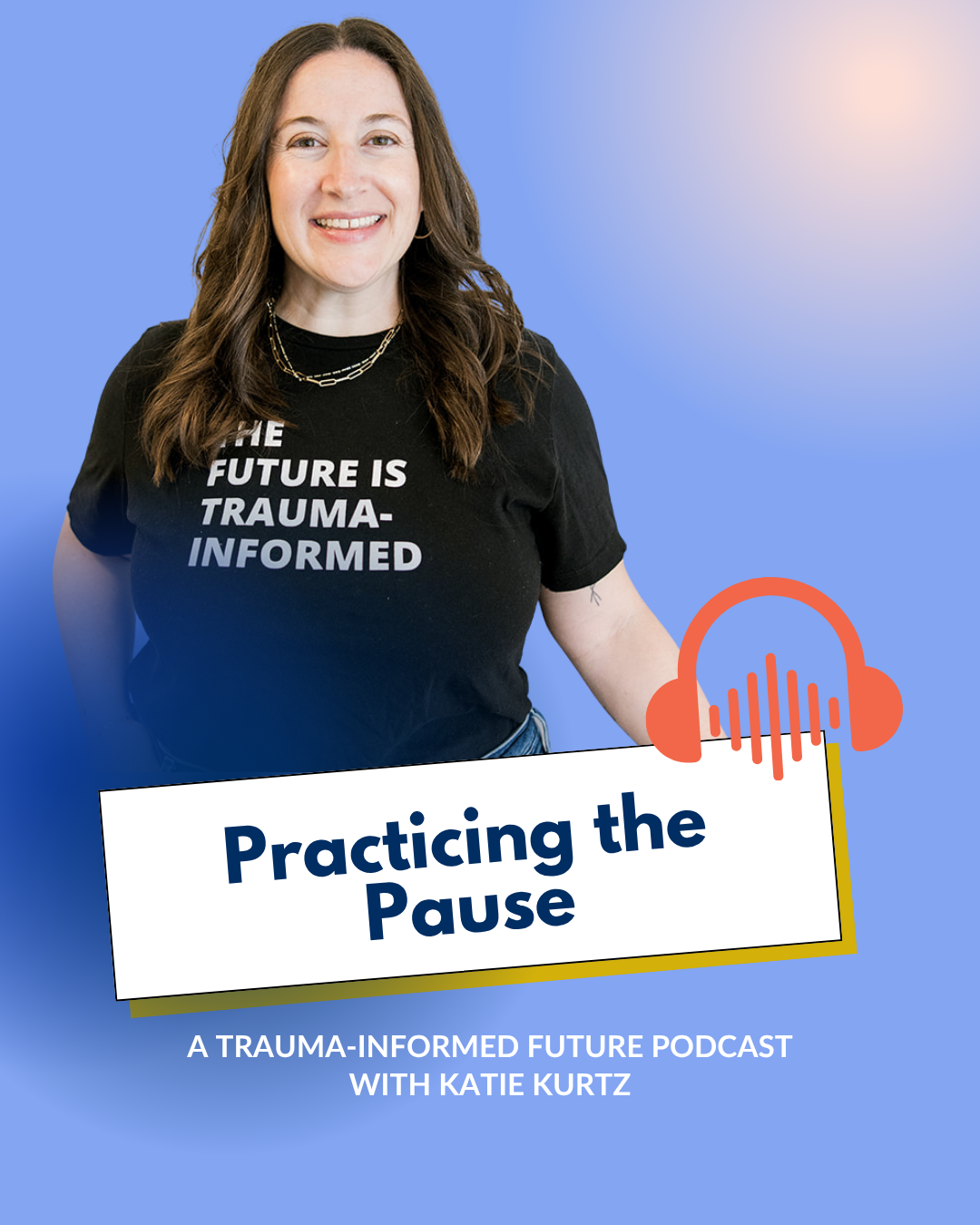
This is a pause week on the podcast as Katie gets ready to celebrate her wedding! Instead of a full episode, today is more of a reminder and invitation for all of us to practice the pause. Practicing the pause is a way for us to literally press pause and slow things down. In a culture of unnecessary urgency and being surrounded by our own stress and witnessing collective trauma, we can all benefit from this practice. In this invitation, Katie shares a little about this simple but powerful, trauma-informed micro practice. We will be back next week with an all-new episode!
Show Transcript:
Katie Kurtz (she/her): Hi everyone and welcome to A Trauma-Informed Future podcast I'm Katie Kurtz. I wanted to come on here this week to let you know that this is a pause week. This week I am actually getting married on Friday, November 10th is my wedding. And so I am taking this week off, you'll receive a new episode the following week.
And so I thought collectively since I'm pausing the podcast this week that I could encourage all of you to also practice the pause. Practicing the pause is something I talk about a lot and I insert a lot into the trainings and workshops I lead. I inserted into almost everything I do. Not just because it's so important. And it's definitely not because I'm really great at it.
To be honest, I'm not good at it. Pausing is hard for me. It's hard because I have a lot of things going on. Many tabs open in my brain if you will. I'm used to a more fast paced environment, a work environment, a life environment. And I live in a culture of unnecessary urgency, and it's hard to divest and detach from that pace that feels fast quick and urgent all the time. And so it's a practice.
That's why I call it, practice the pause and I too need it. And that's why I inserted in lot in so many of the things I do. We're living in these times. I talked about this on our previous podcasts, where there is so many compounded collective trauma occurring all around us, and then we have our own lives and our own things happening.
And maybe there isn't a lot of stress in your personal life right now. And if that's the case, that's great. It's not something you should feel bad about or guilty about or shame around. The reality is we can all benefit from pausing right now. And so I wanted to come on here and invite all of us to practice the pause. And this can look like a variety of things.
It might be just turning this some podcast off and taking a break from it for the week or returning when you feel called to it might just look like taking a deep breath there's so many different ways to breathe. And sometimes a simple inhale, exhale will do. I personally love a good sigh. Ah, just to like audible sigh, let it out.
I do it all the time. It feels so good. Maybe your pause looks like going outside or just moving anywhere, different location, different environment. Pausing doesn't have to look or feel a certain way. There's no right or wrong here. It's just taking a moment to stop what you're doing and slow things down.
We can often think of trauma as too much, too fast, too soon. So practicing the pause is a radical act of compassion and counteracting, this culture we're existing in. And however you can pause today, maybe in this moment together. Maybe sometime today or this week, finding moments to insert that pause, do it together.
Or maybe it's before a meeting or before your next call, just to encourage people, maybe it's during it, just taking that moment to slow things down to honor our pace and to remember because trauma informed in essence as a remembrance -a remembrance of our humanity. A remembrance that we have choice . A remembrance that we have the ability and the right to feel safe and the right to be autonomous.
And so pausing is such an invitation to remember that. So I will be back next week with a new episode for you in the meantime. Enjoy this pause. I hope you can find rest in all its forms and I will talk to you soon
