

Exploring Psychological Safety with Debra Cady
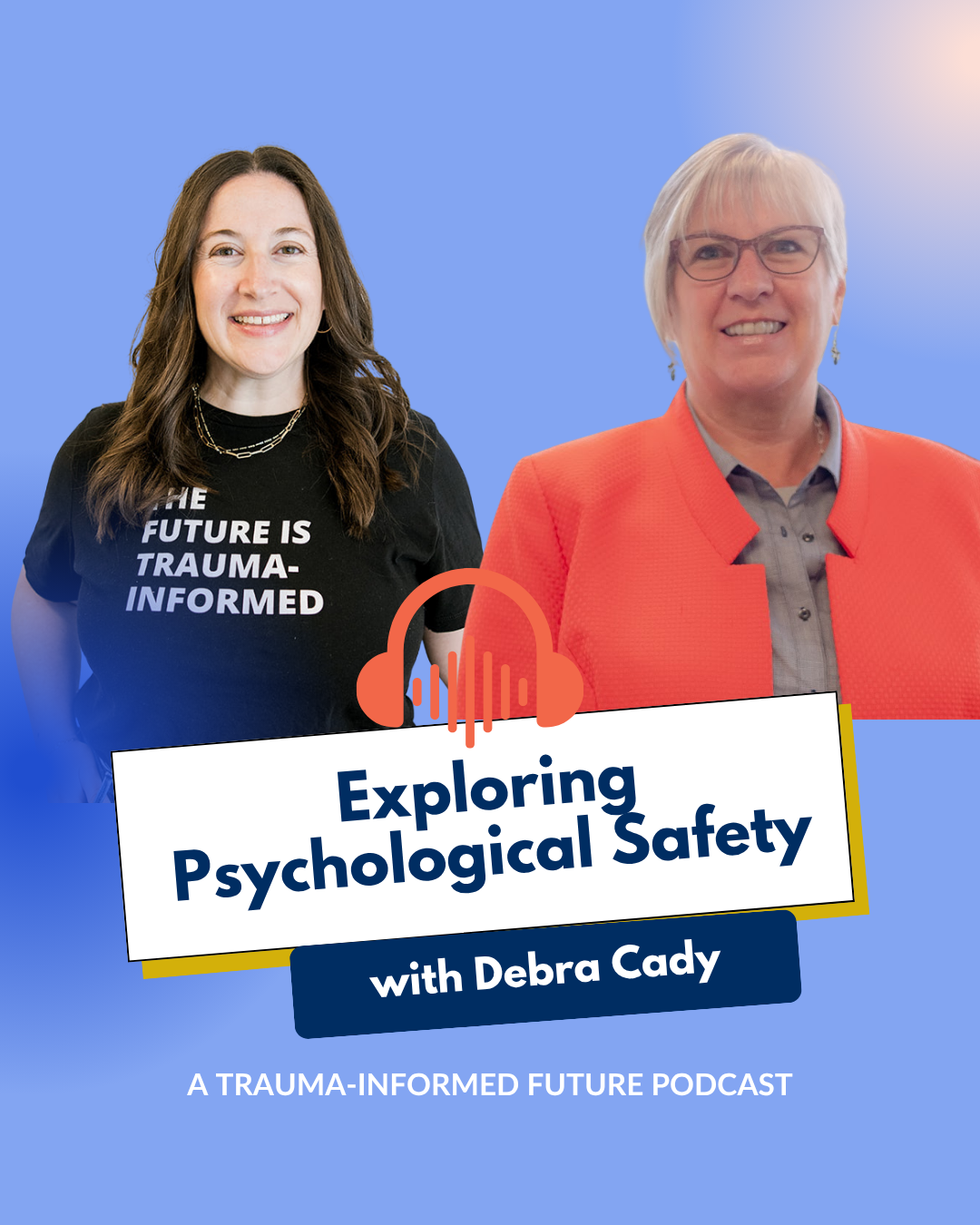
Psychological safety is paramount in any environment, especially in the workplace, as it fosters a culture where individuals feel safe to express their thoughts, ideas, and concerns without fear of embarrassment, rejection, or retribution. This sense of security encourages collaboration, innovation, and learning, as team members are more likely to share creative solutions and admit mistakes that can lead to improvements. In today’s episode of A Trauma-Informed Future Podcast, host Katie Kurtz is in conversation with the CEO of Silver Linings International, Debra Cady. Debra helps us explore the importance of psychological safety and understand how when it is prioritized, it can enhance overall mental health, reduce workplace stress, and increase employee engagement and retention.
Learn more about Debra Cady:
Debra Cady, LCSW, is the visionary founder and CEO of Silver Linings International, LLC, a certified woman-owned small business specializing in catalyzing positive transformations for individuals and organizations through targeted training and consultation. In her impactful role as a former Public Health Advisor with SAMHSA, Debra pioneered the development and oversight of the Healthy Transitions Initiative grant program, specifically tailored for transitional-age youth with behavioral health challenges.
Serving as an Assistant Professor at Georgetown University, she delivered essential training and technical assistance to SAMHSA's child and adolescent System of Care and Healthy Transition grantees. She provides virtual courses like Trauma-Informed Supervisors, Trauma-Informed Youth Engagement, Advanced Practice for Leaders: Cultivating Emotional Intelligence, Trauma-Informed Facilitation, and Launch My Idea Academy to name a few as well as, strategic planning using appreciative inquiry, customized trauma-informed team building workshops, and coaching/consultation. With over 40 years of experience in the mental health, child welfare, and juvenile justice realms, Debra remains steadfast in her commitment to incorporate trauma-informed principles to effect meaningful change wherever she goes.
Connect with Debra:
LinkedIn: https://www.linkedin.com/in/debracady/
Facebook: https://www.facebook.com/profile.php?id=100049090130268
Top 5 Effective Ways Trauma-Informed Supervisors Retain Their Staff White Paper
Resources Mentioned In This Episode:
Show Transcript:
Katie Kurtz (she/her): Hi, everyone, and welcome back to A Trauma Informed Future podcast. I am excited to be in conversation today with Debra Cady. Welcome, Debra so happy to have you here. You have such a breadth of experience and have been doing this work for so long and bring such a rich and dynamic approach to trauma informed care.
And so I was curious if we could just start with my favorite, shared language and understanding. So there's a big. a term kind of being utilized a lot lately which is great and also can often be misused or misunderstood. And that is the concept of psychological safety. And I was curious if we could just start by talking let's unpack that.
What is that, what are people talking about, why it's important and why we're even seeing it discussed so much. Obviously safety in all its forms, but psychological safety specifically.
Debra Cady (she/her): Thank you. I think that the reason that psychological safety is [00:01:00] become so important in the workplace is that people need to feel free to fail and make mistakes and learn and rebound from that and when people aren't willing to share with their bosses or supervisors that they actually made a mistake, it can have dire consequences for an organization, especially if you're a nurse, if you're a doctor, you're a therapist, you could be a machinist, right?
And the idea that we As a workforce are afraid to actually be human and part of being human is making mistakes. And so I think this idea, Amy Edmundson has done so much work on psychological safety and and I think probably just bringing it to the forefront there. And then how do we apply that to all workforces.
Katie Kurtz (she/her): What you said, it brings such an important thing we need to really emphasize is [00:02:00] that we're human first and that we are going to make mistakes. We are going to fail. We're going to change our minds. We're going to think something's going to work and then we have to course correct.
And Especially in high stakes careers and workplaces, whether it's, emergency or medicine or whatnot those mistakes and failures could be life or death. However it can create so much strain and stress for the worker, no matter the career that it can shut people down.
If we don't have outlets of safety to express ourselves, to share, to access feedback, then it perpetuates an unsafe work environment, not just physically, but psychologically. And I think that's such a great point. And, I'm thrilled that we're seeing more and more people discuss psychological safety from an HR perspective.
Obviously, there's a lot of benefits. I always say, , when people, feel safe, the possibilities are endless, right? And I'm curious if you can share [00:03:00] maybe, little insight into your work and why psychological safety especially is such a something we need to be keeping top of mind.
Debra Cady (she/her): I think the prevalence of trauma in the general population is so high right now. COVID really uncovered a lot of stuff and it actually began a mainstream conversation just about what it's like to, have bad things happen and your normal routine, whatever you were experiencing, it is completely gone. And so we have a workforce that was okay. We have to work differently and now we're not in the office or maybe we're in the office or maybe we have hybrid and like a mass confusion about.
What is work and what is work in the workplace and how is it safe? And so people resetting and recalibrating cause this mass exodus out of the workforce. When people are like, this is [00:04:00] too much stress. I went home when I found ways to decompress and I can't go back into that toxic environment. And now people who are going into the workplace experiencing a lack of psychological safety, they're leaving again.
Retention is, really become very difficult. And I think that, the idea of, How important it is to have that psychological safety in the workplaces so that everyone can thrive.
The workplace has actually, in many cases, become a place where trauma is occurring. And it's if you're stressed at home and you're stressed at work, that's a really bad combination for people's mental wellness. And, I think that, accounts of depression and anxiety rates of suicide, all of those things are up and I think that the workplace right now it demands our attention. [00:05:00] People, have the right to feel psychologically safe at work.
Katie Kurtz (she/her): Let's talk about stress for a minute, because I think, and I'm sure in your work, Get this a lot too as I do is the people hear the word trauma and they're like, oh, that's not me, right?
It's like the cringe or oh no, that doesn't happen here. That's not relative to my work But we all know that trauma is a reality of our humanity, even if it's not related to your work It's related to humans, and if you work with humans, which we all do that it's important for us to really understand what trauma is, but all of us know what stress is, because stress is literally how we get through every day, right?
The positive, the tolerable, the toxic stress, hopefully we don't have as much exposure to, but the reality is living and continuing to live in a pandemic, which is a historical trauma, that accumulation of stress, that compounded nature of one thing after another, is a reality for the majority of people on the planet, not just like in certain areas, right?
I think stress is [00:06:00] a little more relatable because people can pinpoint I know what stress feels like in my body. I know that stressful time. And I'd be curious to hear your thoughts on this, of this idea of, yes, we're dealing with stress at home and in the workplace, but it's not just regular stress, like a project's due, or we have a test, or we have a surgery coming.
It's toxic in that it's accumulating. It's one thing after the other. not just within maybe our day to day work, but the culture collective, especially here, we're speaking from the context of living in the U. S. And then our home stuff, right? Our kids, our caregiving, our health, our mental health, all of it.
I posted something on LinkedIn recently that says, I don't think we've completed the stress cycle which is. coming from Emily Nagoski's book, called Burnout. And I'll link that in the show notes. It says, I have a day of completing the stress cycle, and it shows. And I think I can see it when I'm [00:07:00] driving and people, I'm just like where are you?
Like, where's your head? What's going on? I can see it when I talk to people , in customer service, in healthcare, all over, just in, in everyday, life. And it's showing and I'm wondering, like, when are we going to start, when are we going to talk about it? When are we going to start, inquiring and getting conscious of this accumulation of stress?
That's continuously accumulating, like it's just going to continue. Have you seen that and are you noticing people talk about it? Are you noticing people just being like, shying it away or what?
Debra Cady (she/her): So what I would say is I teach a couple of management courses, trauma informed supervisors, emotional intelligence and to your first point, Even titling trauma informed supervisors, which is a foundational course for anybody who supervises a person, right?
I will still have questions about, oh, is this for non clinical [00:08:00] people? And I think that in our conversations and connecting is that I wish everyone would understand that being trauma informed is for everybody. And that You don't have to actually know or even use the word trauma, right?
But we do know that people are stressed out. I think that's what you were saying is that people can identify with stress. And they that's a word that doesn't have any kind of negative connotation per se. And when people are coming into my courses, they're very Cautious around what they're sharing, because if they're not in a safe work environment, they start covering up how they're really feeling . And I think that relates to trust. And I think that really goes hand in hand is I don't trust that this workplace will support me. I don't trust that this workplace is going to provide me what I need in order to [00:09:00] advance several supervisors in the course. Run into other people's defenses.
Maybe that's something that we could talk about is there's people may not say, oh, that was really traumatic experience at work. However, people are people and we people all over the place. And we have ways that we have defenses when we get activated. And so somebody might. Choose flight. Somebody might be okay.
I'm a fighter. Somebody is going to fall on. Someone's going to freeze, right? We all have these go to defenses that just start popping up everywhere. We see it all the time. And so what I see. Is that you have a supervisor and you have somebody who's has a defense of which is activating their defense, which is activating.
It's like the cycle of people doing and then that it and then on teams. They're like, Oh, I just saw what happened over there. So now my defense is up. Whatever my defense is right. And so we have all of these [00:10:00] really thick like barriers between people and it takes a lot of energy.
It just takes a lot of energy to keep a guard up, right? And when you're going to work to do your job, and now you have to have this big wall of defense, Protecting yourself because safety is the number one thing that people are looking for. As you said, we are human and we have to feel safe in order to do anything else.
Then we layer on trust. Okay, so let me put the toe in the water. Let me just tell you something. that I need to share with you. I'm going to see how you react to that. And based on that, I'm building up that defense wall, whether that's avoidance, whether that's right, I'm building it up, or maybe it's anger, or maybe now I'm numbing, maybe I'm just binging on netflix for the weekend. I'm checking out. I'm always working. I just always work. People will just leave me alone. So the defense is just thicker and thicker. It just wears on people's mental wellness. [00:11:00] And so the, to break that cycle is to have somebody in the organization.
It's usually, the reason I work with supervisors or managers is because they usually have a little bit of authority to make a little change. Although I think we can all be change agents, when you're looking for that real like organizational change, it's got to come from all layers.
All levels and all layers. And so really finding ways to help the manager. Okay. Let me first be aware that there's a defense mechanism. You don't have to call it trauma, but I see it. I see it. I don't have to react to it right now. I have self awareness now I can actually. Okay. I see it now. I can let me figure out what's happening and get real curious.
Okay. About what's happening rather than getting defensive. I get to say, oh, that's interesting that behavior is happening. I'm wondering [00:12:00] what's, what's really going on and holding safe and brave spaces in workplaces. And the reason I say safe and brave is really, it's almost impossible to be 100 percent safe because we don't know what's going to activate anyone at any point in time.
The idea is that you trust me well, enough that you can actually say what's truthful for you in a way that you trust me to hold that. And so beginning to have those little switches, then people can take a deep breath and they don't have to get that wall deeper and deeper into their defense to the point where they either stop performing.
Because maybe their defense is avoiding, right? Or maybe one of their defenses that they get sick or they get mentally, mental health symptoms that are real, not pretend. Maybe they're so angry that like people will I have no idea how I lost my job, and so having managers really understand Be aware of how pervasive it is, right?
[00:13:00] And then notice it, be aware of it, then respond to it appropriately, and then do things. Maybe that's policy change. Maybe it's just training to stop re traumatizing or re triggering or reactivating, whatever word you want to use. When we do that then all of a sudden it's Oh, I can actually tell you what's going on.
And then I'm not reacting because I have some self awareness. Oh yeah. That I feel the hair on the back of my neck come up, but I'm not gonna, I'm not gonna allow, I'm going to take a deep breath. And I think that is actually part of a manager's job too, is. Showing how they take care of themselves.
And, in my courses, one of the things that people need to do is what are you going to do for self care? Cause you cannot pour from an empty cup. It's impossible. And I had managers do things like I put 15 minutes between my meetings. I hadn't been doing that for a year. And [00:14:00] what a difference it made fit just 15 minutes.
I'm going more clear headed and into the meetings, we take breaks. I'm like, get away from the screen, right? Unplug do self care, fill yourself up and get really grounded. We talk about getting grounded and remembering who we are. We're people and, we care about other people and we care best about other people when we are not activated, when we are calm, when we, we're in the, we're in the space to support people.
Katie Kurtz (she/her): So many good things there, Deborah. I think you gave a TED Talk crash course master class on how to create a trauma informed culture inside an organization. So I hope people are taking notes and re listen because that's exactly it. The term trauma informed care people don't like. I get it. They want me to use something nicer, or, put some fancy marketing term on it. And I get [00:15:00] that, and I refuse, because we're dismissing the origins of the approach, and, language is important and we need to call something a thing, and your discomfort with the word tells me everything, right?
And so I will continue to use it, I just think we need to expand our understanding of it and create some shared language. But I always get curious, I wonder if I called this stress informed care if people would be , less reluctant to see themselves within this approach. Because, I love what you're talking like these defenses, right?
Are we being reactive or responsive? Because we know if one person's reactive and the other person's reactive, nothing good happens from that. And when we're responsive, we're pausing. We're listening. We're communicating. And that trust is more likely to be felt, which means safety is possible.
Versus the other way, right? This isn't complicated, but it is a choice, and it takes intention, and it takes effort. And sometimes we just don't want to [00:16:00] do that, which is fine, but. There is a choice in it. And something you said that really struck me too was two things was we see maybe one person get defensive and then we become defensive and then maybe someone else sees that.
That's our nervous systems mirroring each other, right? That's the dysregulation pass off is I'm dysregulated, so I'm passing it to you and then you pass it to another, and then it's the ripple effect, right? What could be possible if I'm regulated, and then I pass that to you, and then you pass it, right?
It goes the same way, but that's why being trauma informed is nervous system informed, which is resilience informed. It's all the same, it's all the same thing. So I love that, and I think that's so important to know the power we have in those spaces. And yeah, we're going to mess it up and that's okay.
We're not saying you have to be perfect. It's just being real and honest and transparent. And there was one other thing you shared that I think is so important too, is really understanding, and this is why trauma informed care [00:17:00] is essential, right? Whether you think it or not, you need it, is that those defense mechanisms are these external responses we're having because we're perceiving a threat but a lot of people assume, Oh, it's this like big, huge, like traumatic. No, it's usually the guard up the controlling behaviors, right? The over busyness, the avoidance, the shutdown, the, this, the hard time saying no, or boundary, the boundary violations like perfectionism.
It happens all the time And we can pass that along through the mirroring of our nervous system. So many good things you shared, and I think it's so incredible that you're working with that group of folks, those managers, those supervisors, those people that may not necessarily be in the C suite, but they're that middle, and they're the ones working with the people.
They're the ones doing the check ins. They're the ones doing the meetings. They're the people that are managing people, and this [00:18:00] is essential. Absolutely essential. People are worried about so many things right now. We're seeing more and more folks talk about mental health in the workplace.
We're seeing psychological safety being discussed. We're seeing wellness initiatives, all these different efforts emotional intelligence isn't new. Appreciative inquiry is not new. These things aren't new, but we're seeing more focus. And trauma informed care creates cohesion with all of those things. It's the comprehensive kind of common thread through it all.
So because you work so much with , that specific group of people, I'm curious what you're seeing. Most right now some of the trends or maybe what you're forecasting with needs within those spaces. Cause I think a lot of us can see ourselves in that or have been seeing it, but maybe thinking like, is it me? Is it just me? Maybe it's a me problem and not a we problem.
Debra Cady (she/her): I think that sometimes people don't realize. That they are in a toxic environment because they're so in it. They're so they can't [00:19:00] see the force through the trees, right? They don't even know they're just reacting. And so for them to take a pause and take a step back and look at the whole system and how What's happening to them from above and below for them to take a pause and step back and say, Oh, I can be the one to start making these little changes.
So I think sometimes people aren't aware. And I think that it's normal to go to work and feel this way. And I also am seeing some blaming of the generations. Oh, it's that generation or that generation. And I've done training around that as well. And we are more connected than we are. And more similar than we are dissimilar.
Yes, certain people have certain preferences for doing things in different ways. It's always been that way. Humanities always been that way. We're [00:20:00] all diverse, right? And people coming in also with different cultural backgrounds. And that's another topic when you think about, trauma informed principles is, how are we approaching the workplace with more cultural humility?
People are going to the cultural competence classes. And I can't 100 percent be culturally competent in your background. It's impossible. But I can educate myself as much as I can. And then I can remain curious about, tell me more, let me learn more. What do I need to know about you so that I can effectively manage you?
And so Really looking at the whole person and embracing it, embracing differences and in a way that it's not extra, it should just be part of that and actually acknowledging sort of the wheel of power of privilege and control and really being aware of if you have [00:21:00] privilege.
Check yourself, right? And how are we making sure that we're remaining humble on that front? I think that supervisors are supposed to be, the boss, but. Trauma informed principals talk about how do we share power?
I just taught class yesterday and I talked about being on a teeter totter or a seesaw, right?
And that's what we're doing. And I'll tell you what, when you have somebody who is a playground bully, you're going to get hurt. And this is what we want to really prevent in the workplace is that to get on a seesaw or a teeter totter with someone, we need to balance power. So there's a win. We can continue to work with each other in a collaborative way.
We always know that the manager or the supervisor, they have this power, but you can share some of that. We can give some voice and choice over a couple of things that we don't have to control the [00:22:00] whole thing. Then if we do give voice and choice in the workplace, then you're honoring cultural backgrounds.
Yeah. And I think trauma informed principles is the foundation for everything that we should be doing. And that if we could, if everybody could be trauma informed, we would never have to use the word trauma informed. We would never would just be that's how we are. This is the best practice on humans and how we should treat each other.
And we would just merely then be talking about. Is that a trauma responsive way to approach that? We, it would just become just normal. That would be the new normal. And you talked about not titling things trauma informed, and I get the same pushback, and I retitled the same course something else, and it was too, it didn't resonate with anybody either, and then I went, I have to go back to my roots about this is what I'm trying to do is that make it accessible for everybody.
It's not [00:23:00] clinical. It's not clinical. It's for everyone. And if everyone could just take a look and incorporate some of these principles into their life, not just at work. I have a lot of people who leave my class and oh, that thing you taught me, I did that at home. And I'll tell you what, it's going much better.
And thinking about, All these things that, that trauma informed gives us, it gives us a better life.
Katie Kurtz (she/her): Yes. Oh my goodness. Big mic drop. I absolutely agree and I think What's interesting is that the end of this podcast, I always ask the same kind of gentle spritz of questions.
And the most common response I've had in the last year and a half of this podcast is people saying, what does a trauma informed future look like? It's saying, we don't need to say it's trauma informed. It just is. And I agree.
Trauma is not , ever going away. As long as we're human, we're going to have trauma, right? It's going to happen. And, At what point do we move from aware to informed?
I hold the vision that it will just become the way [00:24:00] leadership is. And I do, I get the same thing too. People are like, I came here for professional development. I didn't realize this, but have helped my marriage or my parenting. And it's yeah, like I just wait for those comments, because A, it shows me that you're doing it, and you're trying it out, and you're curious because this is all just a practice of curiosity over judgment, but also yeah, you can't compartmentalize this work it's just a way of life and, When we do that, though, so many transformational things happen and are possible.
But again, we have to choose it. You brought up privilege, and I think that's just another one of those words that we need to embrace. I know a lot of people get really, have an immediate defense when that word comes up, and that's where I invite people to get curious as to why. We all have some level of it, and I think the more we can look at our positionality, the more we can be aware of the power differentials, which exist, and it's a reality, so let's talk about it let's source it out, let's look at [00:25:00] ways to equal the playing field in, in some way by offering choice and consent and all of those good things.
Debra Cady (she/her): The other thing I was thinking about. And part of my practice and all the years I've had working and all the different types of systems that I've been in I leaned into becoming a certified appreciative inquiry facilitator because I had been doing. Some strategic planning with different organizations over the course of my life.
And I was trying to find a better way to really engage stakeholders, right? And first of all, when you engage a bunch of stakeholders and you try to do something called a SWOT analysis, which is strength, weaknesses, opportunities, and threats, You're on the right path with strengths, but once you hit weaknesses, you bring everyone down, right?
And then you go opportunities and the energy goes up. Then we go threats and everyone just goes back down again. And it is the words that you use, which is [00:26:00] another principle of appreciative inquiry, words, create worlds, words matter, which words you use have a profound impact. Positive or negative.
And the idea of me combining some of that, it's based on positive psychology. And instead when working with people, when you're bringing people together, they're going to people all over the place. And Because they're, they have different preferences. There's, different activations, but if you use SOAR like strength, what's our opportunities?
What are our aspirations? What are the results that we are looking for and bringing people using trauma informed principles. And then using everything that we know that makes people want to work together, makes people want to collaborate. Great. It makes people find connections they didn't even know they had with each other.
And so we begin to coalesce around what we have in common and what our [00:27:00] common goals are. And we start working together, even if we're very diverse. And so the future I, when we think about that is, is getting re connected with each other. That connection, we've been lacking connection, COVID pulled connection away.
People got very disconnected, very disengaged. People need people. And this connection in a way that people are connecting. over things that matter. Doesn't mean people that are agreeing, but they're working towards that common goal in a way that you're supporting them towards a positive process for doing that.
One that's action oriented, one that actually respects people's different ways of learning, like adding in, how do we, how are we moving? Can we add some art? Can we can not everyone can listen to somebody talk? Oh my goodness. I know I [00:28:00] can't just talk talk, right there. We've got all kinds of different types of ways that people learn.
And if we have cultural humility, we're also paying attention to that as well. How can we engage everybody? In a way that they can feel like they can contribute and they have a role and we care about that and we are actually saying creating a future using the words of what we want to see. I think that is what we need to do moving forward is really leaning into the stuff is awesome.
It doesn't hurt us. It actually strengthens us. It doesn't make you weak. You don't have to be a clinician or a mental health therapist. Everything I'm talking about is at our fingertips. And we have the ability, every single one of us, to create psychological safety, not just for other people, but for ourselves.
That we can create trust and transparency. We can do these things. And when we do these things, [00:29:00] we feel better, and when we feel better, we're more present for everything, which means we get to enjoy time off, not perseverating about what happened at work. We get to enjoy so much more.
Katie Kurtz (she/her): Yeah, it's not complicated, but it is a choice, and I think we are not the same people we were. In 2020, and we have not come to accept that yet. And I think we need to start by practicing and naming what has happened. What happened, is we had an onset again, no matter what, I know there's a lot of opinions and whatnot. The reality is a pandemic happened. It has directly and indirectly impacted every single human on this planet, and they're in it, it's still happening, whether you believe that or not, but pandemics are a great example of a historical trauma something happening on our historic [00:30:00] timeline, and having reverberating impact for generations.
So I know everyone wants to get back to normal, quote unquote, normal's not real, sorry to tell you. . And also, how could we possibly get back to something when we were so changed, when we were so impacted? Because we didn't only just see our lives change. Drastically, right? We think of trauma as too much, too fast, too soon.
I know COVID was happening prior to March of 2020, but here in the U. S., March of 2020 is really when things came to culmination. I live in Ohio, the state of Ohio March 13th, I know where I was, I know what I was doing, we changed the way we work, the way we go to school. care give, grocery shop, everything. And remember when we thought it would last two weeks? Here we are. Things have definitely shifted, but they're still in existence. And we have not accepted the reality of what we just went through. Which is wild to me, because it's Like this has never happened before, like not one [00:31:00] single minute where we've in our lifetime, where we've experienced the same thing.
And yet we're over here still trying to like, do things the old way. And I'm like, y'all, we need to take a minute and really think about what's going on here.
Debra Cady (she/her): I also think about the COVID gifts, because that's who I am, and I, to have a collective experience as a society, as a community, connects us we all went through that.
We all went through it together and it affected each of us differently. In very different ways. But the gift is that I saw in my community, here in New York is that people started paying attention to the fact that, oh, did you know that kids in schools, that's where they got their lunches and maybe breakfast. And if they don't come to school, there's a good portion of students who won't be eating this week. And I thought, I knew that, [00:32:00] but what it was so interesting that the public learned that the public learned. That this deep need and they coalesced and they came together and they started delivering Drive through the school.
We're delivering lunches. For the first time people understanding that not everyone has stable internet or internet at all And that this and all of a sudden people were coalescing around making sure every student was like I was, I had goosebumps. I'm like, I've been telling people this, I don't know everybody.
But just for a collective awareness Oh, it like unearthed things. I hadn't even thought of like even things like did people who work at the zoo are essential workers, but nobody got paid differentially. You just like all of these things, you don't realize this impact and all of a sudden, but people are coming together because we all felt.
A little afraid and we leaned on each other more. And so out of it, some people [00:33:00] made career changes. Some people are like, I'm staying home and I'm going to do, I'm going to do art. I saw all kinds of people were like, had these gifts. It was a moment in time where people could do that. And at the same time, bad things happen too.
Katie Kurtz (she/her): I think what you touched upon relates back to what you said, like we can't pour from an empty cup and I, yeah, there are a lot of, quote unquote, several silver linings as you, what your company is called from COVID. But I don't think we understand that those are, that's what resilience is Reserve looks like when we have capacity, more resource access to resources, support and connection or we're forced into that space.
We, we tap into our resource reserves, our reserves of resiliency so that we can find ways , to defend against this threat and especially because it was a threat to our health. It made us more vulnerable. I've done a lot of work within COVID and holding space for people [00:34:00] in workspaces of just like, how do we cope from teachers to principals, to healthcare workers, et cetera.
And, there's a lot of, we know there's a lot of people who were either COVID deniers or, whatever. And even that I pause and say, Yes, and also, do we see what that is? That's also a defense of, again, a very big threat, and that we all had various different trauma and stress responses over the last four years.
I know I have. And when we don't have access to resources, support, connection, then we're more, we don't have those reserves. We don't have any space. So the resilience isn't possible. And that's what it ends up evolving into either that toxic stress or trauma, which we know both have the same impact on us.
And So I think there's always the and both and the nuances, but, and we've seen some good things shift, and then we also have seen people try to live like we didn't go through this big thing, [00:35:00] and it's, I think, when we push aside grieving, There's a lot of grief that has happened over the last four years, specifically, not just loss of life, but loss of opportunity, loss of time, just a lot of different things.
We grieve not just things we have lost, but things that never happened, Or whatever, and we as a culture do not do a good job of grieving or talking about grief, or giving space and time to grieve, or building our capacity to be with grief and I just think we're in such a place where we're This work of trauma informed care is so vital.
The work you do, the work I do, the work we're doing together collectively, because this isn't, gonna go away until we really name it and move through it and feel through it and come together through it. And there's so many other things happening, right? Political unrest, economic distress, war, all sorts of things are happening But and [00:36:00] like you said, people peopling,
Debra Cady (she/her): I think that reflecting on the recent school shooting again it makes me feel really sad that we are failing.
Our youth and our young adults and , it makes me sad and I was I was in Colorado during Columbine and was the mental health therapist and did a debriefing with some school teachers and, it we're getting our youth are getting more disconnected and that's not just a single family problem.
And it's not getting better. And, when I think about embracing the idea of, how can we make the, trauma informed principles, how do we give resources, like you were saying, how do we make sure schools have the resources that they need to identify and, be each common form schools, and we're catching things early, 0 to 3, 3 to 5, that we [00:37:00] are wrapping ourselves around families who are in need and that we're getting resources and, I just think that it's, it brings me great sadness for when things like that it hits because, It's a trigger for me and I get activated because I go right back to those moments.
And every single time there's a shooting I, just like catches my throat and I just think, oh, we have to do something about this. And I think we're able to, I think if we could pull us together and support our families, we couldn't, we can find solutions. We can get support and we can't do it alone.
It really takes everybody to get on board and that's why I think trauma informed principles, trauma informed care, bringing positive psychology into everything that we do and having compassion for all people I think that is our way out.
Katie Kurtz (she/her): Yeah. [00:38:00] Thank you so much for sharing that. And really emphasizing that it's not just a singular person, but a collective, that it's not just a child or a young adult. It's also the caregivers and the educators and the systems and the community and that we need to be looking at all of those places, not just, in this very singular focus and that it all because what one thing impacts the other it's all connected and that's also interconnected to the larger system of how, we're seeing, policy and policy play out on a larger scale .
Debra Cady (she/her): What you were saying When you're talking about people missed out on stuff, our youth and young adults missed out on these huge milestones, graduation, proms, homecoming, things that you were looking for didn't happen, birthdays, people passed away, you couldn't have a funeral, like all of these.
So we're stuck. I think what you were saying in this grief cycle, [00:39:00] like we're never able to like finish. Yeah. Giving people grace. Let's hold space for people to grieve, and let's figure out a path. What can we do? What? What's the world we want to create in the future? What does that look like?
Now, let's collectively go towards creating that. .
Katie Kurtz (she/her): Yeah. And really understanding that resilience isn't just gutting it out, moving through all these hard things and like ignoring what happened. It's really about pausing and building our capacity to be adaptable so that we have more reserves when the next thing happens, because it will, but we can be prepared.
And that's where trauma informed care. equips us, and like I said, trauma informed care is resilience care, like how we can integrate these things all together.
Debra Cady (she/her): I was at Georgetown University working there when we were helping with the mental health first aid for youth edition. [00:40:00] And I think about how back then when I was there, it hadn't even rolled out.
And mental health first aid was getting out there. And Now I see how Mental Health First Aid and Mental Health First Aid Youth Edition is just becoming so widespread. And my daughter just took it and I was like yes. And she's oh, this is going to be so helpful on so many different levels.
And I think about that in terms of being trauma informed. Is that's becoming mainstream. I never thought it would, right? It got traction. It's moving forward. It's helping people identify, or don't have the benefit of being a therapist, right? But it's like people, everybody can have this information.
You don't have to be a clinical person to be the one.
Katie Kurtz (she/her): Yes, I absolutely agree. I'm glad you brought up mental health first aid. I'll be sure to include that in [00:41:00] the show notes so folks can look into that because I think that's a growing resource for people and again emphasizes that we don't need to be it's like CPR.
We don't need to be a nurse or a doctor to offer CPR. And the same goes for all of these things. Even though they were originated in the mental health field they're not meant to just be here. And we also know they still need a lot of strengthening in our field anyways. Debra, thank you so much for being here.
Before we close, I want to offer our gentle spritz of questions if you will. Join me again. I say one word, but you can offer more than one. We'll keep it flexible here. If you could describe trauma informed care in one word, what would it be?
Debra Cady (she/her): Compassion and connection.
Katie Kurtz (she/her): Love it. What is your current go to for nervous system self care?
Debra Cady (she/her): Nature. Walking outside and looking at trees and nature.
Katie Kurtz (she/her): Love it. Same. And what does a trauma informed future look like for you?
Debra Cady (she/her): I am going to continue forward. teaching classes on trauma informed [00:42:00] supervision, trauma informed youth engagement. I will continue to incorporate trauma informed principles in my facilitation.
I'm moving forward and anyone who wants to help create a future, that's going to be positive for everyone to be in. That's where I'm going.
Katie Kurtz (she/her): Yes, with you. Thank you so much, Debra. And how can people learn more about you and your work and connect with you?
Debra Cady (she/her): Absolutely. Go to www. silverliningsinternational. org go on the website, you can get in touch with me it's always, oh, LinkedIn, Deborah Cady, D E B R A dot C A D Y. And I would love to connect with anyone who'd like to have a conversation. And I always am trying to find the silver lining in the challenges that face people today. And yes, I'd love to be a thought partner help craft, what kind of training [00:43:00] that people need for their particular organization. I love it. So I'm here and I'm available. Thank you. Katie, so much for having me on your podcast.
Katie Kurtz (she/her): Yeah. Thank You!
