

Healing Portals, Leadership Edges & Life Updates
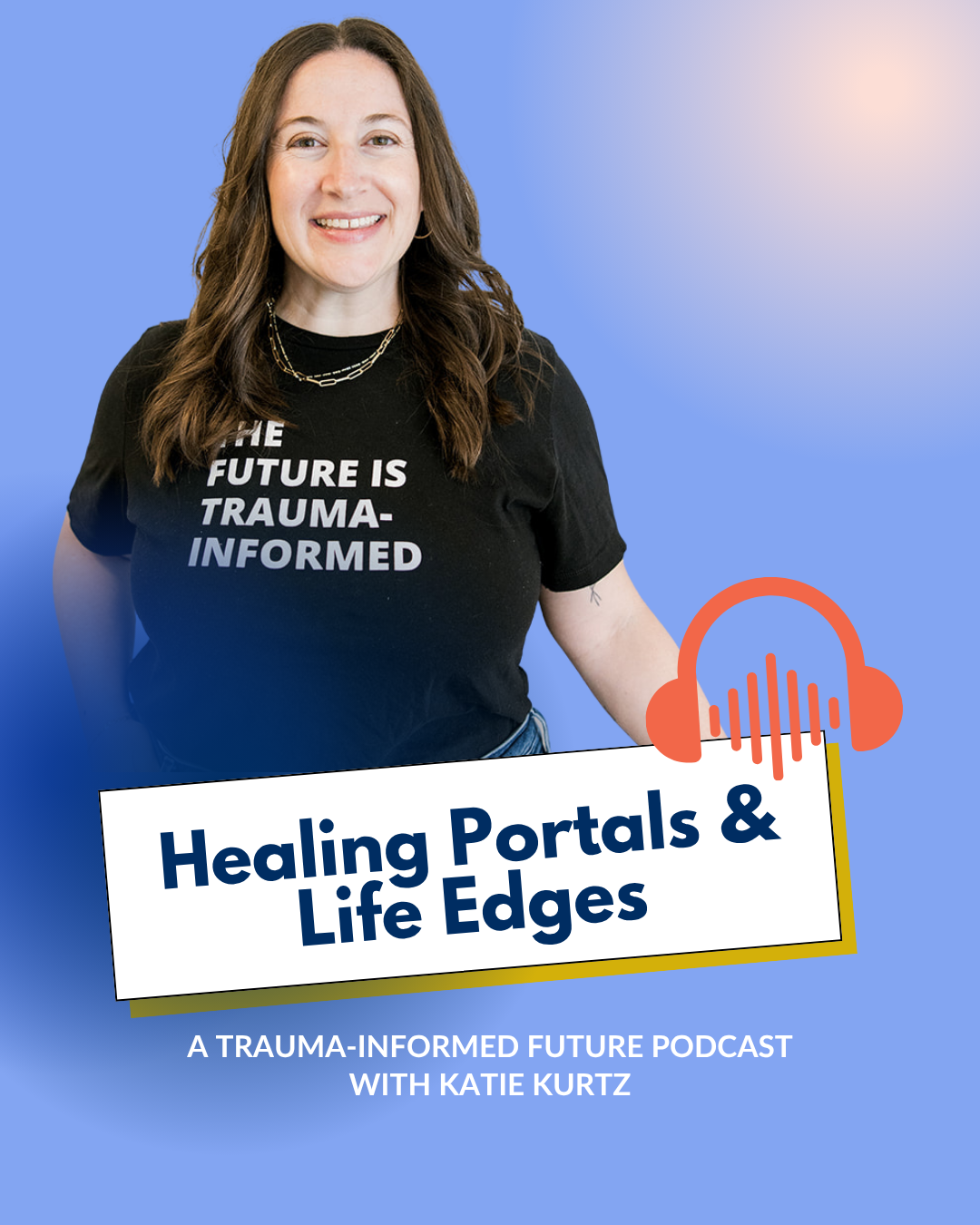
In this season three finale episode of "A Trauma-Informed Future", host Katie Kurtz share a personal glimpse into her own healing journey and some life updates. Katie speaks candidly about the trials she's faced, from embracing a new chapter in her life to shouldering the weight of uncontrollable events, all the while maintaining her focus on healing and leadership. Katie reflects on the transformative nature of personal healing over the last 15 years and its powerful influence on her capacity to lead effectively, especially under the shadow of trauma. Balancing her private life with business endeavors, Katie announces the evolution of her CULTIVATE training into an exciting new venture.
Show Transcript:
Katie Kurtz (she/her): Hi everyone and welcome back to A Trauma Informed Future podcast. I'm your host, Katie Kurtz. This is the season three finale episode. We have 32 episodes of this podcast. We're about 10 months in and we're celebrating over 5,000 downloads and I am beyond grateful for those of you who are listening, whether you've been listening from the start or who are just tuning in with, for those of you who have been sharing the podcast, a rating reviewing, leaving me comments via social media or emails.
Thank you so much. The future is trauma-informed, but it can only be trauma-informed if we come together to co-create it. And I love being able to go deeper into topics to be in conversation with some amazing humans. We've had so many incredible guests. Throughout the podcast, but even just season three alone, we've had some incredible humans here. And so I'm delighted that this podcast is resonating with [00:01:00] you. And I'm eager to continue recording and sharing more episodes with you.
While I'm speaking to you now, I already have season four is like already lined up with some incredible people where we're going into different areas we haven't gone into yet and explore and hear from people about how they're integrating trauma informed care into their personal and professional lives.
We're going to hear from people who have been doing this practice for a long time, we're going to be hearing from people who are just starting off. And I think that is why I started this to be able to humanize this approach and to be able to wait in the waters of nuance and complexities that comes with it.
So we can be in conversation beyond, the squares of Instagram or the limited characters we have on LinkedIn and really have conversations with people. Who are out here doing the work and leading out loud. And who are demonstrating what trauma-informed care looks like in real [00:02:00] life.
And it's only possible by you listening and downloading and subscribing and leaving a rating and review those things really help amplify visibility. Especially around such a niche topic like this one. And it also helps bring people into awareness. Especially the first four episodes, which I always refer back to, which are such a great foundational beginning of shared language, understanding has been really eye opening and really helpful to give as a resource to people.
And I'm so delighted to hear that and honored truly to be in this work with you. I wanted to just wrap up the season, kind of provide an overview and also to invite you into a little bit of my personal behind the scenes of this work and a little bit about me, because every week you tune in I'm in conversation or I'm talking about and doing some mini. Education on this podcast, but you might not know [00:03:00] the human behind it.
And although I have sprinkled that in throughout the show, I wanted to kind of pause and do a little life, update a little behind the scenes update. There's some really exciting things coming and I think it's important. I think I always like when I listen to podcasts to hear about the person who's talking and humanize this as much as possible because like I always say we're human first helper second.
So let's just do a quick little season three review. We started off with five reasons to prioritize trauma-informed care. There's so many reasons, but I shared with you in a solo episode five main ones and ways we can really prioritize and also maybe you're somebody who is prioritizing, maybe you're at your company or your organization or your industry.
And you're like, this is important. We need this. But you're running up against folks who don't believe it, or they don't understand it or they're resistant. And this is a great episode, but also, a lot of these episodes are really [00:04:00] great things say, Hey, why don't you listen to this? Why don't you try this out?
This is what I'm talking about. It gives some context, it gives just a little bit more to understand this approach that we're all trying to make the standard of care. We had some incredible guests this season with creating a culture of consent with Zabie Yamasaki, the power of language with , Rachel Archambault.
We also talked to Julie Parker about the difference between coaching and counseling. We talked about just beginning to understand somatics with Jess Jackson, which is like the beginning of such a long conversation with so many more guests. And I'm sure Jess will come back on to help us with navigating , the nervous system and our final guest for the season was Kelly Campbell and talking about their book Heal to Lead and the integral relationship between healing and leadership being our personal and professional lives. I really walked us through some mini crash courses on consent and [00:05:00] choice and collaboration and co-creation.
And so I had three episodes where if you're really wanting to go a little deeper and understanding how to promote consent, or create a culture of consent looking at fostering agency and autonomy. And really promoting collaboration within your leadership, your culture, your workplace, those three episodes are a fantastic little mini course.
If you will. It's a lot of the content I shared in those episodes are what I share in my trauma informed trainings. So that is all in season three. And we're wrapping up today just with a little finale, a little overview, a little life update.
So I started this podcast June of 2023, and we have been consistent for the last 10 months of providing different episodes, different guests. And have no intention of stopping. It's just the beginning. There's so many exciting things ahead. And also, I would love to hear from you who do you want me to meet?
Who do you want me to be in [00:06:00] conversation with? Who do you want back on? What topics do you want me to go into? There are so many things we can talk about, and that's why I created this podcast is like there aren't enough posts or emails or trainings to create. Like the podcast really allows us to be in conversation around so many of the intricacies of this approach and the creativity it also lends to being able to apply it in so many different ways, because I'm a big believer that this approach belongs everywhere. And I always joke that my superpower is that I can make anything trauma-informed. And so I like why not use this podcast to show that and prove that. And I wanted to talk a little bit today about trauma informed self care.
And I'm planning to do an episode on this next season, more in depth of what that looks like, but I teach and believe that trauma informed care is a bi-directional approach. It's not just the care we give to others, but the care we give to ourselves and that it's incomplete. If we're not also. Treating [00:07:00] ourselves with the same approach.
And so in the spirit of trauma informed self care, I feel like I have gotten a really intense immersive training on this past year. About a year ago, I went through a really unexpected but necessary healing portal. I. Was rewriting a narrative that was very much rooted in some of the childhood trauma .
And I was very aware that this experience was triggering this old narrative and I was faced with a choice. That I could choose to continue to read and believe the story that's very old and not good for me. But sometimes we get comfortable in the discomfort. Or I could burn that story and rewrite the narrative, which would mean leaving opportunities relationships. [00:08:00] Misaligned values, all of those things and choose myself. And it took a lot of courage and discernment and support, and I chose myself.
And so in that choice, I felt like I just entered this healing portal and I was naive, even though, like , I'm a trained therapist. I'm a social worker. I'm a trauma specialist. I'd done this work , but don't sit and think that we have it all figured out because let me tell ya we don't.
No one does. Even the people who are self-identified healers, we don't all have it figured out. Be weary as Kelly Campbell, remind us in their episode that healed is not really a term in our vocabulary because it's something that's always actively happening. It's always an active practice. It's an evolution.
There's no arrival. I literally like, oh yeah, I'm in this portal. My healing era. I did this like big courageous thing. And now I'm just like no open this door and [00:09:00] be a washed with beautiful. Illustrious light. And I think that kind of happened for maybe a hot minute.
And then I feel like I was Alice in Wonderland tumbling down a spiral of just a lot of feelings because healing. Healing is hard and it's like peeling back an onion. And so it's, there's moments there, but at the same time, it just leads to another door. And I found myself in this really empowered space of choosing myself and really feeling okay, I am entering this new season of life. And at the same time. There were some other things in my life happening. And that was out of my control. And so I was like, kind of trying to grip for control grip for the ground. So I would stop spiraling and not like a bad spiral, but just using that as a metaphor for visual. And I realized I had to. Not stop. I had to [00:10:00] continue to choose myself. I had to continue to meet myself where I was. But at the same time, I was simultaneously being met with a lot of unexpected life stuff happening within. Different roles. I was in. And I started to really look at what is the vision for my life that I want to create specifically professionally?
And how can I show up? Because we just came off the episode with Kelly Campbell. Like how is this next level of healing? Also the next level of leadership for me, I felt like by really closing in on and reaching this next level of healing in my personal life, I was also being called in and invited in to this next level of leadership. And I got to work and I was full of creativity and I launched this podcast and a myriad of other things.
But like I said, life was lifing in the background and sometimes we can't control that. And so I had all these great intentions and launches and things planned and I had [00:11:00] to hold back. I had to stop life was moving at a pace that was not a pace I wanted it to move at. And I could control that. And so I had to slow down and I had to recalibrate. And oh, this Virgo does not like that.
I was like, I have a list. I'm going to get this done. I want this to move forward. And life was like no, , we're gonna need you to slow down. I think I've shared this a few times in the past, but my mom has Alzheimer's. She was diagnosed five and a half years ago. And I'm an only child.
Both of my parents have a lot of health issues. And I have been their primary caregiver for about 15 years and something interesting that's happened during this liminal healing portal phase from like one thing to the next is that. This theme, and I'm not like really big into astrology, but I dabble and I found it intriguing that the things I was reading about [00:12:00] astrology kept talking about like 15 years ago.
And I was like, oh, that's so interesting. Because like I said before, when we start to go into these healing portals, at least for me, it started to. Bring me to the threshold of other portals of healing that I needed to address. And despite wanting to just ignore it sometimes cause sometimes we just don't have the capacity or time. That when I do enter those portals, they'll lead me again to another level of leadership in my life.
Not just professionally, but how we lead our lives in general. . We're starting to notice this pattern of things happening in my life. Correlating to things that were happening in my life 15 years ago. For example, I recently was invited and was able to start teaching at the graduate school I went to. I'm an adjunct professor at the social work school. I went to. And 15 years ago, I graduated from that social work school and I have a lot of thoughts and feelings [00:13:00] about the social work field. I am continuously in my healing era of my relationship with social work.
And I think taking this position has helped and aided me in that healing. And so I thought that's interesting. And in the fall of last year, my mom got very sick. The week before my wedding. I got married in November of 2023. And my mom got very ill the week before, and I knew. My now husband and I, and my family we're sitting and we're like, are we going to have to cancel our wedding?
What are we going to do? Is she even going to make it. And thankfully she did, and we didn't have to cancel our wedding, but it was very different. I was in the hospital every day for eight plus hours a day with her up until you know the afternoon before my wedding. And we had our wedding and it was amazing and it was bittersweet because she was not there.
We had planned a mother daughter dance which she would have loved and she was excited [00:14:00] about. And she just couldn't be there. And so right after our wedding, I was right back in being by her side, through that hospital stay. And she was there for six weeks and it was a lot, it was a lot because she was sick and we weren't sure what was happening. It's a lot because she cannot be on her own as someone with Alzheimer's disease. I have to be her advocate. And also there was just a lot of grief in her not being present at a very big milestone in my life. And I talk a lot about my caregiving. What's been interesting. And why I bring this up is when my mom was diagnosed five and a half years ago, I made a promise to myself that I. Would speak the truth that it was about 10 months into being alcohol sober. And I was learning how to tell the truth again. As somebody who started drinking at a very young age [00:15:00] That and maybe I'll do an episode on sobriety actually, probably should.
It's a good one. And so much to talk about trauma and trauma from care and recovery, but. I was feeling amazing. I just had started my relationship with my now husband. And then this diagnosis came and I cracked my heart open and it literally broke my heart. And. I was enveloped in grief. And I remember sitting, crying in a corner of a yoga class saying, I need to tell the truth.
If someone asks me, how are you doing? I'm going to say how I'm doing. If someone asks, how's it going? I'm going to tell them, and if they can't hold that reality, then that's not my problem. It's theirs. And then I'm not going to over accomodate. People are dealing with a lot of grief and. Every day for a variety of reasons.
And , we need to be telling the truth and we need to build our emotional capacity to be with the truth. And so ever since then, I made that promise to myself and I [00:16:00] have kept that promise. And I say that because, five ish, years later, I have to continue to tell that truth and especially. When I was thinking. About that really my mom being so sick during my wedding, it was really rough. And we don't talk a lot about the realities of caregiving for people, especially our loved ones who we might not have great relationships with or it's complicated. I'm grateful.
I can care for my mom. And my dad, but my relationship with my dad is very complicated and it's not It's not easy.. There's literally nothing easy about it. It has led to a lot of hurt and pain and burnout. And so I have been telling the truth about that to my friends, my family my therapist and myself, because it benefits no one to not speak those [00:17:00] things out loud, but I also had to tell the truth to myself that this wasn't working.
These boundaries. We're being broken and I needed to rework my caregiving plan. And I share this again because 15 years ago, I started my caregiving unk nowingly for my parents. They have this weird thing where they always get sick or end up in the hospital at the same time. It's almost comical, but also like truly awful because there've been many times where I've had to go from one hospital to the other for both of them, but 15 years ago, my dad was in the hospital. And which led to him being diagnosed with a form of leukemia. And my mom was in the hospital at the same time, getting her hip replaced, which led her to just kind of the downfall of her mobility. And, it was a really stressful time.
15 years ago, I was navigating graduate school and a new job. And insurmountable student loans and Just being a young 20 something year [00:18:00] old and. I didn't realize that was kind of the beginning of a Rocky journey. I started my social work career and my caregiving career at the same time. And so it's just curious to me that all of these things are happening at the same time.
And these two themes came up a lot for me over the last year. Since this kind of healing portal, I keep kind of referring to because it's just a good visual for me. I share all that because. During all of this, I think it's such a good example of how. When we look at leaders of any kind, when we look at people in this work, when we look at people who identify as like subject matter experts, whatever the term is, That we have to remember. We're human first and our healing directly correlates with how we show up in lead. And again I just love the conversation with Kelly Campbell and I really believe in. This also ties back to her, my [00:19:00] conversation with Nicole Lewis Keeber about what we experience in our lives.
Our own trauma impacts how we show up as leaders or entrepreneurs or whatever. And for me. I know that to be true and. It's definitely not easy. And it's definitely not going the way I planned. I really, I joke like with. Jenny, my OBM and the producer of this podcast, I always have these great plans and poor Jenny bless her and all the beauty and grace she offers me is I have all these great plans.
I like vision. And then I'm like, oh, life happened again. I have someone in the hospital or something's happening. And I have been putting off a lot of big things in my business, in my life because I've had attend to life happening in the background. And there's been a lot of other stuff, but again I'm just sharing.
What's kind of relevant to here. So all of that to say that. I invite you if you are somebody who feels called to this work to remember your [00:20:00] own healing and the process that trauma informed care also applies to you. And as I have navigated my own healing journey throughout the years, but especially intensified this last year as I feel myself, I don't love the term like upleveling, but I don't know what else to call it.
This like emergence into a new season of life that I'm in. I really had to hold on to and prioritize trauma informed care towards myself, that's trauma informed self care, that nervous system care. How am I tending to my capacity? Because I have to protect my capacity. I have to make sure. Because I have so many things going on and because I'm caregiving. There's a lot happening and I have to tend to myself and I'm not always great at that.
And then I get sick or I burn out. And so I have to prioritize that and practice self consent. Is this something I actually want to do? I talk about that a lot in the season of the practice of consent and remembering I have [00:21:00] choice and being grateful for those choices and using those choices. So a lot of this is how we can show up in this work as well. I wanted to share all that and then give you a little bit of updates.
So I've been kind of alluding to these things I've had in the works, these plans I've had. And I joke again, because I think I have had this one thing planned for many years. I just, it hasn't been the right time or something has happened or haven't had the capacity. And I will tell you, I have had been sitting on this kind of reformatting of my business for a year or more.
And again, it just hasn't been the right time or the stars were aligned or whatever until now. And and it's taken me a minute. And as somebody who is always teetering on burnout and who has a lot of brain fog and all the things it's, it can be hard to sit down and just get stuff done, especially when my attention and capacity is being pulled in other ways.
[00:22:00] I'm grateful though that I have a lot of support and ability to do these things. But that being said, I am really excited because come season four in a few weeks you will be hearing a lot about this, just new phase 2.0 of my offerings and what my leadership will be like come then and a lot of you will be introduced to this , sooner rather than later, because as I slowly roll everything out but it will become a mainstay here at the podcast.
So if you're not familiar, I, for many years had been leading a training called CULTIVATE. It's a trauma-informed professional training. For people to go deep into integrative trauma-informed care specifically how they apply it to facilitation and space holding. I love that training so much.
And I've led many cohorts through it, both public cohorts, where people sign up individually and privately with different teams and companies. And this past January of [00:23:00] 2023. I retired that course I had my final cohort and I decided to retire, CULTIVATE. Just let her breathe a little bit. She's not going anywhere, but coming back in a reformatted way. And I really in addition to CULTIVATE, I lead a lot of different trauma informed trainings.
I do a lot of private trainings with companies, teams universities. I also am brought in to consult and coach and do a lot of guest speaking and I love that work and I'm seeing that expand. And that's what I love to be doing. Training is where my heart is. And I was realizing that during the off times of CULTIVATE, people were like, I really want to become trauma-informed.
I want to learn more and I just didn't have other than private trainings, I didn't have anything for them to come to.
So this new kind of era, if you will hang on to the remaining T swift Energy here. Is that in the coming [00:24:00] months, I will be rolling out the Trauma Informed Leadership Studio or the Studio and this is a exclusive online space for trauma informed leaders, a trauma informed space for trauma informed leaders.
It's a virtual membership platform in which trauma informed leaders like yourself. So any profession can join. And you get access to Me directly. So this is like the one place you'll get full access to me. There is a resource library of tools and toolkits and guides that's regularly updated.
There is a continuing education collection of regularly updated workshops and things for ongoing learning. There are by monthly community practice calls. So this is where you can ask questions, get real-time coaching, support, supervision, peer support, all of those things around your own trauma informed practice and to build community with other trauma-informed leaders. And so I have [00:25:00] been wanting to build a space out like this for years.
And finally, it's the right timing. And here we are. And founding membership will open in the coming weeks and you can join us. And this is just a really accessible way to connect with other trauma-informed leaders, whether you're just starting or you've have years in the making.
We know trauma informed care is a long game. And so we need to focus on our capacity and regenerate it and be in community and look at ongoing learning. And so I talk and emphasize about that. So much in my trainings. And have mentorship and supervision and peer support. And I was looking around, I was like, this doesn't exist.
So I created it and I created it, not just for you, but for me too, because as I say, I am never somebody above you. I am in this with you and I am a steward of this approach. I am not an owner of it. I am not someone who created it. I am a steward of it. And I believe in stewarding this approach into a future that's inclusive and integrator for all [00:26:00] of us, for all professions.
So I welcome you into the studio. I want to think of it as like your favorite neighborhood studio that you like. Go in, it's a soft place to land all your favorite people are there. You can go to your bookshelf and find the thing you need. You can connect with people around any topic you want. And it's a space that we're cultivating together because there's beautiful space agreements.
It's a trauma informed space. And that is what I do. That is my gift is to be able to hold trauma-informed space. If you've been in memberships before, or you've been in online spaces. I encourage you before. You're like, oh, that's not my thing to pause. And I invite you to take a look at it because this is different.
A trauma-informed space, a trauma-informed online space is very different because there is no unnecessary urgency. There's no pressure to perform. There's no forced connection. There's no unrealistic expectation or this need to get everything done. This membership, this studio [00:27:00] is built and designed for you to go at the pace of your own nervous system to honor yourself each other in the space.
And to co-create a really sustainable practice. So that you can nurture yourself, your nervous system and your trauma informed leadership. So we have it for the long run. So we have, and can co-create that trauma informed future, we all want, Im really excited to invite you into the trauma informed leadership studio. And if I encourage you to join the email list, doors will be opening to the studio, a big, beautiful, welcome.
And you'll be able to join at any time. This isn't just like a one-time thing, but there is a special discount for founding members. And I you'll hear from me, I'll be sharing about this on the podcast too. But one of the big things I wanted to do was to increase accessibility within my capacity and within what's realistic. This one of the things I really wanted to do is just have evergreen ongoing access to whatever you need to nurture your trauma informed [00:28:00] leadership. So the studio doors are opening soon. I can't wait to welcome you in. It's going to be fun and rejuvenating and a beautiful place to be. The other thing that's going to be coming is the Trauma Informed Learning Suite.
I have extracted the integrative trauma informed care model and framework that I've been teaching for many years that was embedded in CULTIVATE, but kind of extracted that out of the training and create a, workshop and a skills-based training on just integrative trauma informed care. So you've heard me talk a lot about this podcast, but how I honor the origins of this approach, but I take a different viewpoint.
I'm making it integrative inclusive. I really want to focus on how do we become, how do we embody this approach? And over the years I've developed methods, models, and frameworks to really create an integrative trauma informed care approach. And so the training suite will include an introduction to integrative trauma informed care as well as the, an integrative trauma informed skills training. [00:29:00]
So the introduction will just give you a really solid introduction to what is trauma? What is trauma-informed care? What is integrative trauma-informed care? What is the model, which is a great welcome in like entry point for anyone just like really curious or dancing around the edge. Not really sure if they want to commit to the full training.
And then for people who are like, yes, I really want to build my trauma informed leadership skills. The skills training is really going to be looking at key leadership skills again, when I say leadership, I mean, leadership of our lives, personal and professional. So things like relationship building communications decision-making. Self-awareness personal attunement, all from the integrative lens.
Those two offerings will be available soon. They will be autonomous learning and evergreen. So you can sign up at any time. And they're autonomous. So you go at your own pace. And everything again I do is experiential. So you're not just learning about trauma informed care you're feeling what it's like to be held in a trauma informed space.
[00:30:00] And what's great is that you can autonomously learn in those trainings. And then if you want;-=/ which I encourage you to do is to come into then to the studio to practice, because I believe you can take all the trainings you want, but if you're not integrating, if you're not practicing, then what's the point and that's why the studio exists.
So we can all come together and practice and ask those questions and bring the case examples and get. You know my eyes on your stuff to audit it or whatever it may be. This is the studios that space rest to really do the work. And so with all of this, it's going to create a really beautiful space for us to really co-create a trauma-informed future together. And then some things in the horizon. Really holding the vision and hoping life cooperates because my goodness life just keeps lifeing a lot in my world. And I am transforming CULTIVATE into an advanced trauma informed leadership certification. Another thing if you've known me or you've worked me. Goodness I've been sitting on this for a long time and again, honoring our own pace and capacity. [00:31:00] It's finally here. And so I'm excited to bring that to you, hopefully by the end of the year. With again, allowing for flexibility and adaptability. AKA trauma-informed care. Too just allow that life may not go at the same timeline as I want and allowing and always in the practice, because again, my Virgo. I like a checklist.
I like a timeline. I like to plan. And I have to remember my plans just don't even seem to be working out lately. I have to be more flexible and adaptable. So that's, what's on the horizon. Plus in the meantime, behind the scenes, I'm continuing to teach at the university level, which I'm really loving and hope to continue to do. I am being invited to incredible conferences and to speak, which I'm really excited about.
I am being invited to consult and train really large institutions within different industries. And I'm really excited about that. If you are in any industry, any corporate healthcare, nonprofit, whatever it may be, and [00:32:00] you want to either begin or immerse yourself into more of the depths of integrative trauma-informed care and you want somebody who has a load of experience and also makes us adaptable for any profession.
Let me know. That's what I do. And so I'm always behind the scenes working with folks. On large scales like that, but also I love working with my small businesses and fellow entrepreneurs. It's such an honor to be a guest teacher in different coach training programs and masterminds and things like that or other podcasts.
That is just a little bit of a life update. And grateful you're here and like truly grateful you're here and to be in this work with you. And I hope to see you in the studio and in trainings. And I can't wait to see you for season four. We have a great lineup for you. Again, if you want to hear from somebody or hear something specific on this podcast, let me know. I would love to hear from you. Please email me at hello@katie-kurtz.com. Connect with me on LinkedIn or Instagram. I'm excited to be doing more LinkedIn lives this year. So it's a great place to connect [00:33:00] to. If you're not over on LinkedIn, come join the party I was hesitant to, but like now kind of love it.
Totally different, really enjoying it over there. Please be sure to say hi, send me a DM. I love connecting with folks and I'm just excited to see where this goes and. Grateful for this approach and being able to apply it to my own life and the beautiful reminders it continuously gives to me.
All right, friends, that's it for now. If you haven't listened to season three, or you want to go back, be sure to do that. Would love a rating and review again, that just helps amplify visibility of this podcast to folks who may need it or want it. We will talk again soon. Take a care.
