

Trauma-Informed Pharmacy with Dr. Ashley Builta
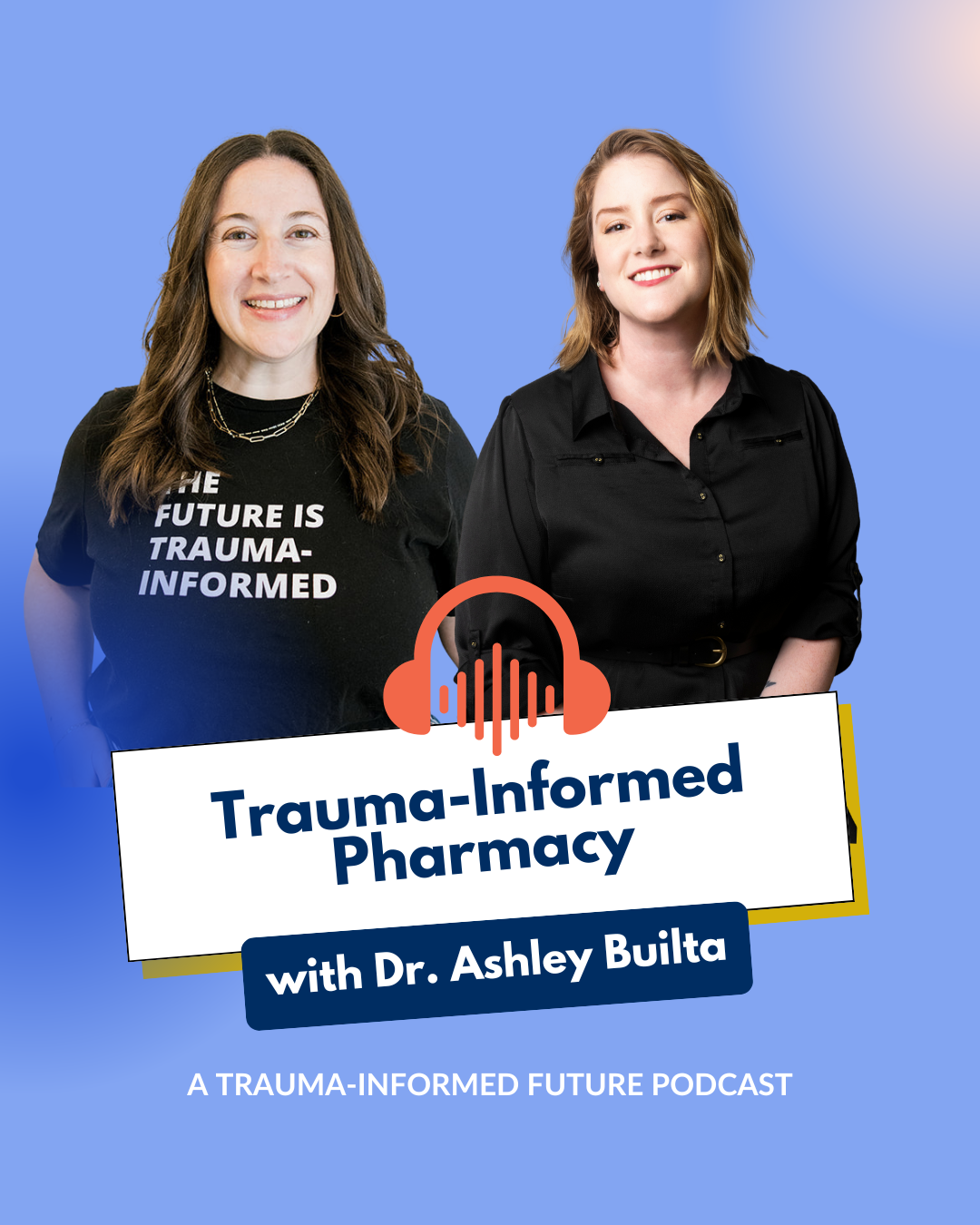
In nearly every community, pharmacists are the most accessible healthcare providers: seeing patients up to 12 times a year or more. Yet burnout rates are staggering, and meaningful connection often gets lost in the grind. On this episode of A Trauma-Informed Future podcast, host Katie Kurtz talks to Dr. Ashley Builta who reveals how trauma-informed care is changing everything in pharmacy delivery. She shares how it's not another task to add to an overwhelming workload, but rather a simple mindset shift that takes just three extra minutes and transforms both patient outcomes and professional purpose. From a life-changing Sunday morning encounter to training the next generation of pharmacy students, discover how Dr. Builta is using this approach to reshape pharmacy practice across Michigan and beyond.
Learn more about Ashley:
Dr. Ashley Builta is a dedicated pharmacy professional and educator currently serving as the Director of Professional Development and Education at the Michigan Pharmacists Association (MPA). In this role, she leads initiatives that empower pharmacists to better support the mental well-being of their patients and communities. She brings a wealth of experience to her role in advancing pharmacist education and public health initiatives.
Ashley holds a Doctor of Pharmacy degree and is a certified Mental Health First Aid (MHFA) Instructor, a credential that enables her to expanded her impact with healthcare professionals, training them in recognizing and responding to mental health and substance use challenges. Her work bridges the gap between pharmacy practice and mental health support, helping to reduce stigma and promote early intervention.
Ashley’s work reflects a deep commitment to holistic patient care, emphasizing the critical role pharmacists play in early intervention and mental health advocacy. Her leadership continues to shape a more compassionate and informed healthcare landscape across Michigan.
Connect with Ashley:
Website: https://www.michiganpharmacists.org/
LinkedIn: https://www.linkedin.com/in/ashley-builta
Show Transcript:
Katie Kurtz (she/her): hi everyone, and welcome to A Trauma-Informed Future podcast. I'm your host, Katie Kurtz, and I'm delighted to be joined today by Ashley Builta.
Welcome, Ashley. I am so excited for this conversation. It's a little niche, but actually I think what we'll find is how it's actually applicable to all of us because of the widespread presence of pharmacists in our world. So welcome, welcome.
Ashley Builta (she/her): Oh, thank you so much, Katie. I am very excited to be on this today, to have this conversation and let people know , how the work can be done in the communities and get it out there.
Love it. Ashley, can you just,, introduce yourself in your own words for everyone listening who you are, what do you do, why you're here?
Yeah. So, Dr. Ashley Builta. I am a pharmacist by training. I went to Wayne State University in Detroit, Michigan, graduated back in 2014. And then I went and worked as a pharmacist in kind of like [00:01:00] traditional, what we call retail settings. So those are the chain community pharmacies. For me that was Rite Aid, which as of this recording, are no longer in the Midwest where I am located, still in Michigan. And then COVID, the initial part of the pandemic right, happened. I got really burnt out and kind of had to do some soul searching on where it was that I wanted to practice pharmacy.
I ended up leaving pharmacy at one point and going to work for a smaller literacy nonprofit in the metro Detroit area. Did operations for them. Which is actually how I found your podcast. 'Cause I was listening to a podcast on like compassionate marketing and you were one of the guests for like, how to make sure that we're not.
Taking advantage of people right when we're talking about it and consent and marketing and everything. And I was like, oh, this is really interesting. And then I went and was like, where's the original go? Went and found your podcast. And that [00:02:00] honestly has been like life changing for me. So long time listener.
And then I went back into pharmacy, did some work. Got trained as a adult mental health first aid professional. So I'm a trainer for that. And in the position I'm in now I'm the director of professional development and education for the Michigan Pharmacists Association. So I have a lot of flexibility with this position and I am working on.
Getting more pharmacy professionals trained across the state whether they're in practice currently or as students. It's been a really exciting journey to see since my graduation and to, to now like how pharmacists have started to embrace and adopt a trauma-informed hair pattern.
Katie Kurtz (she/her): Ah, that's so funny that I guess I didn't realize that's how we, like you found me was through a different podcast.
[00:03:00] That's so, that's so funny. Yeah, I love that. I love how that always works. Yeah. You know, Ashley, so for context Ashley invited me to be a keynote at the recent, your recent annual conference within the Michigan pharmacy Association, and I am not, I was just telling you before we hit require. I was like, when I walked in, the first thing though I could have cried was you had to practice the pause room and I just like couldn't.
I was like, this is the best. Because many of you know, I use that term a lot of just helping us like kind of slow down and get. You know, into alignment. So I loved that. Mm-hmm. It was this really sweet little space that people could kind of take a break in and I was a little unsure of like, okay, I am speaking to like hundreds of pharmacists across Michigan.
I'm from Ohio, so there's already that. And I, in my work in healthcare, like I've. I know pharmacists have been in like trainings and things, but I've never been invited to specifically train [00:04:00] pharmacists. And so I was really excited and a little nervous 'cause I never know where people are at with their level of readiness.
And I was blown away. I was like, oh, my new favorite group of people. Everyone was so welcoming, so engaged, and I. Really learn something from you that I would love for you to talk a little bit about is something I didn't really think was just how ever present pharmacists are everywhere. Like everywhere.
Yeah. When we think about, you know, Rite Aid, CVS, Walgreens, like all these places are in, there's a pharmacy in every community, no matter where you live. And if there's a pharmacy, there's a pharmacist. And I was just thinking like, if something clicked, I was like, wow, , there's a, there's a huge powerful presence within pharmacy that I just, and obviously you're in other places, but mm-hmm.
I like Can you just talk a little bit about that? 'cause I think that really helped me widen my perspective and also think, wow, okay, this approach is [00:05:00] so needed, not just with offering some strategies and how to better work with people in the community. But I know there's high levels of burnout and compassion fatigue and moral injury within pharmacy and this, this approach is bi-directional,
Ashley Builta (she/her): a hundred percent. So that was one of the reasons that when I initially took the mental health First aid training, and that was after I had also been introduced to your work too, , and learning about how do you resource yourself, that's one of the main components of it.
Because, yeah, we as pharmacy professionals have a lot of burnout and moral injury, and it can be so isolating, so trying to bring people together to recognize like, Hey, you have this huge community of people who love and care about you and who are going through the same thing. And I always love your example, and I've used it many times of like everybody has their own pop.
And other people's cups are emptier and they can [00:06:00] handle it, right? They're able to flex their resiliency. Other people, the cup is full and that that one extra drop is gonna overflow it. And that's where I felt when I first had my burnout, I was like, I am a high functioning type A human. I was pharmacy manager at the time, leading a really great pharmacy team.
And then it was just that like, well, it was a whole pandemic, but like that one drop for me, like I just couldn't handle it. But when we talk about too, like the prevalence of pharmacy professionals, so when you look at like a brick and mortar pharmacy is what people traditionally think of. Yeah. You're what we call the chains, the CVSs, the RiteAid, the Walgreens.
There's the ones that are inside the grocery stores too. Like we're kind of like everywhere. And then we're in like outpatient settings for the hospitals and even in the hospitals. So there's almost always a pharmacist in every community. Unless, unfortunately the trend we've seen is that pharmacies are starting to close because of different issues with PBMs, not [00:07:00] reimbursing.
That's for dollars. But we have a really wide prevalence and in very many areas, like we are sometimes the only healthcare provider within. A certain radius, right? We start calling it kind of like that healthcare desert. And so pharmacists and the pharmacy technicians on the team too, like they'll see patients, most of 'em like a minimum four times a year if they're coming in to pick up their prescriptions.
Like they're coming in every 30 days. So we see them 12 times a year or sometimes even more. Like I know when I was out in the field I had regulars and that you get to know their lives. And so you can start to see too, and kind of pick up on what's normal, what's maybe a little bit abnormal, like, Hey, what's, what's going on?
And I didn't have the language. We were starting to talk about it when I went through pharmacy school of like, how do you recognize [00:08:00] and connect with the human in front of you that is coming to seek healthcare and like really trying to humanize healthcare. And so. We're starting to just, I think, work on the language and now I'm, I'm so impressed because it's really evolved where there's so much more training in pharmacy schools to have those professionals Hu Yeah.
Humanize the person in front of you, and you're not just like, oh, this patient's got blood pressure and they're, they're hydrochlorothiazide medication, right? It's like, no, this is Mr. Smith, and like he's my favorite human, and so. You can see changes with your patients, you can see changes sometime with your team too.
And that's, yeah. When we talk about the bidirectional nature, this is an approach that works. Yes. In the patient care settings, but also in like the personal team settings. 'cause you're seeing your team. When I worked [00:09:00] at Rite Aid, I did twelves. I know nurses commonly do twelves too. Like those are long days.
And so. They can wear on you after a while, for sure. Absolutely. Yeah. Yeah.
Katie Kurtz (she/her): And, and also, I know having, knowing a few people in who are pharmacists, like even the, because especially if you're in a chain store or something like. I know during the height of the opioid epidemic there was, potential for theft and violence and just , the customer service, even though it is a patient doctor relationship mm-hmm.
Because of like the chain mentality or , the business of it. There is that customer service, which, you know, there's, you don't know why someone might be in pain or sick and that can. You know, not excusing behavior, but that can also wear and tear on you with people. And I really appreciate you sharing that because that really gave me pause and I was like, you know [00:10:00] what?
I really have a new appreciation for pharmacists and what a powerful. Profession because of your pre, like a powerful presence you all have. And I apologize. I meant I totally underestimated it and I am taking, I learned. So you don't know what you don't know till you know it. Yeah. And now I know. And now I know better.
And I think the thing you hit on that's so key is that. Sometimes pharmacists are, and pharmacists, techs are like some of the only healthcare professionals people can build relationships with, right? 'cause you not necessarily, I mean, obviously there's it, there's a transactional component of, you know, getting your prescrip or whatever.
But then you're also doing things like vaccines or shingles shots and all those things. Yeah. Blood pressure. Yeah, we clinic testing, test, , during COVID it was like huge all the COVID testing, like there's a lot that goes [00:11:00] into it and sometimes, , it's a little different relationship and that, you have a primary care physician but you know, you have 15 minutes to get everything done and said, and then you move on and you might see them once a year maybe.
And. There is, , and especially for small communities that might, your pharmacist might be your neighbor, you might see them. They're in a store, they're in a grocery store, and I think what you helped me better see is the opportunity and possibility for trauma informed practices to be integrated into pharmacy.
And I'm so happy to hear that you're starting to see that in pharmacy school. I know we have a long way to go in medical schools and other professional schools to integrate this approach. It's exciting to see, and it was really fun for me. Talk about nerding out to see how the energy of people coming after to talk to me and like share their interests.
And I was just like, yes, pharmacists. All right. Leading the way. No. Yeah. Okay. [00:12:00] I just love it. So with that said, like, talk to us about what. You think, like when we think about trauma-informed care integrated into the work of pharmacists and pharmacies and knowing that there's a breadth of places that pharmacists live and work, what, what, can that give us some examples maybe of like what this could look like?
Ashley Builta (she/her): Yeah. So I'm gonna draw on my experiences again. I've been practiced in a lot of different places. The majority of my time has been spent out in the community. There's one story that. Always, always hits home for me of like, why is this an essential thing? And so I had, it was a Sunday morning a lot of the time I didn't have enough hours to budget to have a technician on Sundays, so it would be just me for a while and I'd open at like 10 o'clock, I'd have my first people that were always there, like ready to come in.
And this one Sunday I had a patient who, she wasn't typically one of those people, I'm gonna call her Mrs. Smith. [00:13:00] And she comes up, it's just her and me, and I'm like, Hey, what's going on? She's like, yeah, I, I need a refill. Or my Tylenol with codeine, which is a controlled substance. So there's some extra rules around like how early I can do a refill.
Never in her life in our relationship had she been early, and I'm like, huh. And this is that point where you just kind of stop and don't judge. Right. I love using this example with students too. 'cause they're always like, oh, she's early for a controlled substance. Like, no, no, no. We respond with curiosity.
And so you take a pause and you're like, okay, hey Mrs. Smith, like what's going on? You're, this is kind of abnormal for you , to be requesting stuff early. And she's like, oh, I get, I have to go to Texas. Okay, how long are you gonna be gone? We kind of get going, so I end up in my call. I'm able to determine that, yeah, I'm gonna go ahead and refill this for her.
Like I could, I have that override capability and we're ringing her, I'm ringing her up and I'm looking at her and I'm like, something else is off. [00:14:00] It's just us again. And like I'm ignoring the phone. 'cause I'm like, no, this is the person that needs my attention right now. And I'm like, Mrs. Smith, I know this is gonna sound weird, but can I give you a hug?
And she was like, actually, yes. And so I come like out around the counter in front of the register and I just give her like the biggest mama bear hug I can muster. And she just started sobbing. She's like telling me at that point that her sister had just been diagnosed with cancer. She has chronic back pain, she has to drive all the way down to Texas.
And she is just so scared that she doesn't know what to do. 'cause she has to be the strong one in this situation. Ugh. Like I get teary eyed thinking about it. 'cause like that was the day that I was like this, this, this is why we need a trauma-informed approach. We need to stop and. Ask questions and figure out what's going on with our, not just our patients, but the human in front of us.[00:15:00]
And so she, I didn't see her for a while after that. She came back to me for a flu shot a couple years later, and she, we were in the consultation room and she's like, I'm not sure if you remember me. And I'm like, I do. I really do. Because that was like a fundamental, that's like a core, like foundational change in how I practice pharmacy was.
Yeah. I was like, I'm so thankful that. We were able to talk that day. Yeah.
Katie Kurtz (she/her): I love, I love that example so much. It's such a great example of what you said, like, yeah, we could easily go about our day and just be like, okay, next person, next thing. Mm-hmm. Whatever. And you demonstrated the simplicity, yet the power of pausing to choose.
You had a choice in the moment. You could choose curiosity or judgment, and you chose curiosity and that curiosity , left. Led you to a check-in. Mm-hmm. Which gave you helpful information that dis, [00:16:00] that dispelled the notion that this person's drug seeking or, or whatever. Yeah. And it allowed you to build trust to the point of human connection that is, could have changed the trajectory of that person's life and even not just their day.
And I think that we so often get so caught up in the grind that we forget. That, that is why we do what we like. There's purpose. Yeah. Like you didn't just like become a pharmacist for the hell of it. Like people have purpose and we lose that purpose, or it gets kind of driven out of us through the grind of things.
Mm-hmm. And what. I mean, this is such a great example, a of the trauma-informed principle of curiosity, right? How do we leave with curiosity over judgment? How do we ask questions? How do we discern? How do we see people as humans first? And you demonstrated just how simple it is, right? Like that wasn't [00:17:00] complicated at all,
Ashley Builta (she/her): and it took maybe three extra minutes in that entire transaction, right?
But like life changing for both her and I.
Katie Kurtz (she/her): Yeah. And that was years ago. And that's someone you remember? And I don't wanna assume, but I bet. Just because being in similar fields, like when we have those moments with our clients, our patients, it almost, you talk about the cup, right? Like I have my big giant cup here.
Yeah. It almost, it's like taking a sip. It like rejuvenates you, right? It's like, oh yeah, this is why I'm doing this. Right? It like reconnects you to your purpose. It gives you that connection. Like I always say, resilience is relational. It gives you that connection that feeds your capacity. And you know, like, yeah, there's a lot of stuff that wears and tears on us, but when we have those moments, that's what you know. It refills our cup.
Ashley Builta (she/her): Feed the soul. Yeah, yeah,
Katie Kurtz (she/her): [00:18:00] yeah. Absolutely. And I, so I'm really grateful you shared that. And I think, again, such a misconception, especially in healthcare, is, well, we don't have a lot of time. We have to meet certain requirements. We have a ton of people to see. All the stuff, and I don't wanna add another thing to the plate, and something my friend and colleague Alexis borough always says, it's not adding something to your plate. It is the plate. Like this is the plate. Like, it's not, it's simple shifts that create alignment with intention and action. So yeah. Love that so much.
Ashley Builta (she/her): A hundred percent.
Katie Kurtz (she/her): Yeah. I like along those lines, like if anyone's listening. Who is a pharmacist or, or in similar healthcare kind of professions, pharmacist, tech you know, what are some other examples or things you can suggest to people like either why this approach is so important and then like things to consider these simple shifts people can consider, and how this practice can be [00:19:00] led out loud every day.
Ashley Builta (she/her): Yeah. I think one of the biggest things is, and you kind of hit the nail on the head, is like, we only have so much time and we're like, oh, we're. We only have eight hours to do this, or 12 hours and when there's so many things that we have to do, and it's like, no reminder, at the end of the day, you're working with people.
I mean, I went into pharmacy because I, I love people and I love helping people live the best life that they can. And that is through medical intervention in drugs in my case. But a lot of people are helpers, right? And so when we're looking at whether it's helping our team go through. The loss of a patient 'cause that happens.
Or helping your patients, right? So there's lots of different scenarios. And you kind of touched on this earlier too, like there's a way to approach things that can help like deescalate some of the situations that feel a little scary. Or Sure. And I'm trying to think. There was one that I had she was on.[00:20:00]
A really interesting combination of psych meds and probably shouldn't have been driving. And I couldn't get ahold of a physician. And I'm just like, what resources do I have to like handle this? And so I think one of the biggest things that we can do is wherever you're practicing, try and figure out what other resources are available, whether that's your local health department, what other referral systems are in place, if you have someone who has transportation issues and.
Again, I'm always impressed when I go back to the schools because they're starting to teach that like whole human looking at what we call the social determinants of health and how, like, do we have access to food? What programs do we have? Do we have access to transportation? Like beyond just like Uber credits, like what else is available?
And so like helping people get to their necessary medical bits so that they can live their optimal lives. So I think finding which resources you have available to you. In your community, in your systems has been [00:21:00] huge for being able to say, I see you and I see what I think is happening. Is it okay if I share some information with you about this?
And then you just kind of let the conversation go from there?
Katie Kurtz (she/her): Yeah. Yeah. And I think so often a misconception I come across in every industry when it comes to trauma informed practices. Well, I'm not a therapist. I'm not a social worker. Like I don't know, you know? Right. And it's like, good. I don't, I don't want you to be, don't recommend it. Don't want that.
Ashley Builta (she/her): Don't recommend it. I didn't go to school for that.
Katie Kurtz (she/her): Yeah. And I'm like, you know, the thing about resourcing is it's. And resourcing is one of the trauma-informed leadership strategies I teach is that like you shared, it's not just about resourcing, giving people resources, having resources and referrals to give others actually resources you right?
Because that means that you don't have to have the answers or [00:22:00] solutions. You don't have to fix or solve it, and. Sometimes there's just not gonna be a resource or referral, and sometimes you just need to listen and that's okay. But there are a lot of things available to people. And having that out or just knowing about it is a great thing to have because it helps you relieve any guilt or pressure and hundred percent.
It also gives you the knowing that there is something you can give to that patient or person. You know, if there's a need or something happens. Mm-hmm. It's similar, like mental health first aid. Yeah. You're helping people with that protocol framework, but that is about resourcing you, the person with the, the tools so that if a crisis or something happens, you know, you know what to do, which is actually.
Not much in the grand scheme of things, but ensuring, you know, a trust and safety [00:23:00] component to it. And obviously there's so many more ways we can resource ourselves from nervous system care and ongoing learning and thing and support which is, I think the, yeah. The great thing about your association is like bringing pharmacists together, finding that community, especially if it's isolating if you're in a, a rural area or you know, just.
You know, doing your 12 to 12 shift, like that's a lot. Yeah. And so having peer support, community practice, ongoing learning case examples there's so much
Ashley Builta (she/her): I'm very passionate about that obviously, or I wouldn't be looking for the association, but Yeah. 'cause we, yeah, we have like local chapters and stuff and like, those are the things, and like the alumni events, like those are the things that I know.
As a burnt out pharmacist really helped me reconnect and rediscover my purpose and my passion for it, and yeah, helped me redefine what this next stage of life looks like for me. For sure. Yeah. Yeah.
Katie Kurtz (she/her): You know, I'm curious, Ashley, like [00:24:00] how so. Is it still prevalent? You know, we think about healthcare burnout.
I was preparing for my keynote, I was doing some research to learn specifically just what it was like in the pharmacist world. And, and it was staggering how high the numbers were reported regarding pharmacy burn, pharmacist burnout, and just the, the vicarious trauma, you know, the stress especially that the pandemic gave rise to.
And I'm curious, is it. Still, are you still seeing that stigma attached to, you know, a moral failing, a personal failing if we're burnt out? Are you seeing some shifts when it comes to supporting healthcare providers in this area?
Ashley Builta (she/her): I think some of this is generational too. I was actually just talking with a veteran the other day and he was like, oh, well I am, I'm just, I have the mental fortitude.
I'm like, I'm so glad you do, because not everybody does. Right. And so I think it's, it's becoming [00:25:00] more acceptable to have these conversations. There's obviously, there's always gonna be pockets of holdout in people that aren't ready for it yet. But I am always heartened to see like, and especially with like the student pharmacists and those that are in their, what we call their new practitioner phase, which is like the first 10 years.
They're wanting to have these conversations and they're very willing to be open and, and have these conversations about it. So I am hopeful that they will continue to shift and change and just overwhelm
the stigma and be like, no, this is fine. Like, you're gonna experience burnout, you're gonna experience moral injury, and how do you, what resources do you have to help you deal with it?
Katie Kurtz (she/her): Yeah. And, and I, and I know you know this, but like that again, back to that bidirectionality, like a trauma-informed, adopting a trauma-informed approach is for you too, right? Mm-hmm. Like, it's not [00:26:00] just what we, you know, how we communicate and build relationships , and care for others. It's how we care for ourselves, and we know that.
Yes. When we apply trauma-informed practice, especially in healthcare, we see better patient engagement, right? They're gonna show up for their appointment, they're gonna get their refills, they're gonna take the full antibiotic. By the end, we're gonna listen
Ashley Builta (she/her): yes, right? And
Katie Kurtz (she/her): they're gonna have better experiences and therefore better outcomes.
But the same goes for providers. We're starting to see more research of the efficacy of trauma-informed healthcare and how we also see better. Provider engagement, better provider experiences and better provider outcomes, which could also lead to retention and burnout prevention. Right. So it's a win-win across the board.
I think it's just that getting started and, and mm-hmm. It can be daunting, right?, It's like this whole thing plus , I can't even fathom. [00:27:00] All the things you have to know, because that's a lot like medications. That's right. All the things, all the math, all the science and. On top of that, then it's the, the, the care and mm-hmm.
And again, just reiterating for people, you have to remember, pharmacists aren't just everywhere. They're also working with everyone across the lifespan. Right. From a hundred percent, you know, from pediatrics. So in, in the babies in the nicu Yeah. Babies in the nicu. Like to, to kids, to adolescents, to young adults.
Mm-hmm. To all sorts of different areas. End of life. Right? End of life care. Mm-hmm. Yeah. End of life care, hospice. We're also talking like oncology. Every thing is pharmacists. And I, I mean that's a pretty unique, I'm trying to think, just given my time in healthcare, like you, you know, you have your like occupational physical therapy kind of across the board and you know, there's specializations, but.
Pharmacist is always a running, like there's [00:28:00] medication somewhere. There's always like understanding interactions, understanding the whole person. There's a lot there and so. Yes, a trauma informed practice is a new, newer thing, but it's not meant to be another thing. It's meant to create that cohesion and like you said, really apply that humanized, humanizing healthcare that that human first approach.
Ashley Builta (she/her): Hundred percent. Yeah. Helps with the collaboration in the teams too. 'cause you have to remember like. You are seeing these people all day, every day. Right. And we wanna, like you had touched on too, like, we wanna retain people in the field, right? We spend so much time learning and accumulating student debt, right?
And like going through our lives of like, this is the purpose that we want to have. And so being able to stay in the field longer helps, helps the, the person, the practitioner, helps their patients. So, yeah, it is the, that bi-directional approach of Yeah. It's not just the patient outcomes, it's also the [00:29:00] team that you work with.
Katie Kurtz (she/her): Absolutely. Absolutely. 'cause so much of the skillset of being trauma-informed is communications. Mm-hmm. Relationship building conflict management, which is the natural part of relationships. Yeah. Yeah. You know, collaboration, all of those are key skill sets that are part of this approach. And, also universally used in so many other things. So again, there's that cohesion. And there's something I just wanna name and acknowledge because I think one of the biggest barriers I hear from healthcare providers across the board in every state is they want this, they, they believe in it, it makes sense.
This is important, but. It's counter-cultural, right? It's it's little bit, a little, I mean, it's a little less in healthcare, but it still is this counterculture to think about a appro, you know, applying this [00:30:00] approach, which is so, you know, trauma-informed care is human informed care, which you would think would be.
The focus of healthcare, but when you add things like insurance profit, all that, yeah. We have to acknowledge the capitalist influence into healthcare. Yeah. You know, and then , your specific with pharmacy being in corporate settings like a CVS or a grocery store or whatever, there's another layer to it.
And I think, again, for anyone listening. I always say like I take a top down, bottom up approach. Like sometimes there are teams, departments, organizations that are like ready. Mm-hmm. And if I can find people who are ready, I, that's like a dream come true. Right? Right. Like that's like my like favorite thing.
And sometimes they're not because it, people still don't understand. You can put people in profit like they can coexist. Mm-hmm. But we always wanna be. Focusing on the people. 'cause when you focus on the people, you'll also get that productivity and profit. Yeah. [00:31:00] And but sometimes they're not ready.
Right. Because it's, yeah. It's a cultural shift. So you have that bottom up approach where it's. Individuals like yourself, like you found this and you're like, I'm gonna educate myself on this. I'm gonna learn and then I'm gonna apply it. And then people start to feel it. Yeah. They feel the difference. And then you start to model a mirror, which brings that groundswell and gives rise to the people at the top needing to change.
And that's how we Exactly. You know, it takes time, but don't underestimate small shifts and big impact. Yeah.
Ashley Builta (she/her): Yeah. Because that, I mean that the initial story I shared with. What we call Mrs. Smith. Yeah, right. Like she came back to me, right. She trusts me, she trusts that I have her best interest in heart and I do.
Right? Yeah. And so I am able to help manage her care more often than her bouncing around to different pharmacies and dealing with what we call polypharmacy, which can lead to medication errors and all sorts of stuff we don't want. [00:32:00] So that's where I really think, yeah, it is small changes. And they're really just so small and they really take almost no time.
But it's really just, okay, how can I stop and pause, ask questions, be less judgmental? I mean, maybe I'm gonna go complain about it later, right? But in the moment. We're human first. Ashley? Yeah. A little bit of a gossip later, but compliant with hipaa. But anyway, yes. Yeah, it was like, how do I respond with compassion and questions and curiosity over judgment in the moment?
And that's, yeah, that's kind, it's a mindset shift.
Katie Kurtz (she/her): Absolutely. It is a mindset. It's an overall overhaul, really. Mm-hmm. And it's. Really, like what you just said is these little shifts. Some people are like, oh, well that's so easy. And I'm like, yeah. Yes. But you know, [00:33:00] curiosity or judgment, that's connection or disconnection.
There's always gonna be a choice to help or harm and what that small shift can make the difference. And so yeah, it might take two extra minutes, but. Look what that two minutes could do. Yeah. It could either help having a lifetime of care. Yeah, exactly. Exactly. So if anyone's listening, even if they're not in pharmacy related work this is applicable to all of us.
Like if, if it's new or. You want to be that person who's ready and in a, a sea of people who aren't like how. Mm-hmm. But, and also specific to pharmacists, like how can people get started? Like, where do people start? Where did you get started?
Ashley Builta (she/her): I got started with you, so like, I'm gonna plug your stuff for a second.
But honestly, like the way that you have built, like in the trauma informed leadership studio like, and the trainings and the [00:34:00] materials you provide, there's lot. I mean, there's lots of. Trauma-informed stuff out there, but I felt like yours felt the most trustworthy when it came to stuff that I could actually like apply in real life.
And then there's lots of places, obviously we have to work with the systems that we have. So that's where I have the Mental Health First Aid training. Taking that is an eight hour course as of this publication. And that's not that much. Like we have so many certifications that we have to do as pharmacy professionals, medication therapy management, and point of care testing and station training.
And that requires CPR certification, right? And like, like we just get like this like list of like, blah, how many things do we have to like, keep up on? But when I took the mental health Crus aid training and when I really like, it really clicked for me of. Everybody needs this.
And that's, [00:35:00] again, I'm always impressed by, and especially the pharmacy schools in Michigan, and we're training pharmacy students as part of the curriculum now.
And so i'm like, okay, let's get it out to our technician teams and let's get it out to our pharmacists. Like let's get it everywhere.
Because that's where it needs to be, is that we, yeah. It's that human-centered approach and we deal with humans in healthcare. Yeah. We all deal with humans, right?
Katie Kurtz (she/her): Yeah. I love that. You all are seeing , and really finding that movement within the schools. And I have found too that if we wanna create that culture, shifts starting there is so key.
And I love being able to come in and guest teach or work with. You know, different schools because that's it's not yet the standard of care, but I think one day it will be. And I'm really hopeful and I'm seeing those shifts and I think people really want it. They're craving it. And I love talking to residents and fellows and like people in it along, [00:36:00] even in trade schools who are going into more tech or whatever, like this is almost like the CPR for humans.
We don't have to wait for crisis. This is just every day it becomes again. The more you do it, the more it just becomes , this is just how I talk to people. This is just how I leave. And it doesn't mean we're like perfect or we change our personality. Nope. We learning all the time. Yeah. Right.
Like we, we're still gonna be judgy and we're still gonna be ourselves, but we have a toolbox of ways to interact and engage with people and and support ourselves along the way. Okay. Awesome. Preach. Yeah. Ashley, anything else? Like if anyone's listening, like what, anything else you'd like to share or mention?
Ashley Builta (she/her): Sometimes it can seem like there's so many other things that we need to be doing and I'm a mom of a five-year-old now on top of having like a busy professional [00:37:00] career and like all of the thing and the garden. Right. Like all the things. But I found that this approach has truly shifted the way that I interact with all of the humans in my life, including my 5-year-old.
Okay. Right. And responding with curiosity when she's having a giant meltdown on the staircase, because I wouldn't cut circles for her. Like, okay, like, what's good? Oh, you need a snack? Okay. So like it at first, it can feel overwhelming of like, oh my gosh, there's just one more thing I need to do. But it's so natural now.
And yes, still always learning. Still learning how to interact with things and see people and ask like, whose voice isn't being included in certain spaces that I need to recognize? Right. And so there's always that learning to be like, how [00:38:00] can I be a little bit more trauma informed today? Or maybe not today.
Maybe it didn't happen today, but maybe I'll work on it more tomorrow. And like providing yourself with that grace too, like I think is huge.
Katie Kurtz (she/her): Yes. I love that. Thank you for naming that , and sharing that and how it is. So often you're introduced to this practice through work which is, you know, 70% of our life.
But it's not meant to be compartmentalized there that it does. It's so common for me to hear, wow, I didn't realize this would. Impact my marriage or my friendships or my parenting or caregiving. And that's 'cause it is, it's a human informed approach. It can be a little harder with the people we love and know and or have deeper trust with.
But and just self care and how we care for ourselves and our own lived experiences and how we're showing up during times of high stress or collective trauma. So. Thank you so much, Ashley. Before we go [00:39:00] into our gentle spritz of questions, which I know you're familiar with how can people learn about you and your organization?
I know its specific to Michigan, but I think it's important to share maybe there's other associations by state people. Can get in touch with. Yeah, and
Ashley Builta (she/her): I think this is becoming like, again, the hope for it to be the groundswell. Yeah. So obviously I'm based in Michigan, so I work with the Michigan Pharmacist Association.
People can find me on LinkedIn. Love to connect there. That's really where I play the most these days is looking at LinkedIn and just connecting with others and seeing what they're doing at a state level. I know , there's changes that are common. Which I always, I am very hopeful for and it makes my heart happy.
But yeah, I'd say there's lots of different training opportunities out there. But yeah, if you wanna connect with me LinkedIn. Great. Under my name Ashley Builta.
Katie Kurtz (she/her): Awesome. And a great way too, if maybe somebody in a different location is curious about how to replicate or focus like Ashley. Obviously a great [00:40:00] example of someone leading this approach out loud. So, awesome. Thanks Ashley. Alright, are you ready for our gentle spread of questions? Yeah. Okay, here we go. If you could describe trauma-informed care in one word, and if you have more than one, that's okay. What would it be?
Ashley Builta (she/her): Integrated?
Katie Kurtz (she/her): What is your current go-to for nervous system care right now,
Ashley Builta (she/her): The psychological sigh.
Katie Kurtz (she/her): Oh yeah. Oh good. And yep, that, yeah. And what does a trauma-informed future look like for you?
Ashley Builta (she/her): A trauma-informed future is one that is built out of love for other humans. Like, I know that sounds so cheesy, but like, at the end of the day, like it's to, to love the other people around you and to come at it with compassion and care. Awesome.
Katie Kurtz (she/her): Thank you so much for being here, Ashley. Oh, thank you. And doing the work you're doing.
I think, you know, especially in healthcare, we're also patients and [00:41:00] our loved ones are patients and it's so important. And it makes such a difference to receive trauma informed healthcare. And I think I'm excited for where. We have a long way to go, but , we're on our way. So thank you so much for being here.
Ashley Builta (she/her): Oh my gosh. Thank you so much for having me. I am so honored to have been here. 'cause again, long time listener and to, it feels like coming full circle, but that I'm like, I still have like 30 years to go. So much more to learn. So thank you.
