Neurodiversity Affirming Care with Tahlee Rouillon
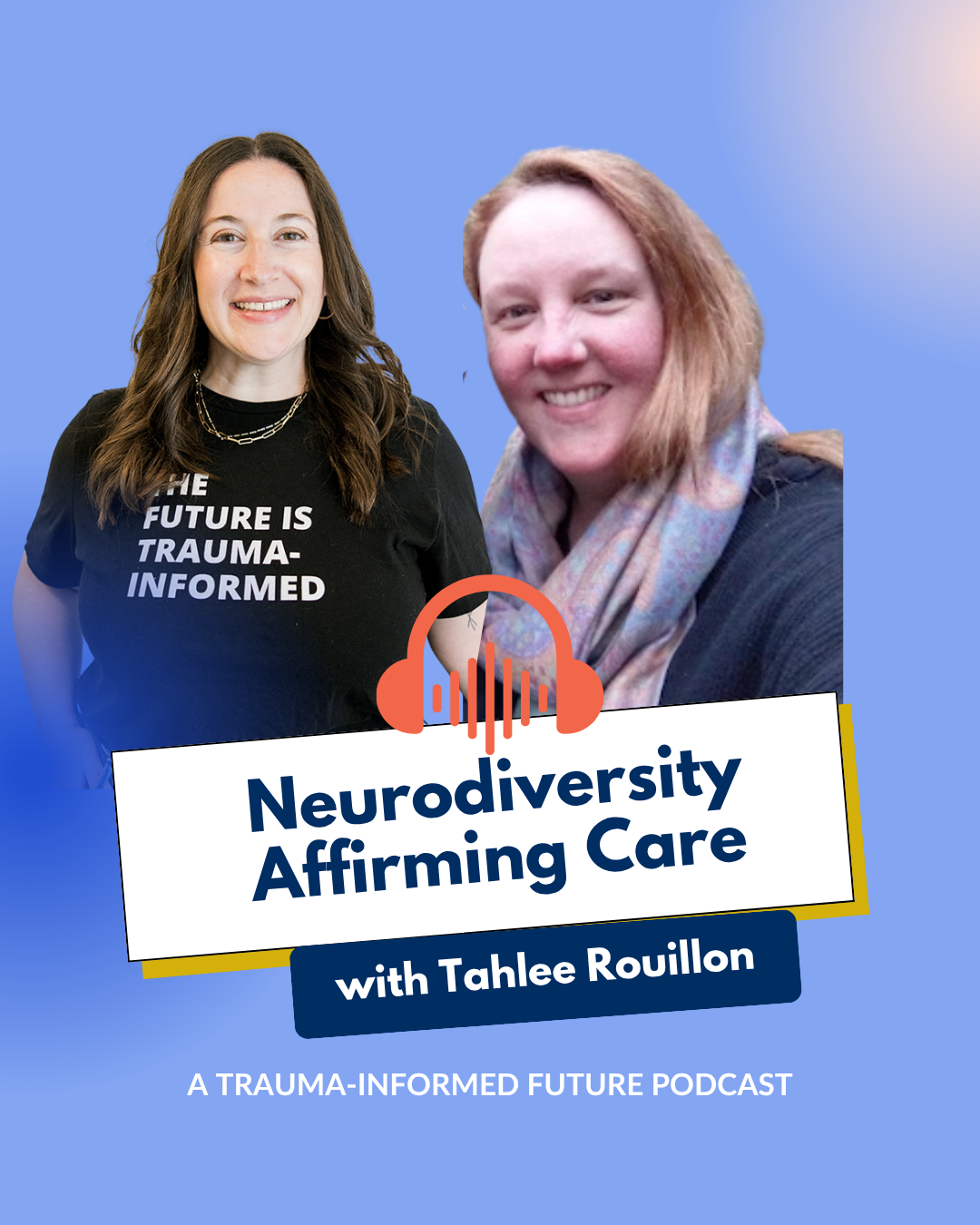
What may be traumatic for me, may not be traumatic for you. But that doesn't mean my lived experience isn't real or valid. Because we each have unique nervous systems. We also have unique brains. Neurodiversity is becoming a more popular topic but what is it and how can be we be neurodiversity affirming? In today's episode of A Trauma-Informed Future podcast, host Katie Kurtz is in conversation with distinguised Australian musician, Tahlee Roillon. Tahlee discusses the connection between neurodiversity affirming care and trauma-informed care. She also shares her journey in creating the Restful App as a tool for supporting our nervous system through sound and senses.
Learn more about Tahlee:
After completing a Bachelor of Music in 2001, Tahlee has dedicated her life to composing meditones - a unique blend of binaural beats and beautiful ambient music. Her sacred wordless vocals & emotive sonic landscapes often move listeners to tears. Each piece of music is a feeling translated into sound. She's a multiply neurodivergent who loves dogs, forests, neuroscience, and building a restful world for all.
Connect with Tahlee:
Website - https://www.restfulapp.co/
Instagram - https://www.instagram.com/restful.music/
Get the Restful App on iOS - https://apps.apple.com/au/app/restful-focus-sleep-sounds/id1599997971
Get the Restful app for Android - https://play.google.com/store/apps/details?id=co.restfulapp.restful
Mentioned in this episode:
Show Transcript:
Katie Kurtz (she/her): Hi, everyone, and welcome back to A Trauma-Informed Future podcast. I am delighted to be in connection and conversation today with Tahlee Rouillon. Welcome, Tahlee so happy to have you here. I'm a big fan of your work and the gifts you bring into the world. I'm really excited to have you here honored, really, and excited to be in conversation. I think it'll be a really, great one and something that's going to resonate with a lot of folks. So welcome.
Tahlee Rouillon (she/her): Oh, thank you so much, Katie. I'm really stoked to be here too. I think there's a big overlap between the things that we care about, the way that we work the things that we're interested in. So yeah I'm really excited to dive deep.
Katie Kurtz (she/her): Just to get started, do you mind just sharing a little bit about yourself, the non professional kind of bio version of just who you are and how you're arriving today?
Tahlee Rouillon (she/her): Yeah, for sure. So for those of you who might be wondering where my accent's from, I'm in Australia. I'm just a music brat from Melbourne. [00:01:00] And yeah, I've basically spent my whole life Being just obsessed with music. I started singing in choirs when I was a little kid. Did the whole punk band thing when I was a teenager in high school.
Did singer songwriting. I actually went to university and did a bachelor of music. And yeah, just spent the next 20 years trying to figure out how to help people feel good when they listen to my music. Yeah, and then coinciding with all of that. I've also been really fascinated by mental health and neuroscience.
Primarily because of my own experience I really struggled a lot with my mental health from a pretty early age and just always wanted to figure out why I was the way , why I struggled, why I felt so different why I felt so inconsistent or [00:02:00] fluctuating or yeah, it just felt like there was something I could never quite nail down.
And it was basically a process of years of therapy years of just like my own personal research just nerding out on neuroscience books and papers and you're listening to podcasts and watching videos and all of that kind of thing. And then finally, a couple of years ago I started hearing more about neurodiversity and the neurodiversity movement and what it meant to be neurodivergent.
And I also at the same time was hearing more about trauma and What it meant to be trauma informed and those two parallel interests really collided for me personally, and realizing that, oh, I'm neurodivergent. And I think a lot of this explains why I am the way I am my strengths, my weaknesses, the things I really enjoy, the things I struggle with, all of [00:03:00] that.
And I think it was so helpful to realize that yeah being trauma informed and the neurodiversity movement really helped me I feel like land more inside of myself, if that makes sense. Yeah.
Katie Kurtz (she/her): Oh, that's beautiful. I love that. Thank you for sharing in your journey and the intersection of your love and gift of music and Your interest in neuroscience and then your own lived experience like the intersection of all of that is really incredible And I think it's so common for us to have our lived and learned Experiences influence what we do and who we are right and I'm so delighted to see more people share that and be more open with that rather than compartmentalizing.
And I know we do that for many reasons and many are for safety reasons, but it's always beautiful to hear the background and the story. So thank you.
I really want to talk about your music because I [00:04:00] love it. It's been a resource for me personally for my nervous system care for many years and I share it with people all the time.
First on Spotify, cause that's like how I accessed you and now through your Restful app. But I would love to start, I'm a big fan of shared language and understanding, and you talked a lot about neuro. Diversity, the neurodiversity community and neurodivergence. And I think this is a big term being utilized a lot and I just think it's always important when we use terms that are being used more frequently, that we assume people would know, but it's always safe to have some shared language and understanding around what it means.
So that we can all start on the same foundational playing field, if you will. So I was curious if you wouldn't mind just sharing. A little bit about what is neurodivergence, maybe what it means to you or what neurodiversity is.
Tahlee Rouillon (she/her): Yes, I love that question because I think you're right it's really risen. Popularity quite [00:05:00] significantly in the last few years. And I do think because it is such a new concept, because it was such a fringe term for a really marginalized group for a long time, I think there is a lot of misunderstanding about what it means. And it really took me, honestly, like years to really wrap my head around it.
So what I would say is neurodiversity is a term to describe a group of people. The way that I think about it is like a landscape is biodiverse. And so a group of people are neurodiverse. A plant isn't neurodiverse. A plant is a unique part of a landscape. But a group of people are neurodiverse in the way that we all have our own unique brains.
No one brain or no two brains are alike. Every single person has a unique brain. And so then the, Neurodiversity movement is really a political and social movement to help essentially neutralize [00:06:00] differences in cognitive function. And what I mean by that is the term neurodivergent simply means someone whose cognitive function and behavior diverges To how we expect people to function and behave.
I like to use a thought experiment which could be really helpful. If you don't mind me sharing.
Yeah, so imagine a world where you were expected to be proficient at music, dance, and art, and you were not expected to be proficient at reading, writing, or arithmetic. And in this world, everybody communicated via sign language.
In this universe I would be considered neurotypical because music comes very easily to me. I'm a good singer. I have pretty good relative pitch. It's not hard for me. It's not hard for me to be creative. So I would be considered neurotypical because I fit the expectations of that universe. But [00:07:00] if you struggled with music, you were a terrible singer, you couldn't really get pitch very well, you would be diagnosed with tuneful music disorder.
And in this universe, If you preferred to speak instead of using sign language, you would be called non compliant and possibly even punished for not using the correct, quote unquote, correct communication styles. In this universe, if you were really good at math You might struggle to learn at school and get a job because you're proficient at something that no one really expects you to be or cares about.
You're not good at music, you're not good at dancing, you're not good at art. And It makes it really difficult for you to learn, communicate and work. And so instead, maybe you start a small business solving maths equations on a marketplace called Mathsy and everybody calls you quirky and [00:08:00] mathematical, right?
So this imagining different universes like this, I think can help us really understand that neurotypical is not quote unquote normal. It doesn't mean that it's normal. a brain. What it means is a person who is more able to adhere to neuro normative standards, the things that we expect people to be able to do.
And when they diverge from that in our society, we call them disordered. But the neurodiversity movement is about saying just because I'm different, it doesn't mean I'm bad. It doesn't mean I'm broken. It doesn't mean I'm deficient. So yeah. That's what the neurodiversity movement is all about.
Katie Kurtz (she/her): First of all, I love the visual of the landscape and thinking in comparable terms of like biodiversity and neurodiversity.
I [00:09:00] think there's so many parallels there to trauma informed care. And I'm a big believer that, when we think of trauma informed care, it's also neuro diversity informed care. We're honoring the lived experiences, the neurodiversity and the intersection of identities people hold.
And so when we pause and we consider it's not just trauma because trauma is not, a tangible thing. It's our brilliant body's response to, trauma. Unsafe or threatening conditions environments, et cetera. But it also does so much more to honor people's other lived experiences, identities, and neurodiversity, and I think that is there's just so many, it's one of the same it's all intersected to me because we're talking about our humanity, and it's all, it's, it all is connected.
I love this example of the universe my brain that resonates like I get that [00:10:00] and yeah, I think that's so helpful to because it is something that is becoming I'll never say like a buzzword or, Whatever, because people do that with trauma informed care, and I'm like, oh boy. But it is becoming more discussed, and I think also, and I'd be curious your take on this.
A lot of people over the years, especially recently, are like, Oh, everyone's talking, like, why is everyone talking about trauma all of a sudden? I'm like, what? We've been talking about it for a long time, but I think people, because we are creating more language and people are being more open about their lived experiences, we're giving people words to use and concepts to understand and also things to name and identify with.
And I in the past would never identify as neurodivergent and the more I learn about myself and my own brain and like, it's very much aligned for me and understanding the way I process especially sensory wise, like my sensory processing, but. [00:11:00] It can be easy to be like, Oh, I don't want to join it.
Do you have to be invited? There's of things on the internet, but and then you're just falling into hierarchy and all of that stuff, which happens. We're human, but, it is a newish concept, I think for many, but I think more people are just really finally having a little bit of more tangible answers to maybe something they've always known about themselves.
Would you agree or is it becoming ?
Tahlee Rouillon (she/her): Yeah. Oh I think both is true, right? I think as the term neurodivergent becomes more popular. And people are hearing it in passing and they're becoming aware that this term exists, but it's completely devoid of context and they don't understand what does it mean?
What, like, how does it fit into like other social terms? How does it fit in with medicine? Who gets to call themselves neurodivergent? What does it even you know, all of this sort of stuff. So I think it is becoming a buzzword. And also, because it is such a radical [00:12:00] concept it does require a really deep understanding and also a pretty massive mind shift a mindset shift about how people operate.
And yeah, I do think that there is a huge overlap between being trauma informed and being neurodiversity affirming, right? So what you were talking about is like honoring someone's unique way of being honoring their humanity. And I really think that if anybody is struggling with the idea of am I neurodivergent?
Am I not? What does it even mean? What I would say is Anybody can call themselves neurodivergent. It is not a medical diagnosis. No one can tell you that you are or that you aren't. All it's the way I think about it is the term queer in the LGBTQ plus lexicon, right? It's it's an identity.
It is a way that I know I function differently. And for example, what makes me. Personally, neurodivergent isn't my ADHD. I was only [00:13:00] formally diagnosed with ADHD this year, but what also makes me neurodivergent is my CPTSD and migraine. I have migraine. We don't expect people. to have a nervous system that becomes so overstimulated that they end up having essentially almost like a seizure.
And then, the sensory overload that causes a migraine attack. We don't expect people to have sensory sensitivities. We don't expect people to experience time in a really fluctuating manner. We expect people to, Observe time in a very concrete and linear way. And so when you really think about the expectations of society versus how you personally function, I think that's what neurodivergence is really about.
Because there are so many things that the term neurodivergent covers. Sunny Jane Wise is the Lived [00:14:00] Experience Educator on Instagram. And they have taught me so much about neurodivergence. They wrote an incredible book called We Are All Neurodiverse. And they created this incredible graphic called the Neurodivergent Umbrella. And underneath it is like a range of terms. And it's quite surprising when you read it because There are the more obvious ones that I think a lot of people are familiar with, like ADHD and autism, but there's also schizophrenia, epilepsy, acquired brain injury, like all of these things fall under the umbrella because They diverge from how we expect people to behave.
And that is the neuro normative standards of society. So yeah, and I also think trauma is as it, it changes people's nervous system. There are physical changes in the brain and the nervous system. And so if you have experienced trauma I [00:15:00] believe you can call yourself neurodivergent.
I believe that PTSD and CPTSD is a form of neurodivergence.
Katie Kurtz (she/her): Yeah, thank you. And I'll be sure to link Sunny's information so people can see their Instagram and their book and the umbrella, because when you were talking, that's the visual that comes to my mind too, is that umbrella. Yeah. And I'm glad that you talked about the intersection with trauma and, I think that's, the other thing that kept coming into my mind when you were discussing these really helpful visuals for understanding this is the nuance, right?
There's just a, there's a lot of gray here. And when I think of quote unquote, typical quote, unquote, normal, it's very linear. It's very binary. And the reality is we're just not, There's not a lot of it's, there's a lot of non binary, there's a lot of gray, there's a lot of and both, there's a lot of multiple truths at the same time.
When we talk about trauma and trauma informed care, it's really, mastering, without really mastering, because there's no mastering, but this building [00:16:00] of capacity and nurturing capacity to be with nuance and understanding that Each person has their own brain and nervous system. So when we're put into environments and conditions or in relationships or experience different kinds of events, I this is the definition of trauma right here is that we're all going to respond differently and also that response is going to be impacted by a variety of things like our support system, our resources our neurodiversity, our previous lived experiences, our intersection of identities.
And so whether that turns into a trauma response versus a stress response is all dependent on these things. And so understanding neurodiversity is so important. And I would say a parallel practice, as you were saying, neuroaffirmative care is a practice with trauma informed care, they're intersected.
Just how anti oppression, like you can't have one without the other. We need to be [00:17:00] doing these parallel practices together. So that we can truly pause and apply these same skills and strategies to honor the humanity of the, of other people. Consent and choice work for everyone, right? It's not just people who have lived experiences of trauma.
We all benefit from communication, transparency, predictability, all of these things and being really adaptable and flexible with folks so that we can allow them to learn and engage and be in whatever way is best for them.
Tahlee Rouillon (she/her): Absolutely. And I think you just pointed so perfectly to the overlap between being neurodiversity affirming and trauma informed care.
And that is this idea that it really does help everyone. And I think that's really important. One of the biggest things that I have learned in the last few years, being in the neurodivergent space, being in the disability justice space, is that so many people [00:18:00] benefit from accessibility.
So many people benefit from accessibility. Being neurodiversity affirming and obviously that's not why we should do it. We should do it regardless because neurodivergent and disabled people are human. But I do think it's really interesting that One of the examples in Australia is we have a grocery store, a big massive chain called Woolworths, and they have this thing called Quiet Hour, which is their kind of milquetoast attempt at accessibility which is essentially For one hour a week, they turn off the fluorescent lights, they turn off the blaring radio that they play over the speakers.
And so it's it's supposed to be a way for people with sensory sensitivities, autistic people neurodivergent people or disabled people to come in and do their grocery shopping. Shopping without feeling overwhelmed, but I find it so funny that when I went to Woolworth's one time [00:19:00] during quiet hour, I mentioned to the person at the cash register, gosh, it's so nice being in here when they switch off all the lights and the radio.
And she said, Oh, I love it so much. I wish it could be on. this way all the time. And I don't know if this person was neurodivergent or not, but the fact that we both were like, gee, this is just so much more pleasant than the typical way of having the shops run, I just thought it was really fascinating.
Katie Kurtz (she/her): I am fascinated that even exists. I'm in the U. S., so I highly doubt that exists anywhere. I would love for somebody to tell me that it does, but that's incredible. I can't imagine anything, any store in the U. S. doing that because, capitalism, but wow that is so amazing. And yes, I was just like visualizing grocery shopping without the blaring lights or like this might bring a lot of feelings to the [00:20:00] table, but the free samples.
I'm not a free sample person. I honor other people are, but as somebody with anxiety and people asking me for free samples I'm like, no, it is not. do my thing and be in the zone. But yeah, like that's so lovely. Oh, U. S.
Tahlee Rouillon (she/her): Yeah. Yes. And so what's really fascinating to me is that again, they've done studies around curb cuts and wheelchair ramps.
And that obviously those things help people in wheelchairs. They help people pushing prams and strollers or trolleys or suitcases. All of those sorts of things are super helpful. But they've also found that like people who aren't even in a wheelchair or needing to, quote unquote, needing a ramp will sometimes more often than not, choose to walk up a ramp rather than a set of stairs.
People enjoy closed captions on videos these days because so many of us have our sound turned down when we're, [00:21:00] scrolling I just think, And again, this isn't why we should do it, but I do find it really interesting that accessibility could be the norm. And in a lot of ways it should be.
And it's really frustrating that it isn't. And some of the criticisms that we have about Woolworths obviously Quiet Hour is fantastic. But my criticism is if Woolworths had a wheelchair ramp for one hour a week into the shop? Is the shop accessible? Obviously not. It's not at all.
It needs to be there permanently, right? And sensory accessibility needs to be a permanent solution. And so I think that's something that, we need to orient ourselves towards when neurodiversity affirming and trauma informed is like, it isn't just about the individual because obviously individuals deserve dignity and comfort and agency and autonomy and [00:22:00] flexibility.
But it's also about like, how do we advocate for building a better world? How do we make our public life more pleasant for neurodivergent and disabled people?
Katie Kurtz (she/her): Yeah. I'm curious what your if you have any, guidance or feedback for folks listening when we think about being more accessible, when we're thinking about offering and being more neurodiversity affirming in our work. We have a lot of folks from all over the world who listen to this podcast who are just really trying, who care about trauma informed care, and are doing their best, and we honor this, there's no arrival, it's an evolution, and that there's many skills and strategies, and that it's always, we're always evolving and practicing I'm curious if you have any things that we might be able to do or consider on a more micro level, an individual level when we're working with others, whether [00:23:00] it's personally or professionally, to be more mindful and perhaps more informed and really providing that affirming care.
Tahlee Rouillon (she/her): Yeah, absolutely. I'm going to say an answer that I used to genuinely hate, but it really depends. I think when you're thinking about being neurodiversity affirming, what comes to my mind is the fact that every single person who is neurodivergent is unique.
It's not a monolith group of people. And that every single person who is neurodivergent will experience their own neurodivergence in a completely unique way. And so thinking about how to work in that sort of more micro individualized way, it's really about honoring what that person needs, offering them flexibility offering them accommodations.
Without it feeling like an inconvenience. I think honoring the way that they personally need to [00:24:00] work or show up. Really I don't know, maybe you would feel differently about this in terms of trauma informed care. But for me, I feel like neurodiversity affirming care is really about helping people feel comfortable and safe.
So really it's about giving people the opportunity to have choice, agency, autonomy, options and flexibility, the things that work for them. Yeah. And how that perhaps evolves over time too. Yeah.
Katie Kurtz (she/her): Yeah. I'm so glad you said that. And I think that is, that's the deep connection there, is that for people to feel comfortable and safe, which is what we all generally want and we all benefit from and no matter who we are, what we're doing. However what I really hone in on to help people understand is we can't just say that like we, have to integrate actual actions so that safety can be possible for each person.
And that's exactly what you touched on. Offering choice, offering [00:25:00] accommodations. Really being mindful and attuned to options and allowing for agency. And I think the flexibility and adaptability is huge and something I'm always sharing with folks, especially , on practice circle calls or work I do with trauma informed leaders is this, we have this tendency as humans just swing to extremes, right?
It's okay I want to be inclusive. I want to be accessible. So I need to offer all these choices. It's if you're offering a million choices, then you're swinging to that screen. That extreme, which a could be really flooding and overwhelming, which could counteract your intention.
And also is it in your capacity to offer all these choices? You have to also be mindful of what's within your capacity. And if you have, I think a lot of people think when there's choice, there's no structure. And I'm always like, structure is great. We actually feel really supported and sometimes generate safety from structure.
Is there space to move around it or is it really constrictive and rigid? Because that's where [00:26:00] things can feel really tight and lack of consent and choice can occur. But if there's A structure, it can be super supportive and we can move about within the confines of what's set forth.
And so I always encourage people, especially if you're listening, you're like, Oh no, I need to do all these things. Come back to neutral, find a way to come back and see what's doable for you within your program or your course or whatever you're doing. So that, cause if you're giving too many choices that may not end up benefiting others or yourself.
Tahlee Rouillon (she/her): Yeah, absolutely. And I would also say to anybody listening who is feeling called to become more neurodiversity affirming please don't put pressure on yourself to be like, Oh God, there's like another thing I need to do. There's another credential I need to add to, otherwise I'll like unintentionally harm someone.
And I totally understand that impulse. Like I'm going to assume that everybody listening to this podcast and who is in connection with you really doesn't want to hurt anybody. And so I just think take your time to [00:27:00] learn more about it. Like I said, I've been learning about the neurodiversity movement for years, and I still get things wrong and I'm still learning more about it and what it means.
Like I said, it is such a radical concept that truly, if the All of society was to become trauma informed and neurodiversity affirming. Society would be completely transformed. It changes everything. Absolutely everything. Yeah. Total culture shift. Exactly. Exactly. And yeah, I would say just take your time, pace yourself, learn more about it.
It's You've said about becoming trauma informed, it's a journey. And as you learn things and you become more confident still have that humility to know that you're learning still. You might make mistakes, that's okay. Repair where you can. And I think, yeah, just really know that it [00:28:00] is a very a very vast it's a pretty complex topic and it is evolving as we learn more and understand more.
But yeah, I think, yeah, it was really zooming out to that like neurodiversity affirming practice is really about that mindset shift of just wow, we really have an underlying. Assumption that neuro normative standards are the way that everybody should work. And when people don't operate in that way, just understand that it is not a deficiency.
It isn't like I am not a deficient neurotypical person because of the way I think, or process information or behave. It is. Totally morally neutral, right? My divergent thinking is a core aspect of how my brain operates. When it comes to running a [00:29:00] music business, it's a fantastic asset. I'm able to ideate.
I'm able to be creative. I'm able to recognize patterns and connect dots and really thrive and blossom. When I go to. Make dinner. Divergent thinking is a hindrance, right? I'm forgetting to put ingredients in. It's total chaos. I'm not understanding which step comes next. I need to follow a recipe.
Otherwise, it's a total disaster. Even then, sometimes, that's what I mean when I say, It's really morally neutral. Everybody has strengths and weaknesses. Everybody has a unique brain.
Katie Kurtz (she/her): I'm so grateful you said that so beautifully. And I think, again, it really just reiterates that interconnection and parallel practice with trauma informed [00:30:00] care and that these are long games, it's going to take a long time and it's about being diligent and really cultivating a mindset, which leads to embodied practice and that these things are.
It's not another thing. They're all like just a reminder like they're all interconnected. So yes, there's more deepening into Understanding and learning and cultivating the skills, but it's really this very cohesive It's all cohesive It's all together and I think the trauma informed care brings in a little more of that skill development which supports everything else Yeah.
Okay. You mentioned your music company. I'm taking a little bit of a shift. I would love to talk about. Your work as a musician and your app and your gorgeous voice that just Oh, I love it. Not to make you uncomfortable, but I was just like, I'm very, auditory, like I, I very much connect with music and sound.
And [00:31:00] so when I find sounds that really I really feel connected to, I just listen to it because it's like a very it's that repetitious. Self soothing mechanism. So I would love for you to talk a little about your music and also its connection to nervous system care and how it's all interconnected with neurodiversity as well.
And trauma for all of it's connected once again.
Tahlee Rouillon (she/her): Yes. Thank you. Yes. Thank you for your kind words. I really appreciate it. And I'm really glad that you love my music. It's yeah, just beautiful. Really makes me feel so good to hear that. Yeah. So I went to university, I did a bachelor of music and I majored in electronic music production.
And it was around that time that I really, I was introduced to ambient music and chill out music and like really just luscious electronic music that I really fell in love with. And when I left university which I now realize I was basically in the throes of neurodivergent [00:32:00] burnout. I really especially I think my undiagnosed ADHD really impacted me very heavily.
And I just, I basically just melted into executive dysfunction and a pretty bad depression. And It was around that time I was trying to like figure out what I wanted to do with my life and like how I was going to be a professional musician. And I met a psychologist who introduced me to binaural beats and Binaural beats these days are pretty well known.
Most people know what they are, but if you don't know what they are, essentially they are two slightly different frequencies of sound that when you listen to them in headphones, they stimulate relaxed brainwaves. And so I was just like blown away by this. audio technique. I was just like, what sorcery is this?
This is incredible. And I just, At the time I was working part [00:33:00] time back at my old university. And so I was able to access like some really fantastic like research and information. And yeah, essentially I was able to start incorporating binaural beats into my own ambient music. And.
So I came up with the term meditones because at the time trying to explain binaural beats was really difficult. Nobody like back in the early 2000s, like no one knew what they were or how they worked. But also I really wanted to focus on the music aspect of it as well. Because I feel very strongly That music is so powerful and can be such an incredible tool for healing and mood and connection and, or, and all of those like beautiful human emotions and experiences.
So yeah, basically I started producing Meditones and I was. I was originally just selling back in the early 2000s, I was selling CDs and [00:34:00] then I was selling MP3 downloads.
Katie Kurtz (she/her): I have all of them. Thank you.
Tahlee Rouillon (she/her): Thank you.
Katie Kurtz (she/her): Yep.
Tahlee Rouillon (she/her): Yeah, exactly. So interestingly I kept coming across this issue where like people were really struggling to they download an MP3 on their computer and then how do I get it to sync to my phone and just like the technicalities.
of it all was a hassle. And my beautiful partner, Harley he is he works in web development and he basically said, have you ever thought about building an app? And I was like, Oh, that'd be amazing. And he was like, I can build us an app. And I was like, Are you serious? And yeah he spent a couple of years developing what is now the Restful app, which is available like on the app store and on Google play.
And it just was such a beautiful way to essentially help people access like the library of everything I've done in such a long time. But also just try to make it an easy process for people, more [00:35:00] affordable for people. And just, yeah, I just really. I felt just so called for people just to be able to access it really effortlessly.
I knew the benefits of Meditones. I knew the deep impact that it had, and I just really didn't want to You know, I don't really like the word gatekeep, but, I just, I really wanted as many people as possible to be able to experience it. And then as I learned more about my own neurodivergence and I realized, oh, wow, like this is why Meditones works so well for me.
And also probably why it works so well for my fans. I'm pretty sure like most people who, are connected to me are probably neurodivergent themselves. And just the fact that there is a tool that works consistently and without practice or without any effort I think is just so beautiful for neurodivergent people and including people who have experienced trauma to know that they don't have [00:36:00] to try, then they know that they can rely on this tool.
tool as part of their like self care practice to just know that you can put on your headphones and this thing will work every time is really nourishing and comforting. I think.
Katie Kurtz (she/her): I've used it personally and also I've used it within community spaces when teach yoga or hold space if we needed a moment.
I don't have a lot of saved like old school, like iTunes downloads, but I have all of my Meditones. And I think what you haven't told us though, it's your voice. Like the sound that we're hearing is your voice. You need to make sure people know that this isn't like it's, you're using, I don't know how you're making it, but the sound that we're hearing and absorbing is your gift, your voice, not electronic generator. I don't know what they're called. .
Tahlee Rouillon (she/her): Yes. Thank you for pointing that out. So [00:37:00] I, primarily I'm a singer that has always, that's my voice has always been like, my first instrument really was my voice. And I love singing and I love just vocalizing all of the music that I create. It doesn't really have words.
It's just vocal sounds. And yeah, I do write some instrumentals because that's also something I really enjoy. Like I love the sound of piano. I love the sound of ambient synths and all of that sort of stuff. But I remember like a few years ago, a friend of mine mentioned something about like the vocal sample in one of my songs.
And I was like, What do you mean sample? And she was just like, Oh, like the vocal sample, like the loop, the voice, like the voice sample that you've used. And I was like, that's me. And she's what? I was like that's me singing. She's really? I was like, yeah. And she was like, I had no idea.
I was like, Oh, okay. That's my voice.
Katie Kurtz (she/her): I listened to a lot of [00:38:00] different types of like binaural beats and focus music. Like I said, I'm a, I have synesthesia, so I see the color of the sound. Which is like under the neuro divergence umbrella, but it's not, it's just like a sensory processing. It's not good, bad or anything.
It's just I just never thought of anything of it. And then when I did my yoga teacher training, my teacher is A classically trained cellist and using a lot of sound in our training and I would take these classes and I would just see these really intense colors, why just like sitting in like still and I grew up with a lot of music and my voice is was my first instrument.
So like it's something that always resonates with me and. is one of my go tos, especially for just nervous system care. But what's interesting is when I listen to the Meditones or on the Restful app, because it's your voice, [00:39:00] I will sometimes find myself humming with it where I don't do that with other, because it's just some generated beat and the humming in turn, that's something that we know is very soothing for our nervous system.
But for me, it's like really. really supportive. So I noticed that with specifically with yours, because I think there is that vocal component, which is just an added benefit really when we hum because of that vibration within our bodies, it's a very it really hits our vagus nerve and it really helps support our nervous system.
Yeah.
Tahlee Rouillon (she/her): Yes, I love that. Sure, that'd be great. Thank you.
Katie Kurtz (she/her): Five stars. Highly recommend. And I do include, I have included it in my trauma informed training resource guide. Because A lot of times we talk about, and another thing, right? A lot of people are talking about a nervous system, A lot of people talking about polyvagal theory or the vagus nerve, or vagal toning and all these things. But I think unless you're well versed in talking about it every day, like we are, [00:40:00] people are sometimes, what do these things mean? And like, how do we actually do it? So I love giving people tangible tools or resources or things.
I love sound. I especially love repetitive sound or like instrumental or things like that. But I know there are some people where sound it's sensory overload of sound can be very triggering and overwhelming. And we also know, and again, because of trauma informed care and neurodiversity affirming care that we can resonate with some sounds and other sounds can very much create a response or a stress response in our nervous system. So knowing to like getting attuned to what those are for ourselves is so important, especially as trauma informed leaders, so that we can be aware of that and then also be more attuned for other people.
Tahlee Rouillon (she/her): Definitely. . Yeah. And sound and music is just so subjective too. Like what, someone finds stressful, a lot of people find soothing, it really is [00:41:00] very individual and very dependent on yeah, like nervous system processing personality, like all of these different things. And Yeah I do think using sound, obviously I personally believe sound can be incredibly healing.
It can also be a weapon. But yeah, actually creating sounds in a really mindful way. And using what I know of like classical music, Western theory, Western music theory to try and create sounds that are coherent and harmonic. I feel like one of my skills is Translating emotion into sound.
That's something I feel like I, that's where I start. That's my creative process. Like when I start a track, I always ask the question, how do I want people to feel when they listen to this track? And that's what kind of kick starts. The sound choices and the melodies and harmonies and [00:42:00] instrumentation and everything that's what underpins my whole vibe.
Katie Kurtz (she/her): I love it. So good. I, all the things will be linked. I highly recommend it. Again, coming back to this inadvertent theme we've talked about today is like connection. It's also really meaningful, I think, to be able to connect with somebody creating these sounds because again, and maybe I'm wrong, but I go to YouTube or Listen to I put on my ADHD focus music or brain FM or whatever.
And I just listen to it on repeat all day. That's how I get work done. That's how I function now and teach their own, but I have no idea who's creating these sounds. I don't know if it's AI generated or who's behind it. That works for me then, but when I need to like really rest or when I'm in a grief wave or whatever, I turn to the Restful App because I feel like it's a little more intimate because there, I don't know how to explain it maybe because I know The voices, I know [00:43:00] who is creating this and there's a little more connection to it than just throwing on my YouTube channel and, listening to whatever works.
And I don't want to minimize people who put things on YouTube. That's not what I'm saying, but there's just like a different level to it and I think that you're right it's a healing art that, again, for many people It can be an invitation just to go deeper and to also be a respite in a variety of ways.
And I think that's a really, yeah, and I think it's also a beautiful way for when we think of curating trauma informed spaces, whether that's online or in person. We can be mindful, at least the way I teach is we need to be mindful of the sensory elements in a space. And how do we do that? We can't always control it because, we can't control, always the lighting in a room or the sounds, but we can do our best to offer buffers or choices or things like that.
And I always tell folks remember You know, the sensory [00:44:00] elements and especially sound can very much impact a space and to just be attuned to that and how it, if you can do something or offer choices to, to do that.
Tahlee Rouillon (she/her): Yeah, absolutely. Yeah. Thank you for saying that. I've definitely noticed obviously the rise of AI in the last sort of few months to year or couple of years, it's really just absolutely exploded.
And because I'm in the app space now, which is such a weird, strange space to be like as a creative person. Because I, I'm exposed to like startup culture and like how to monetize your app and like all these things that you should be doing to get users. And I'm just like, Oh, far out.
But one thing I've definitely noticed in the sort of I guess quote unquote meditation app. space is definitely the rise of advertising around [00:45:00] AI generated music. Which I just personally find so bizarre. And like that's a feature of your app. We create AI generated soundscapes.
I'm like, Oh, okay. Yeah. And I've definitely also seen the rise of people talking about ADHD a lot more specifically in apps and in the meditation space. And I do feel like like you said, just being mindful of who is behind these things. I personally really believe in by us, for us businesses because I really genuinely believe that unless you are a neurodivergent person or have a lot of neurodivergent people on your team, I really don't, I think there is a danger that you're going to miss something when you're developing a tool or an app or a course or, anything like that within the user experience or the [00:46:00] interface or the design or the features, all of these things I hate seeing them as a kind of add on that a lot of other apps are just like, Oh yeah, like we're doing this.
And now, ADHD is loving it. It's okay, sure. But please don't treat people like just a marketing cohort. I just really think having that experience, that lived experience is so helpful to just really ground the experience. in a way that is as meaningful. And yeah, I think also what you were saying too, about creating safe physical spaces.
Yeah, like thinking about the environment and really those like sensory aspects and knowing how to like not control, but yeah, just adjust for that is super helpful. And again, it's just that mindset. It's I used to sometimes hold live events where I would do music and I would often hold them in yoga studios that were [00:47:00] at the top of a steep set of stairs, because it just never occurred to me to think like, how is someone going to get to this event if they can't?
Walk easily up the stairs. And now I would never hire a venue that didn't have a very accessible, dignified entrance for everyone. And so again, it's just that evolution of the mindset of just thinking about what do people need here? Who am I? Forgetting about or what do people need to feel comfortable and just trying to, like you said, attuning to that, I think is really important.
Katie Kurtz (she/her): Yeah. Thank you. This is so great. And so many really important takeaways from today. And before we share just, all of the good stuff you have for people to connect with you. We have reached our gentle spritz of questions. This is my anti rapid fire. And so I do say one word, but if you have more than one, you're more than welcome to share.
There's no, limit. Are you ready?
Tahlee Rouillon (she/her): Yes.
Katie Kurtz (she/her): If you could describe trauma [00:48:00] informed care in one word, what would it be?
Tahlee Rouillon (she/her): Loving.
Katie Kurtz (she/her): What is your current go to for nervous system care?
Tahlee Rouillon (she/her): It's more than one word. I would say giving myself permission to be neurodivergent.
Katie Kurtz (she/her): Love self consent. Love it. And what does trauma informed future look like for you?
Tahlee Rouillon (she/her): Oh, intersectional. A hundred percent.
Katie Kurtz (she/her): Thank you so much, Tahlee for joining me today in this conversation. So rich, so good. I could talk to you forever.
How can people connect with you? What are you offering right now? What are ways people can find you in the world?
Tahlee Rouillon (she/her): Absolutely. So our website is just restful app. co. You can find the restful app on the app store and on Google play. I spend. quite a lot of time on threads at the moment. And so both my Instagram and threads is at restful. music. And I also have a sub stack called wavelength.
Katie Kurtz (she/her): Awesome. Everything will be linked. Please connect with Tahlee, check out the app, the Meditones, [00:49:00] all of it. So good. Love threads. Love seeing you on threads. Always just Hey, it's Oh, Hey, there you are. Yeah. Like a fun little moment on the internet sometimes which is very rare to say these days.
Tahlee Rouillon (she/her): Yes. I feel like threads has just like such a lovely neurodivergent community.
Katie Kurtz (she/her): Yeah, it is. And I don't know how algorithms work over there. I'm sure not in anyone's favor, but the lack of ads. And I think just getting, I just, the things I see, it's just great. I'm seeing like, A lot of alignment. So I'm going to soak that up for however long that'll last.
Yeah. Maybe a month or two. Who knows? But yes always lovely to see you over there in that neighborhood. Thank you so much again for being here. I really appreciate it.
Tahlee Rouillon (she/her): Oh, this was so good. Really fantastic conversation. Thank you, Katie, for holding this space for us.
